The Ultimate Daily Care Guide for Men's Curly Hair
Discover the exact daily routine required to maintain, hydrate, and style men's curly hair. Say goodbye to frizz with these expert barber-approved techniques.
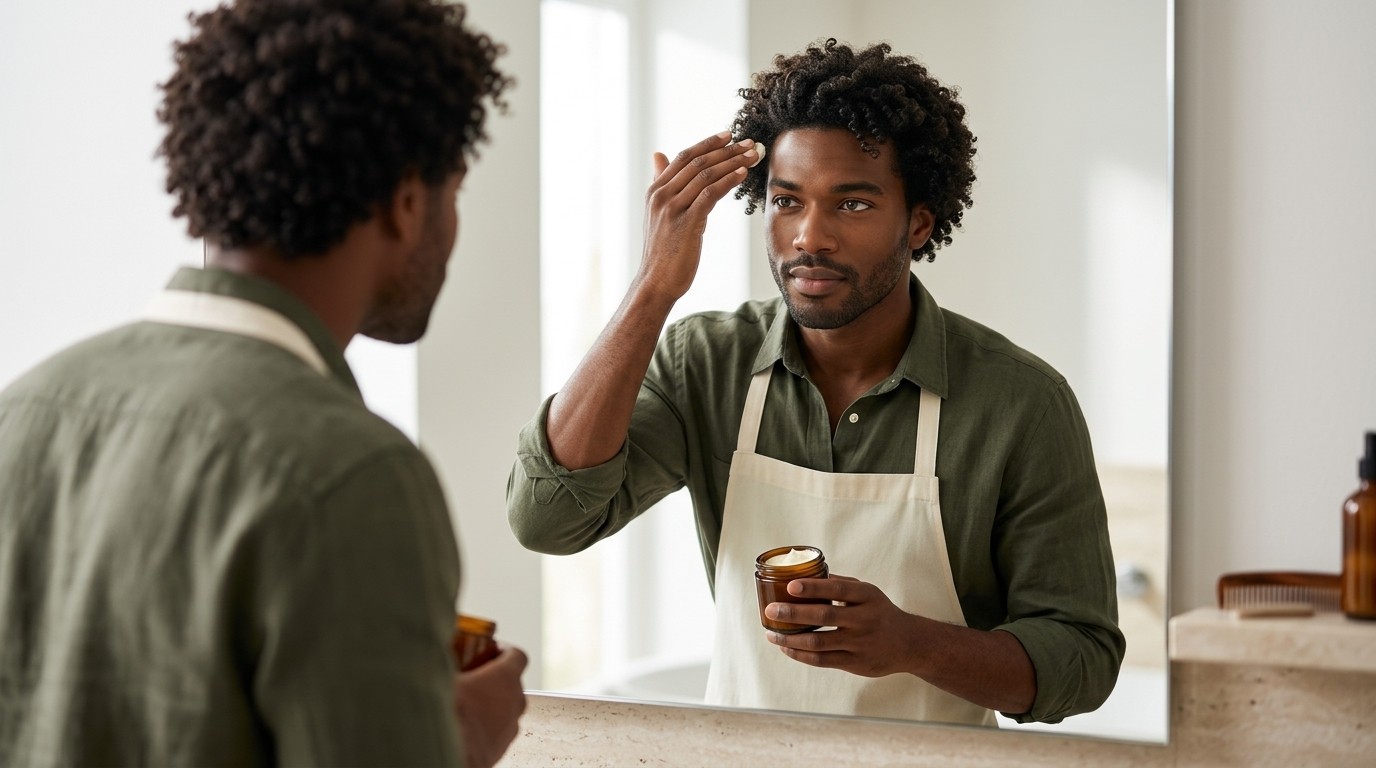
Let us dive right into the reality of managing a textured mane. For decades, men with natural waves, coils, and ringlets have fought against their genetics, often opting for a super-short Buzz Cut just to avoid the daily hassle of styling. However, embracing your natural texture is one of the most rewarding grooming decisions you can make. Maintaining men's curly hair does not have to be a frustrating battle against frizz, dryness, and unpredictable volume. With the right daily regimen, an understanding of hair biology, and professional techniques, those unruly spirals can be transformed into a structured, highly attractive asset.
Textured hair requires a completely different approach compared to straight hair. The conventional grooming advice—lather up with a strong shampoo daily, vigorously rub your head with a towel, and rake a comb through the damp strands—is a guaranteed recipe for a frizzy, damaged disaster. To master your daily routine, you must first understand exactly why your hair behaves the way it does, and then adapt your washing, drying, and styling habits to support its unique structure.
Understanding the Unique Structure of Curly Hair
To properly care for your hair, you have to understand its fundamental biology. Straight hair grows out of perfectly round follicles, allowing the natural oils produced by your scalp, known as sebum, to easily slide down the hair shaft. This keeps straight hair naturally moisturized and shiny. Curly hair, on the other hand, grows out of oval or asymmetrical follicles. The flatter the oval, the tighter the curl pattern.
Because the hair shaft coils and bends, those natural oils face a difficult, winding path. The sebum rarely makes it all the way to the ends of the hair. This biological reality means that curly hair is inherently dry. Furthermore, the outer layer of the hair, called the cuticle, is prone to lifting at the curves of each curl. When these cuticle scales lift, moisture escapes, and humidity from the air enters, causing the hair strand to swell and lose its defined shape. This is the exact scientific mechanism behind the dreaded frizz halo.
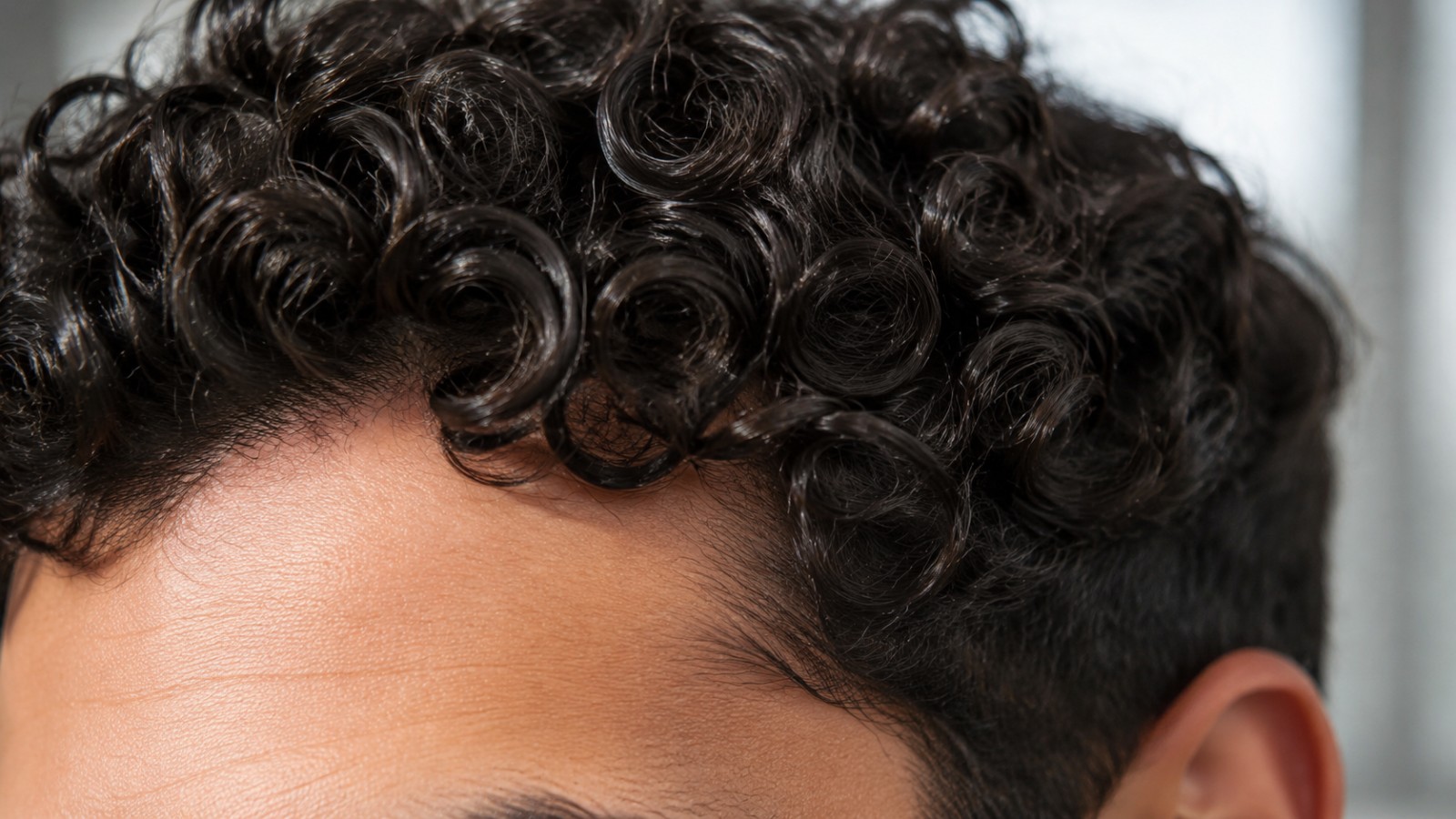
Recognizing that your hair is naturally dry and fragile is the foundation of your new daily routine. Every product you choose and every technique you apply must be focused on two primary goals: retaining maximum moisture and keeping the cuticle layer smooth and sealed.
The Daily Washing and Conditioning Protocol
The biggest mistake made in men's grooming is over-washing. Using a traditional, harsh shampoo every single day strips away the minimal natural oils your scalp has managed to produce. The first step in your new routine is to eliminate shampoos containing sulfates. Sulfates, such as sodium lauryl sulfate, are aggressive detergents responsible for the thick lather in commercial shampoos, but they are incredibly damaging to textured hair.
Instead, you should transition to a washing schedule of one to three times per week, depending on your lifestyle and workout frequency. On the days you do not use shampoo, you can practice a technique highly recommended by barbers and stylists called co-washing. Co-washing involves washing your hair solely with a specialized cleansing conditioner. This removes daily sweat and environmental grime without stripping the hair of its essential oils. Even with fewer washes, the skin underneath still needs attention, so apply the same scalp care principles used for buzz cuts and fades: massage gently, rinse thoroughly, and never let product build up at the roots.
When you are in the shower, temperature matters. Washing your hair with scalding hot water melts away sebum and forces the hair cuticles wide open. Always wash and condition with lukewarm water. When applying your conditioner, be generous. Coat the hair entirely from the roots to the tips. Use your fingers as a wide-tooth comb to gently detangle the hair while it is saturated with conditioner. This is the only time you should be actively detangling your hair; doing so when the hair is dry will shatter the curl clumps and create instant frizz. Before stepping out of the shower, do a final rinse with cool water. The cold temperature shocks the cuticle closed, locking in the hydration you just applied.
Proper Drying Techniques to Prevent Frizz
How you dry your hair immediately after stepping out of the shower dictates how your hair will look for the rest of the day. Grab a standard terry cloth bath towel and vigorously rub your head, and you will instantly destroy the curl definition. The rough loops of a traditional towel catch on the hair cuticles, tearing them open and causing severe friction.
Instead, you must invest in a microfiber towel or simply use an old, soft cotton t-shirt. These materials have a flat surface that absorbs excess water without roughing up the hair shaft. Lean forward, flip your hair upside down, and gently gather the curls into the microfiber towel, pressing them upward toward your scalp. This technique is known as scrunching. Scrunching encourages the hair's natural curl pattern to form while safely extracting the dripping water.
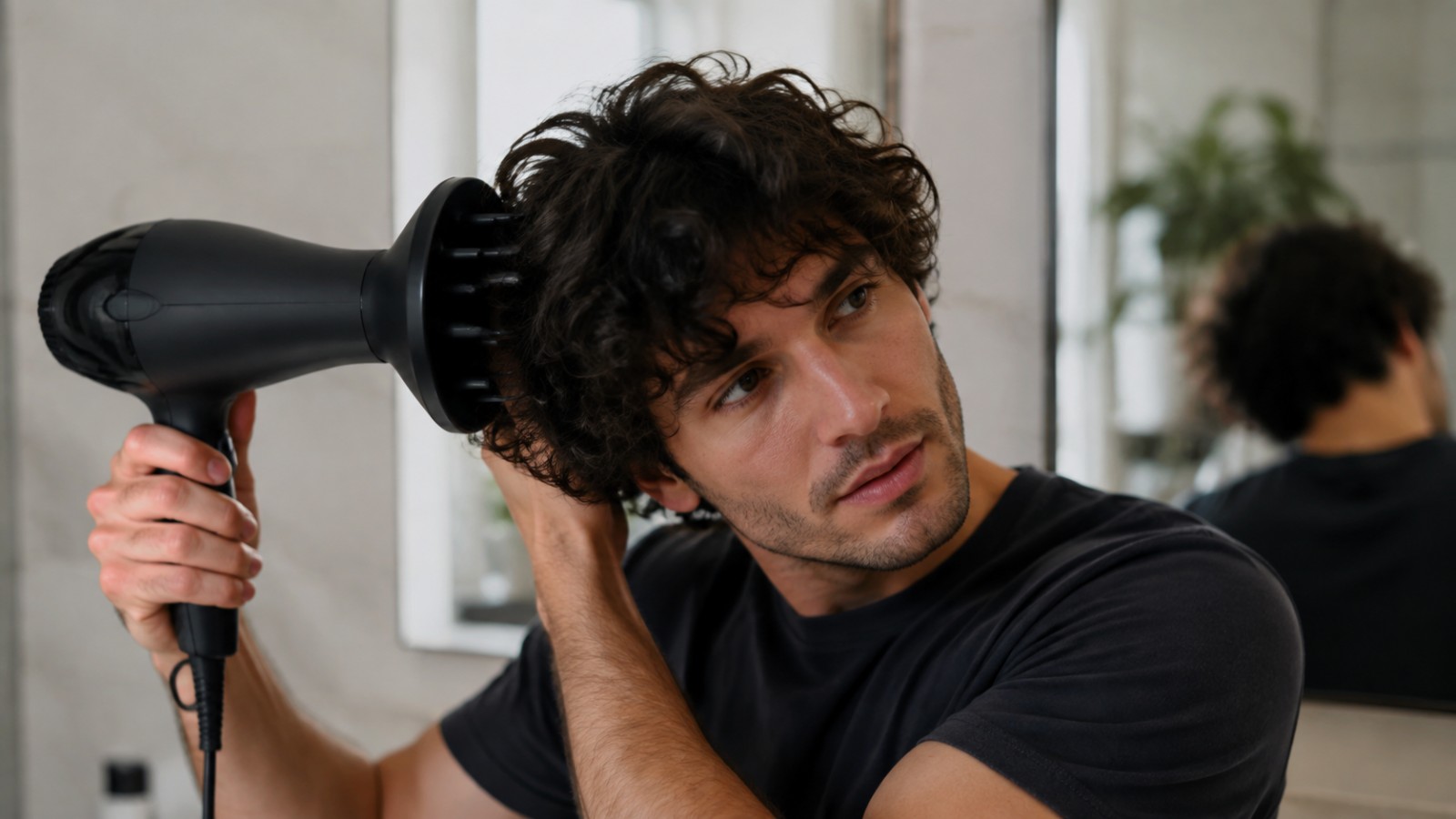
If you have the time, air drying is the absolute best method for preserving moisture. However, if you need to speed up the process or want to achieve more volume, you must use a hair dryer equipped with a diffuser attachment. A diffuser disperses the air over a wider area, preventing the concentrated blast of wind from blowing your curls apart. Set your dryer to a low heat and low speed setting. Gently cup sections of your hair into the bowl of the diffuser and hold it against your scalp for several seconds before moving to the next section. Do not constantly move the dryer around, as this introduces unnecessary friction. If you are new to heat styling, it is worth learning how to control a blow dryer properly, because the same rules about distance, heat level and airflow direction apply to curls.
Essential Styling Products for Textured Hair
Navigating the men's grooming aisle can be overwhelming, but building a solid product arsenal is crucial. The goal is to layer products that provide both moisture and hold. A highly effective method utilized by styling experts is the LOC method, which stands for Leave-in, Oil, and Cream. While you can adjust this based on your hair's thickness, applying products in the correct order is non-negotiable.
Always apply your styling products while your hair is still soaking wet or very damp. When hair is wet, the cuticles are primed to absorb product, and the curls are already clumped together in their natural shape. Start with a high-quality leave-in conditioner. Work a dime-to-quarter-sized amount through your hair, ensuring even distribution. This acts as your base layer of hydration.
Next, you need a product to define the shape and provide hold. For looser waves, a lightweight curl cream or a sea salt spray might be sufficient—and mastering sea salt spray for a medium messy finish is the fastest way to add grit without weighing the wave down. For tighter coils, a specialized curl gel is required. Many men avoid gel because they fear the crunchy, stiff look of the early 2000s. However, a modern, alcohol-free gel is essential for locking in the curl pattern. As the gel dries, it forms a hard shell around the hair strand, known as a cast. This cast protects the hair from frizzing while it dries. Once your hair is one hundred percent dry, you simply take a few drops of lightweight hair oil on your palms and gently scrunch your hair again. This breaks the hard cast, leaving you with soft, touchable, perfectly defined curls that hold their shape all day, which is exactly the finish you want on a voluminous textured top.
Best Haircuts to Complement Your Curl Pattern
No amount of premium product or careful drying will save a bad haircut. Curly hair requires a barber who understands how to cut texture. Cutting curly hair straight across results in the dreaded triangle shape, where the hair lays flat on top and balloons out at the sides. A skilled barber will use point-cutting techniques and remove strategic bulk to allow the curls to lay naturally, so it pays to know how to describe the cut you want to your barber before you sit in the chair.
Choosing the right style can significantly reduce your daily maintenance time. Here are the most effective haircuts for managing natural texture:
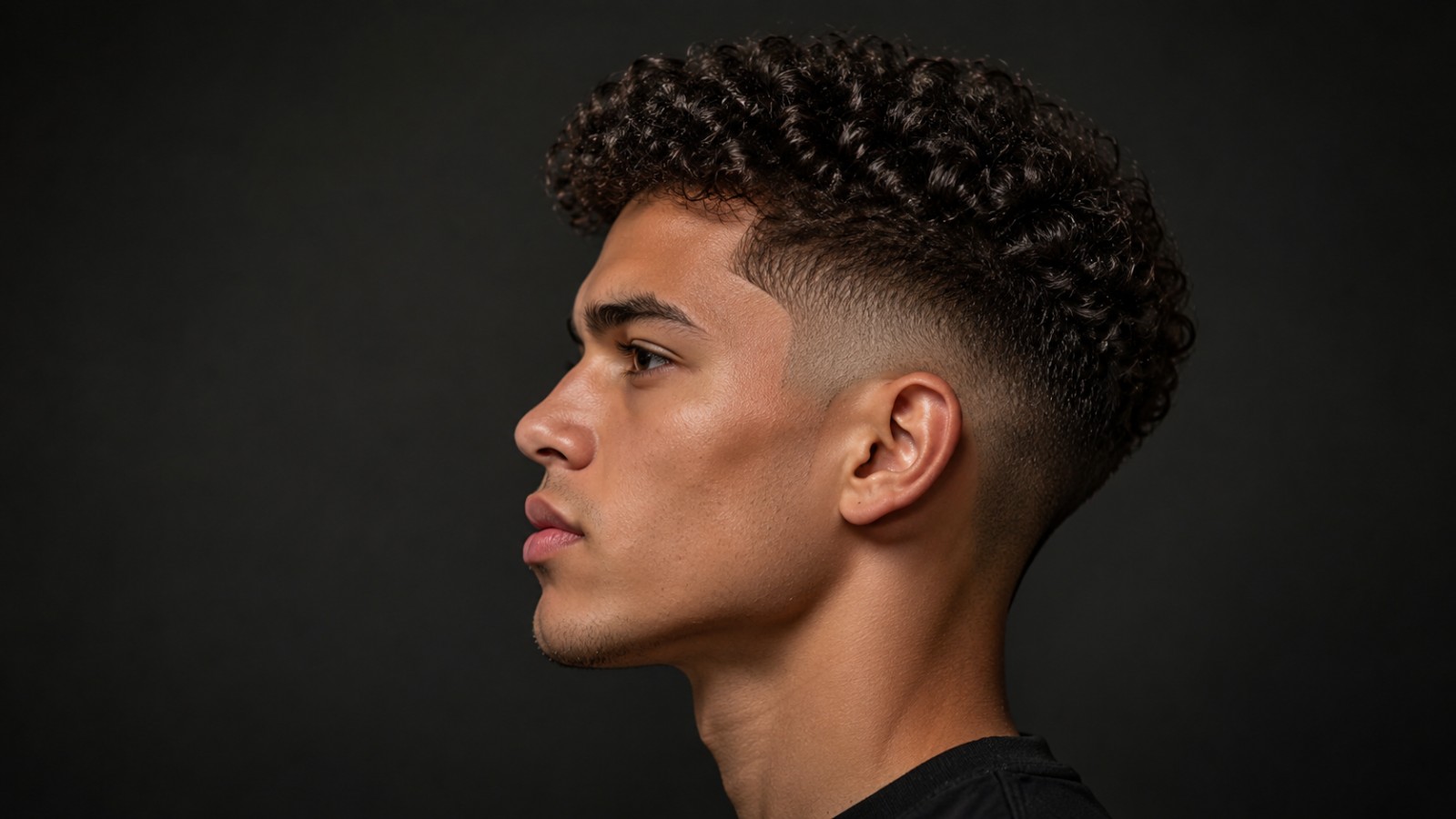
- The Curly Fade: By taking the sides and back down to the skin with a skin fade or a very short guard, you eliminate eighty percent of your styling work. A tight high fade provides a sharp, masculine contrast to the voluminous, textured curls left on top.
- The French Crop: The French crop brings the curls forward over the forehead into a textured fringe. It is incredibly easy to maintain daily, requiring only a quick scrunch with curl cream to look intentionally messy and stylish.
- The Textured Pompadour: For men with looser waves, leaving more length on top allows you to sweep the hair back. Unlike a slicked, straight pompadour, the textured version uses the hair's natural volume to stand up, requiring a strong-hold cream rather than a heavy pomade.
- The Modern Mullet: Highly popular in current trends, the mullet utilizes the natural coil of the hair to create volume at the back while keeping the sides tapered. It works exceptionally well for tight ringlets.
Nighttime Routine and Refreshing Between Washes
Your daily care routine actually begins the night before. Tossing and turning on a standard cotton pillowcase acts like sandpaper against your hair, pulling out moisture and creating severe tangles. To preserve the styling work you did during the day, you should switch to a silk or satin pillowcase. The smooth surface allows your hair to glide effortlessly as you move in your sleep.
If you have longer hair, consider tying it up in a loose, high ponytail on top of your head before bed—a technique often referred to as the pineapple method. This prevents you from crushing your curls under the weight of your head overnight.
When you wake up on days you are not washing your hair, you will likely need a quick refresh. Do not step under the shower head. Instead, purchase a continuous mist spray bottle and fill it with water and a small squirt of your leave-in conditioner. Lightly mist your hair until it is slightly damp. The water will reactivate the styling products you applied the day before. Use your fingers to gently reshape any flattened curls, scrunch lightly, and let it air dry. In less than five minutes, your hair will look as fresh as it did on wash day.
Committing to the Curly Hair Journey
Mastering men's textured hair is a journey of patience and consistency. It takes time for your hair to recover from years of harsh shampoos and rough towel drying. You may experience a transition period where your hair feels slightly unbalanced as your scalp adjusts its natural oil production to your new, gentler routine.
Stay committed to the process. Focus on deep hydration, gentle handling, and utilizing the correct holding products. By working with your natural texture rather than fighting against it, you will develop a daily grooming ritual that not only improves the health of your hair but elevates your entire personal style. Your curls are a unique genetic trait—treat them with the expert care they deserve, and they will undoubtedly become your best physical feature.