Dreadlocks

Dreadlocks are rope-like strands formed by matting and locking hair into permanent, cylindrical structures that grow thicker and tighter over time. Unlike temporary styles, dreads are a long-term commitment — they take months to form and are meant to be worn for years, evolving and maturing alongside you. This ancient style spans cultures worldwide, from Rastafarian tradition to modern urban fashion. Dreadlocks offer incredible versatility once established, as they can be styled, colored, accessorized, and shaped in countless ways. If you value patience and self-expression, dreads deliver a powerful, distinctive look that only improves with age.

28 results
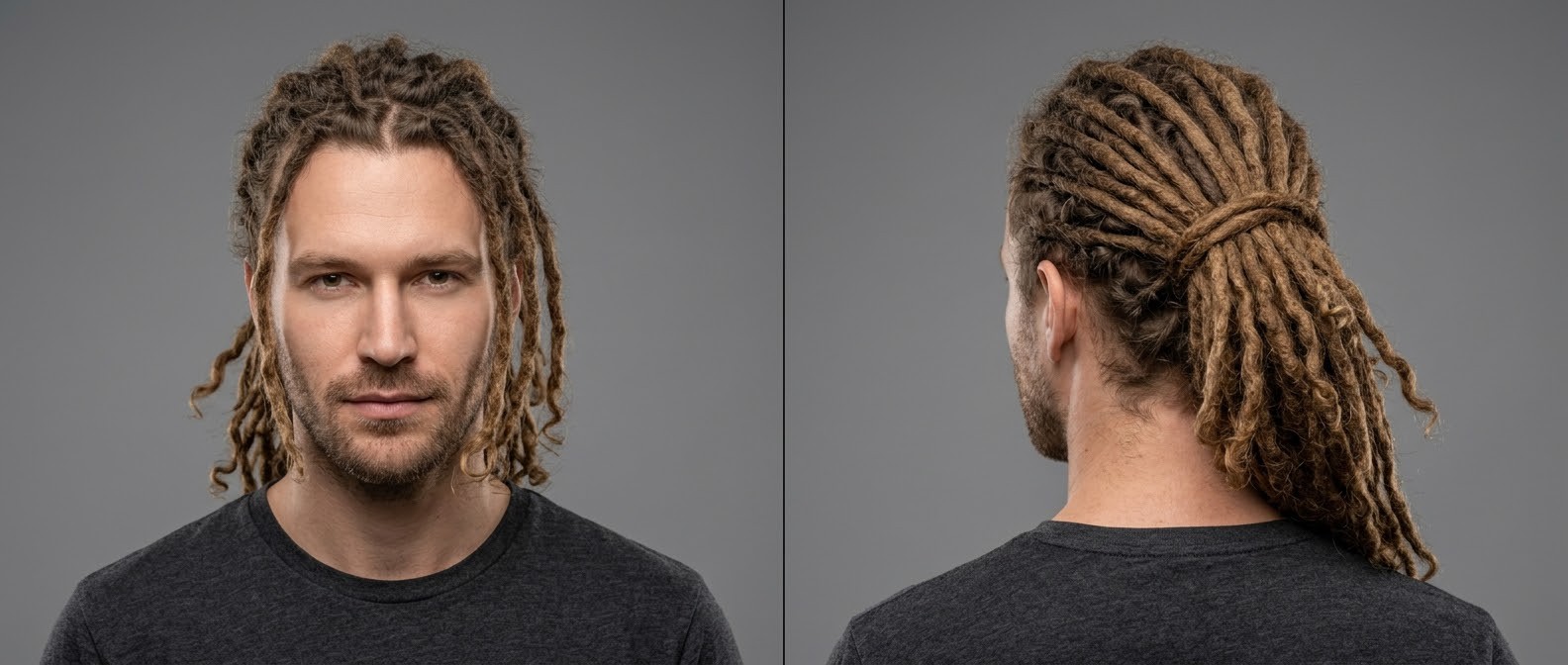
Caucasian man with long light brown dreadlocks styled in a half-up tie with curly tips, featuring a middle part and light facial stubble.

Long Light Brown Caucasian Dreadlocks with Half-Up Tie and Curly Tips

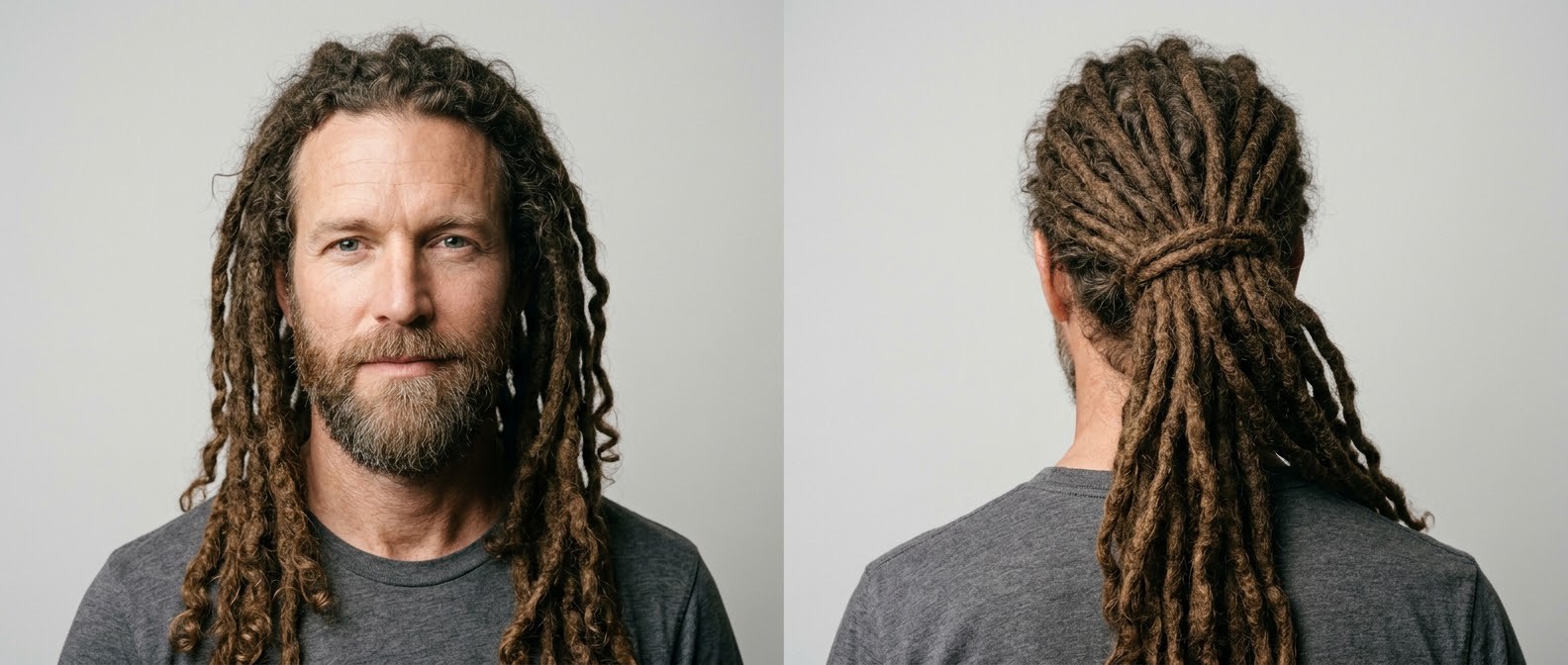
Mature man with a beard modeling long, thick natural brown dreadlocks, shown loose from the front and tied in a wrapped low ponytail from the back.

Mature Long Natural Dreadlocks with Custom Wrapped Low Ponytail Style

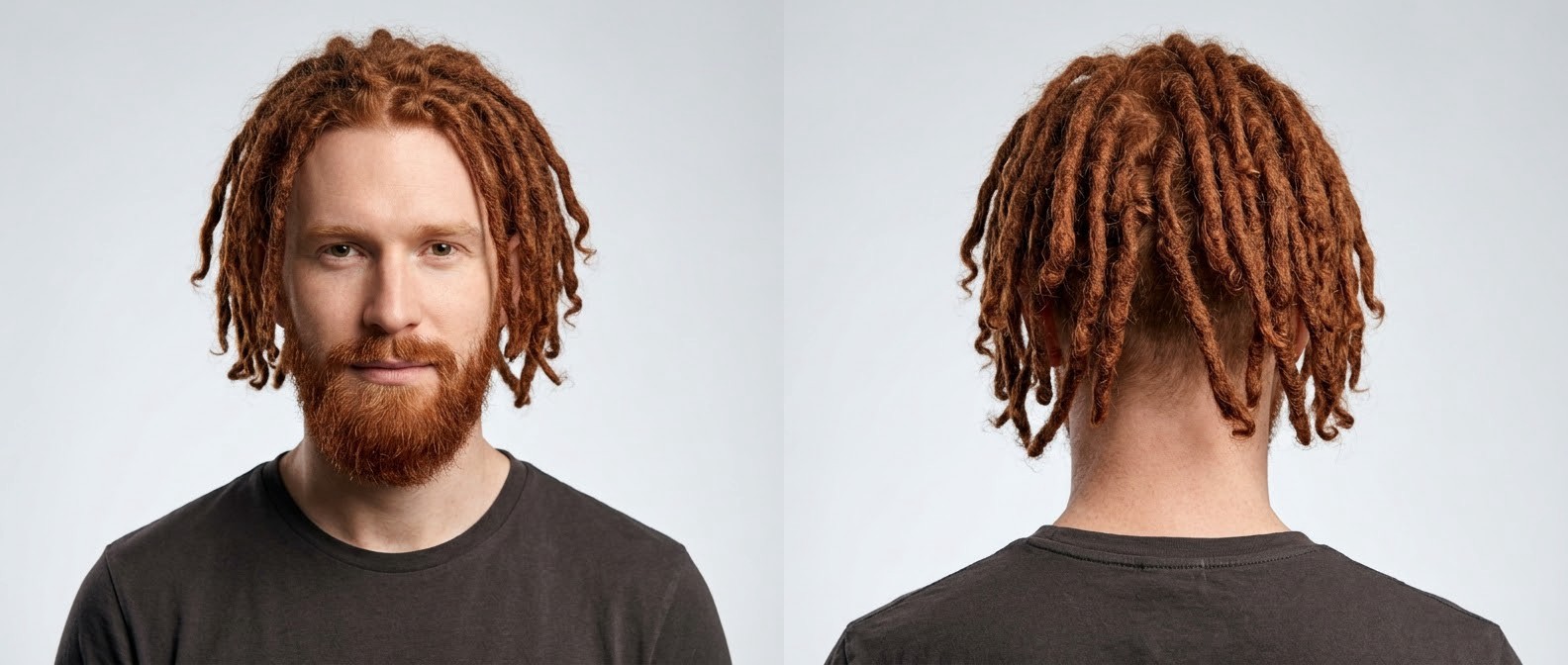
Caucasian man with vibrant copper red dreadlocks and a full beard, showcasing a nape undercut from the front and back views.

Vibrant Copper Dreadlocks with Subtle Undercut and Full Beard

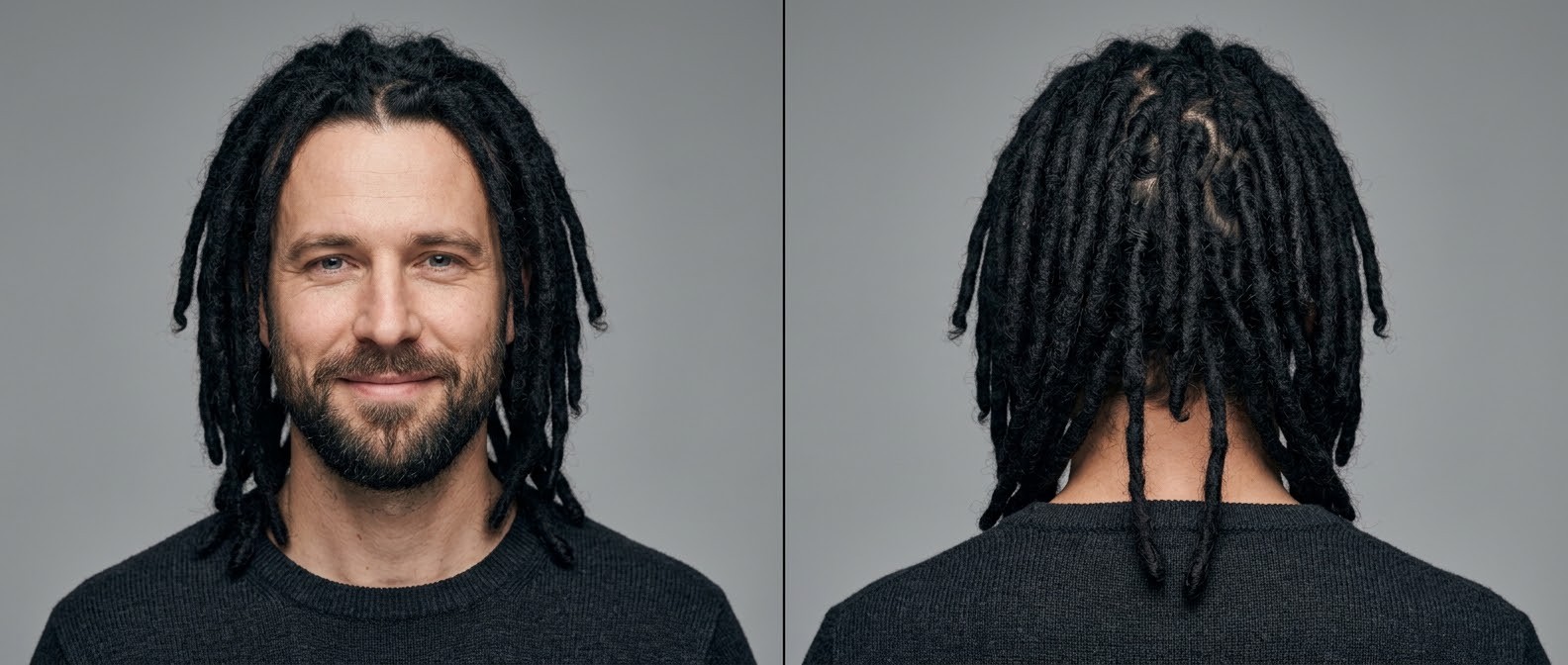
Caucasian man with long, black dreadlocks parted in the middle, paired with a short, neatly trimmed beard against a grey background.

Classic Shoulder-Length Dreadlocks with Center Part and Beard

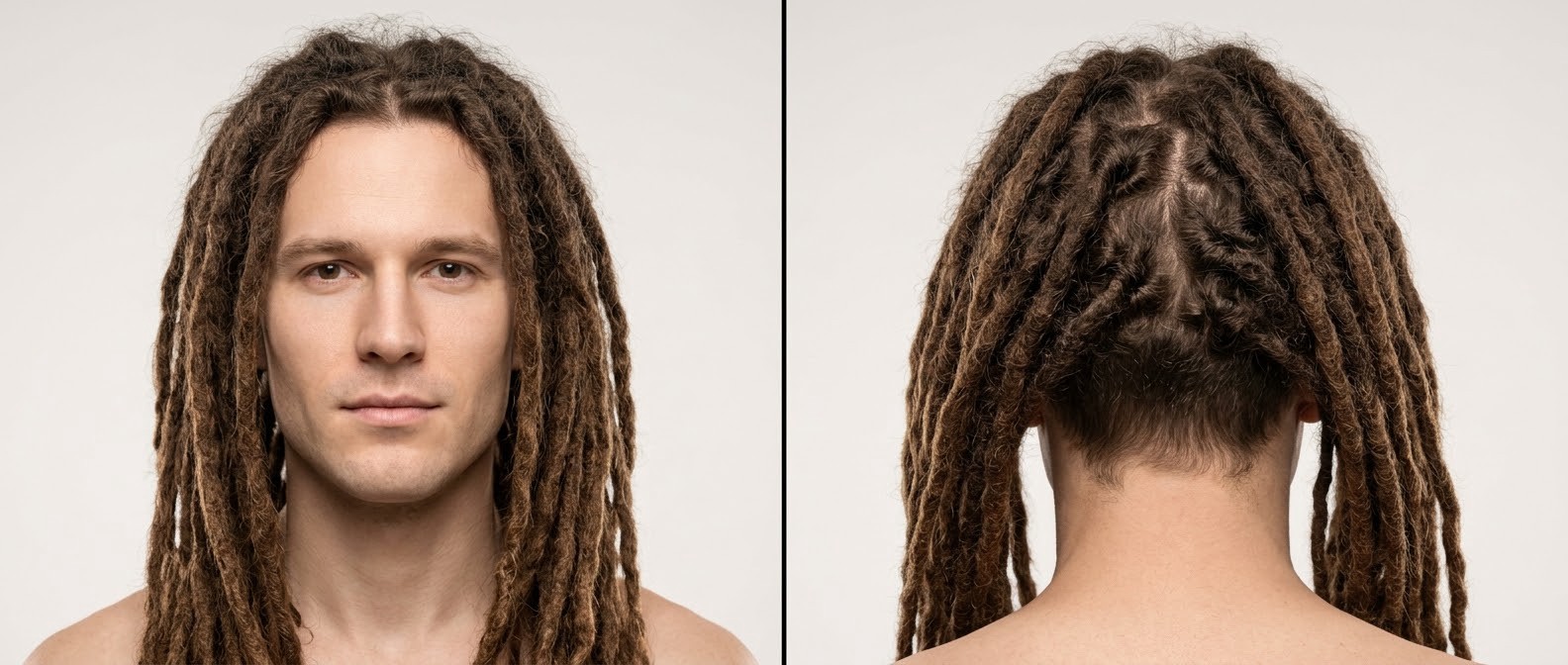
Caucasian man with long brown dreadlocks parted in the middle, featuring a hidden nape undercut visible from the back view.

Long Caucasian Dreadlocks with Hidden Nape Undercut

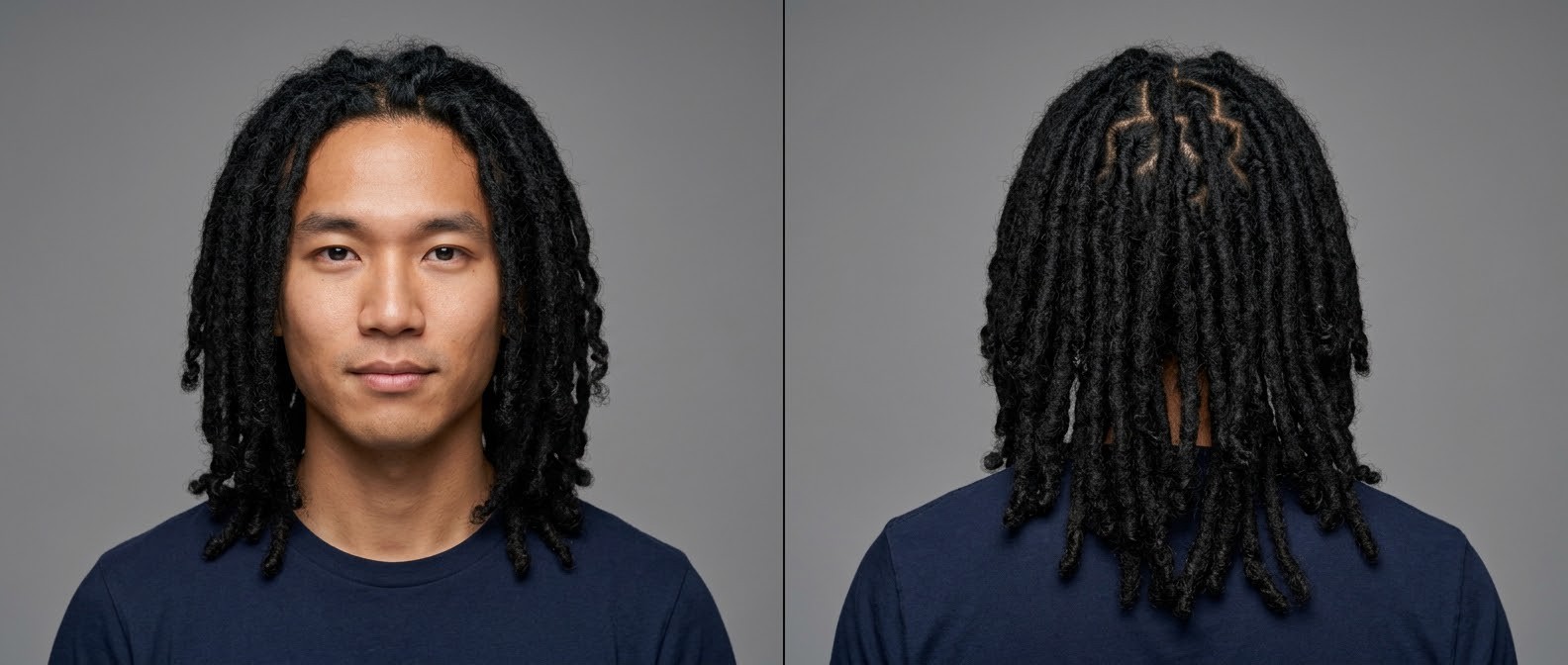
Asian man with long, thick dreadlocks featuring a middle part and intricate geometric zig-zag parting at the crown, wearing a dark blue t-shirt.

Long Structured Dreadlocks with Geometric Crown Parting

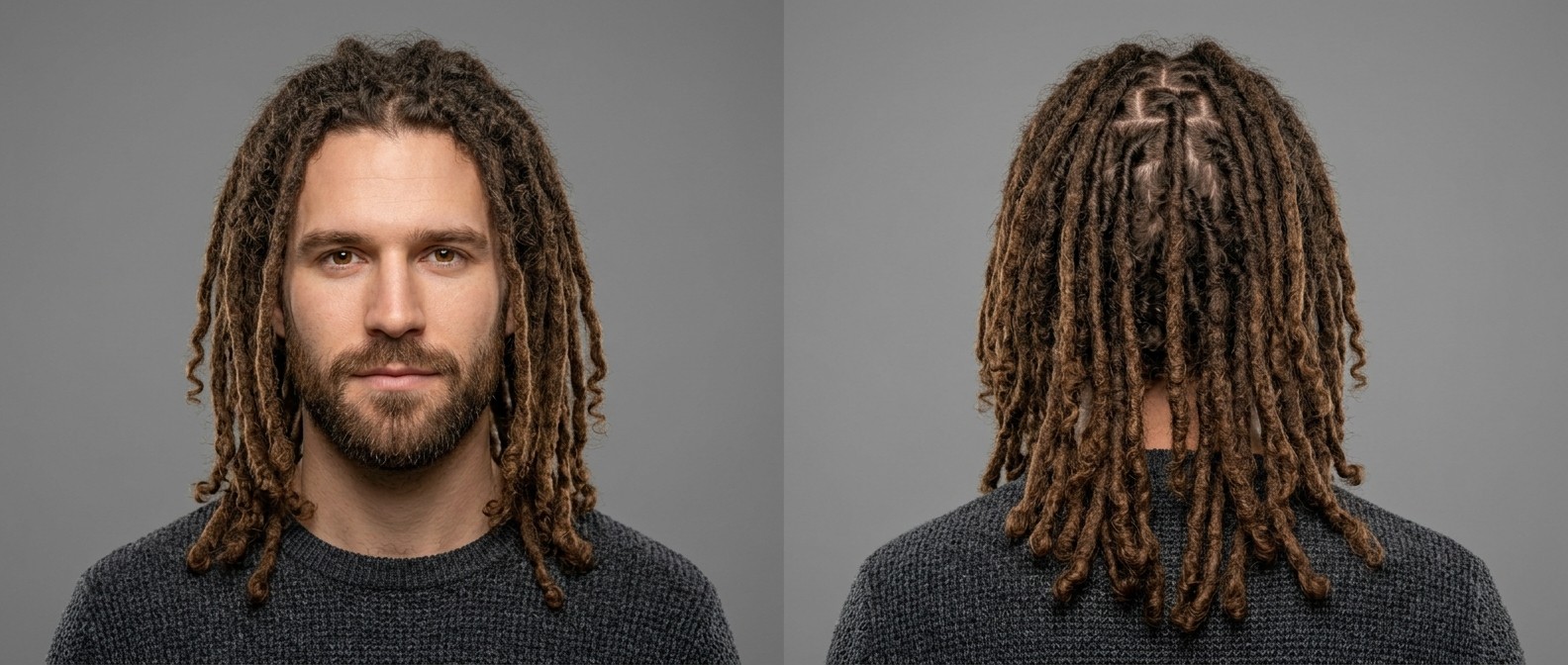
Front and back view of a Caucasian man with long brown dreadlocks featuring precision square scalp partings, loose curly ends, and a short groomed beard.

Long Men's Dreadlocks with Precision Square Parts & Curly Ends

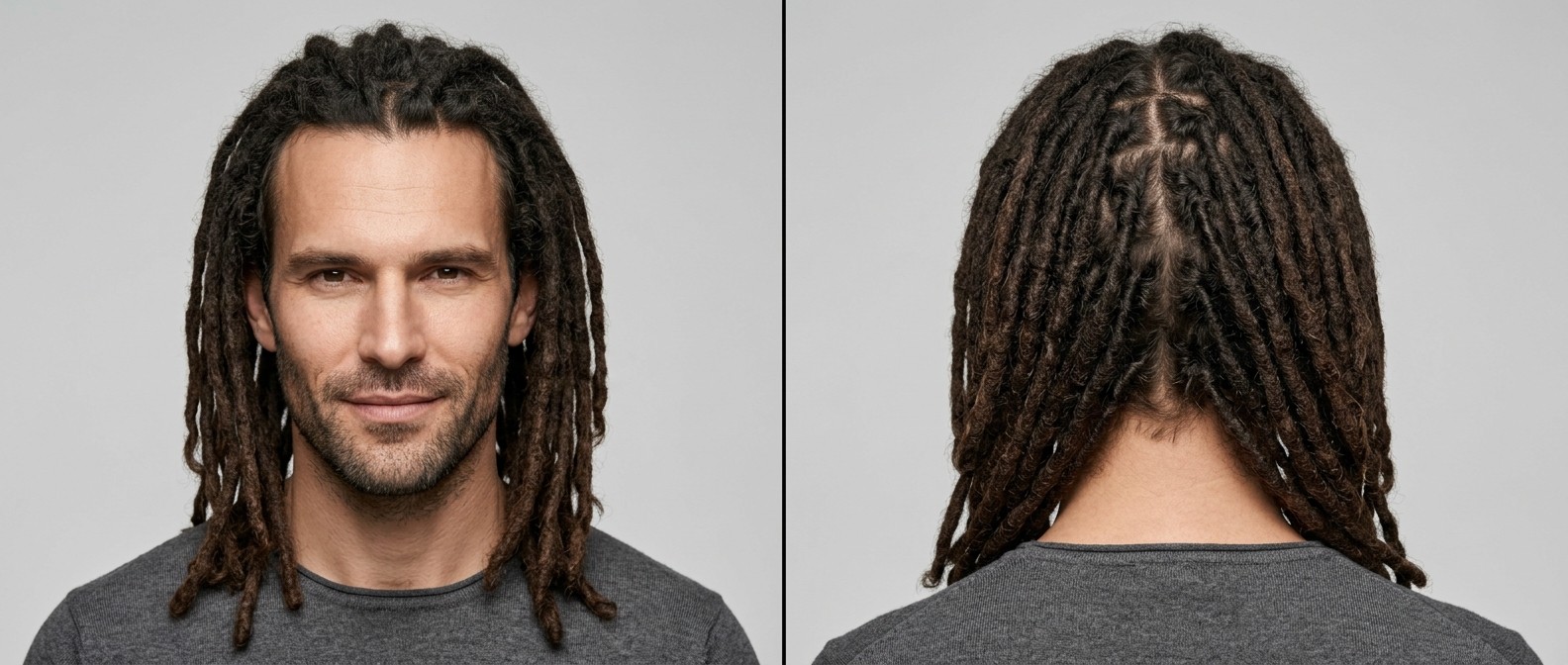
Caucasian man aged 35-45 with long, dark brown structured dreadlocks, featuring precise geometric scalp parting and a light stubble beard.

Long Structured Men's Dreadlocks with Geometric Scalp Parting

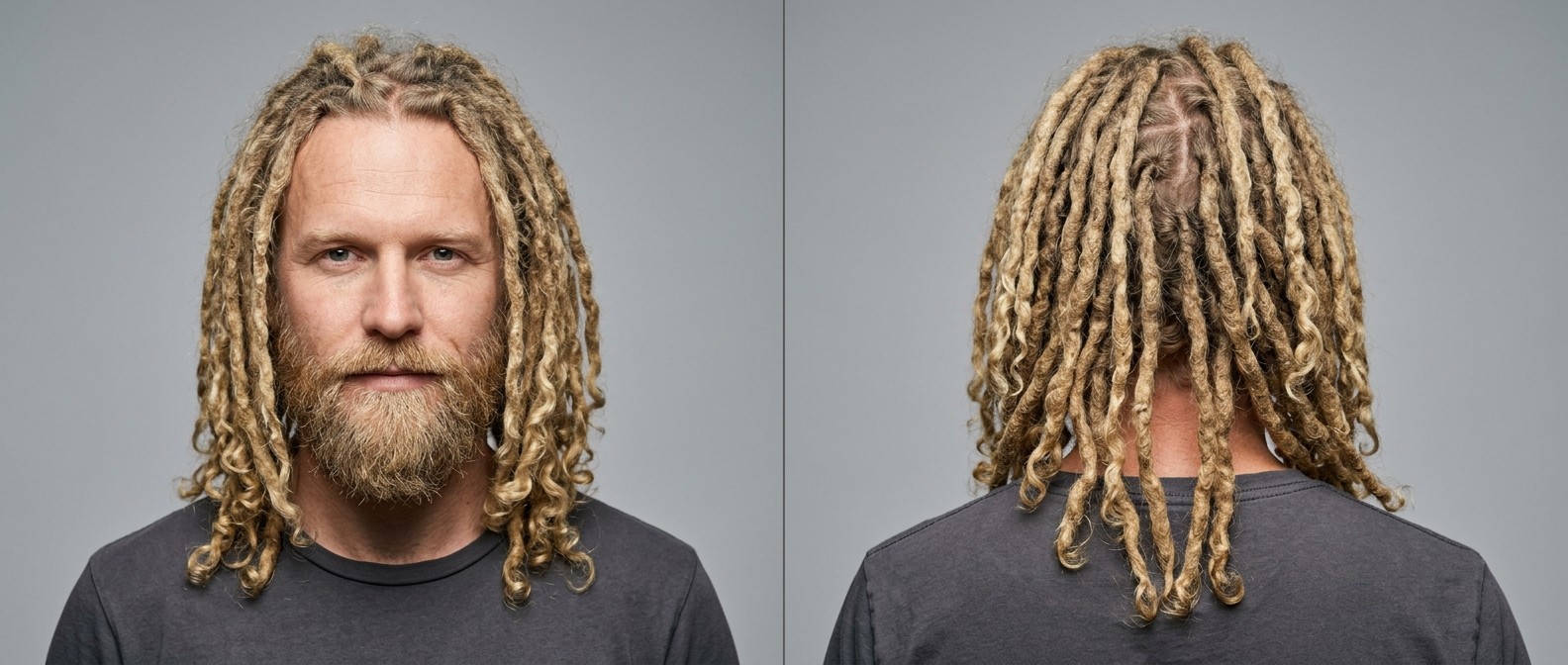
Caucasian man aged 35-45 with long blonde dreadlocks featuring loose curly ends, paired with a full, well-groomed beard against a grey background.

Long Blonde Caucasian Dreadlocks with Loose Curly Ends and Full Groomed Beard

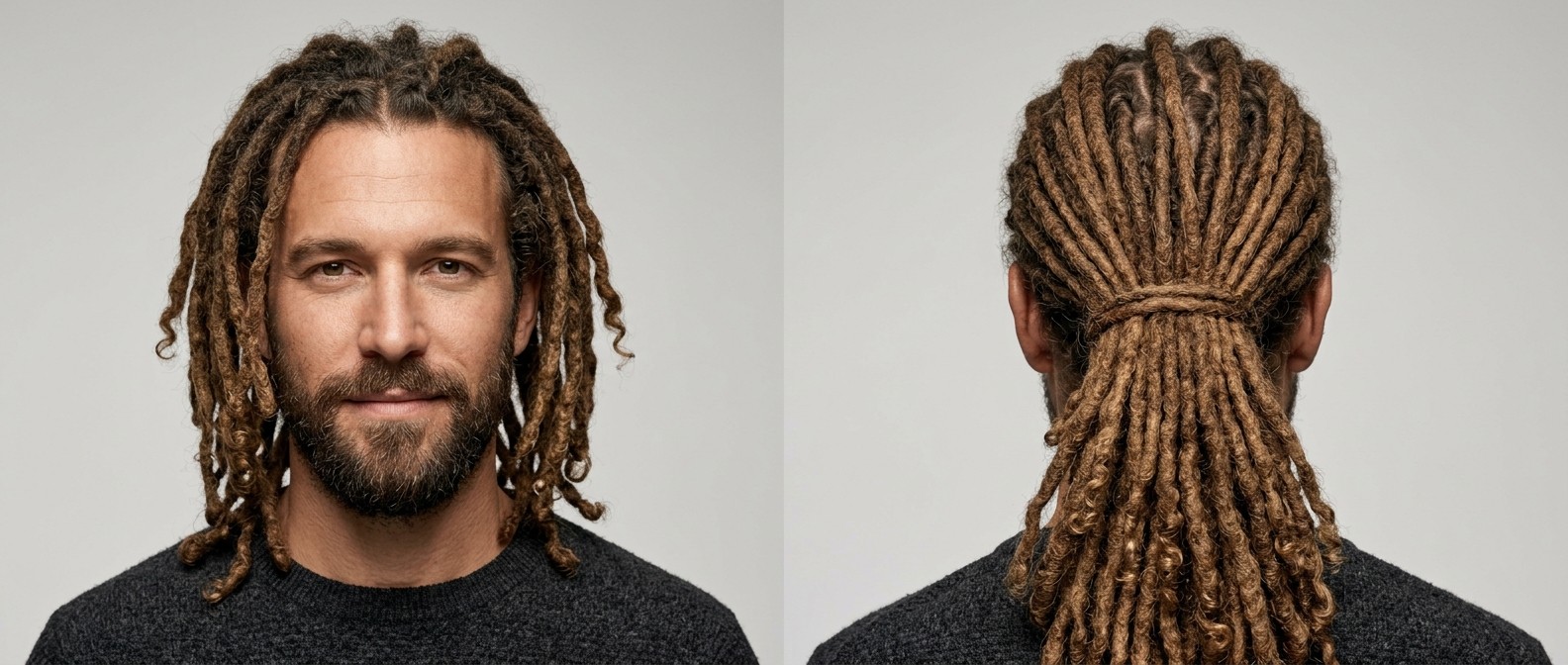
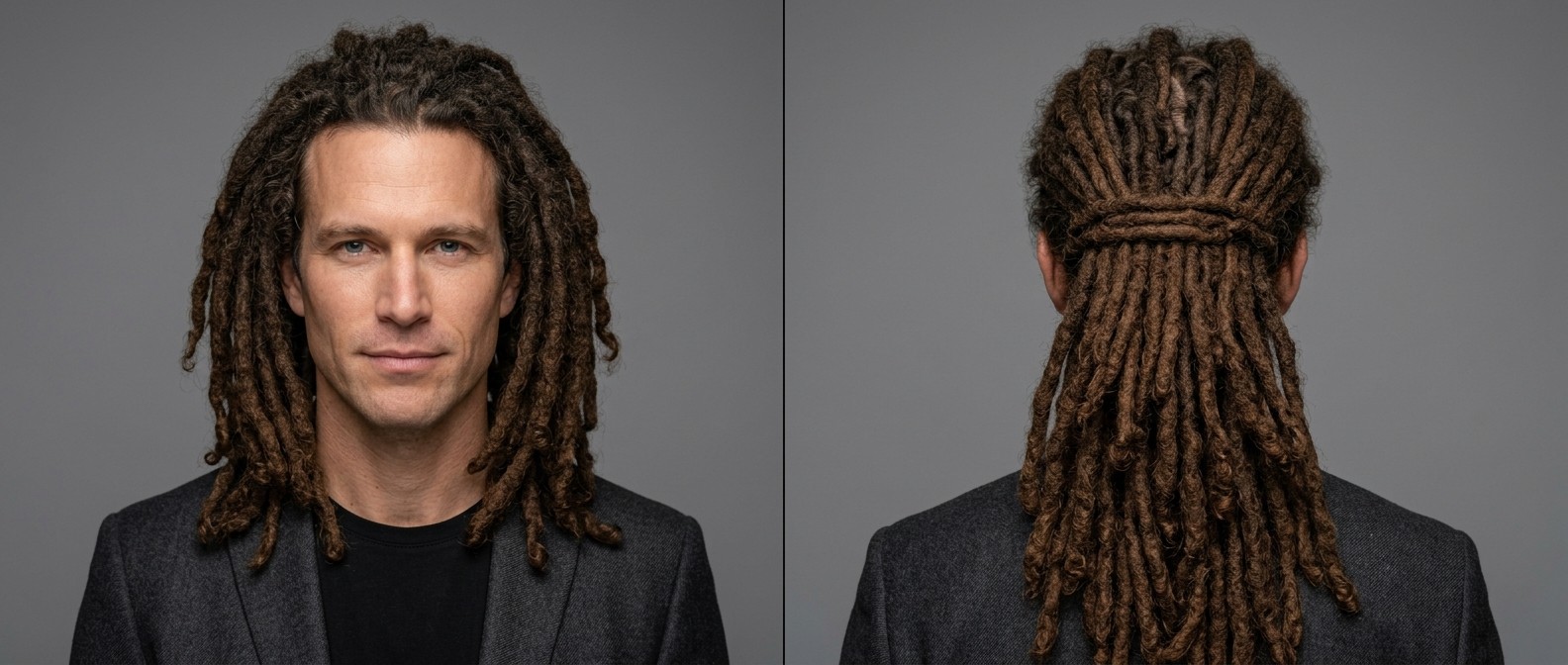
Caucasian man aged 35-45 with a beard, wearing long light brown dreadlocks with curly ends, styled down and tied back in a low natural ponytail.

Long Light Brown Tied-Back Dreadlocks with Loose Curly Ends

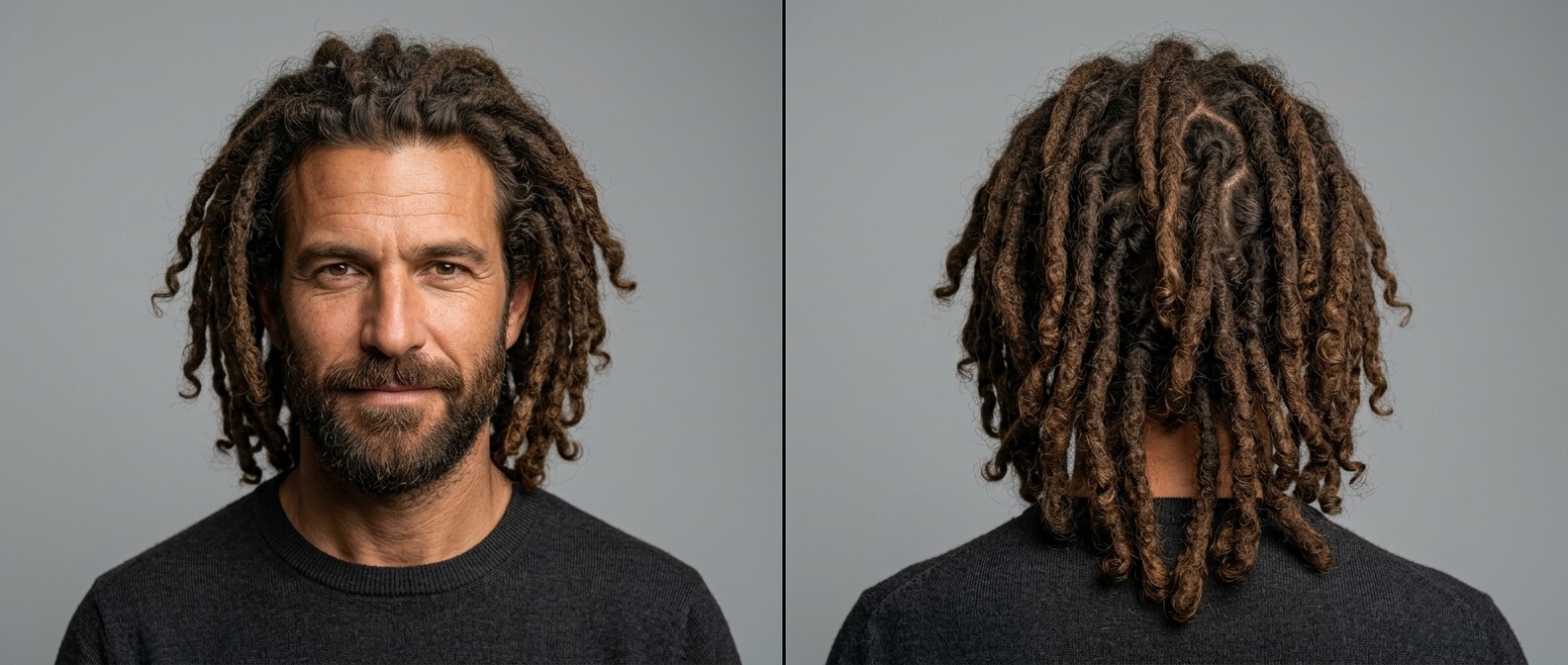
Front and back view of a mature Caucasian man with a neat beard sporting shoulder-length natural brown dreadlocks with loose curly ends.

Shoulder-Length Natural Brown Dreadlocks with Loose Curly Ends

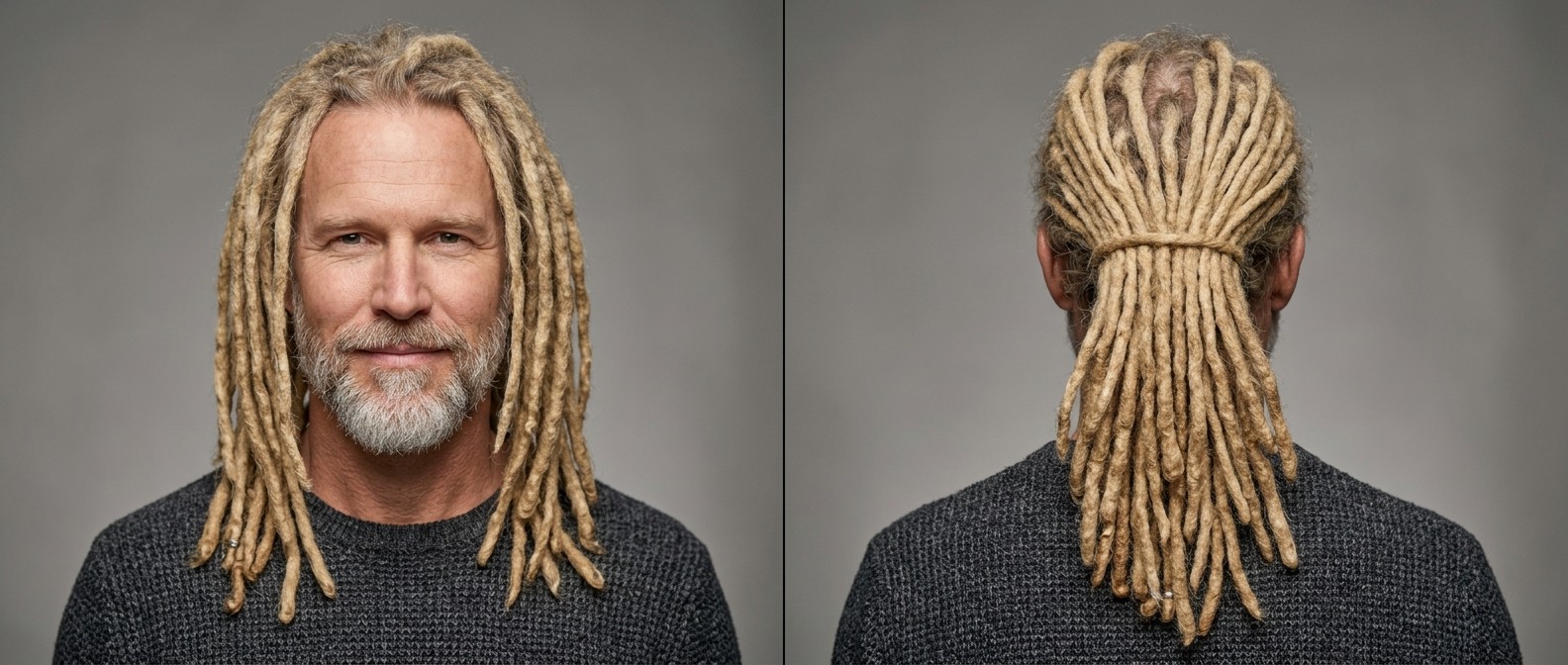
Mature Caucasian man with long blonde dreadlocks and a trimmed grey beard. The back view shows the dreads tied back using a natural hair tie.

Long Blonde Mature Dreadlocks with Natural Half-Tie and Groomed Beard

Caucasian man with long brown dreadlocks styled in a neat half-up half-down look, showcasing medium-thick locs and a clean straight hairline.

Long Mature Brown Dreadlocks with Half-Up Tied Crown

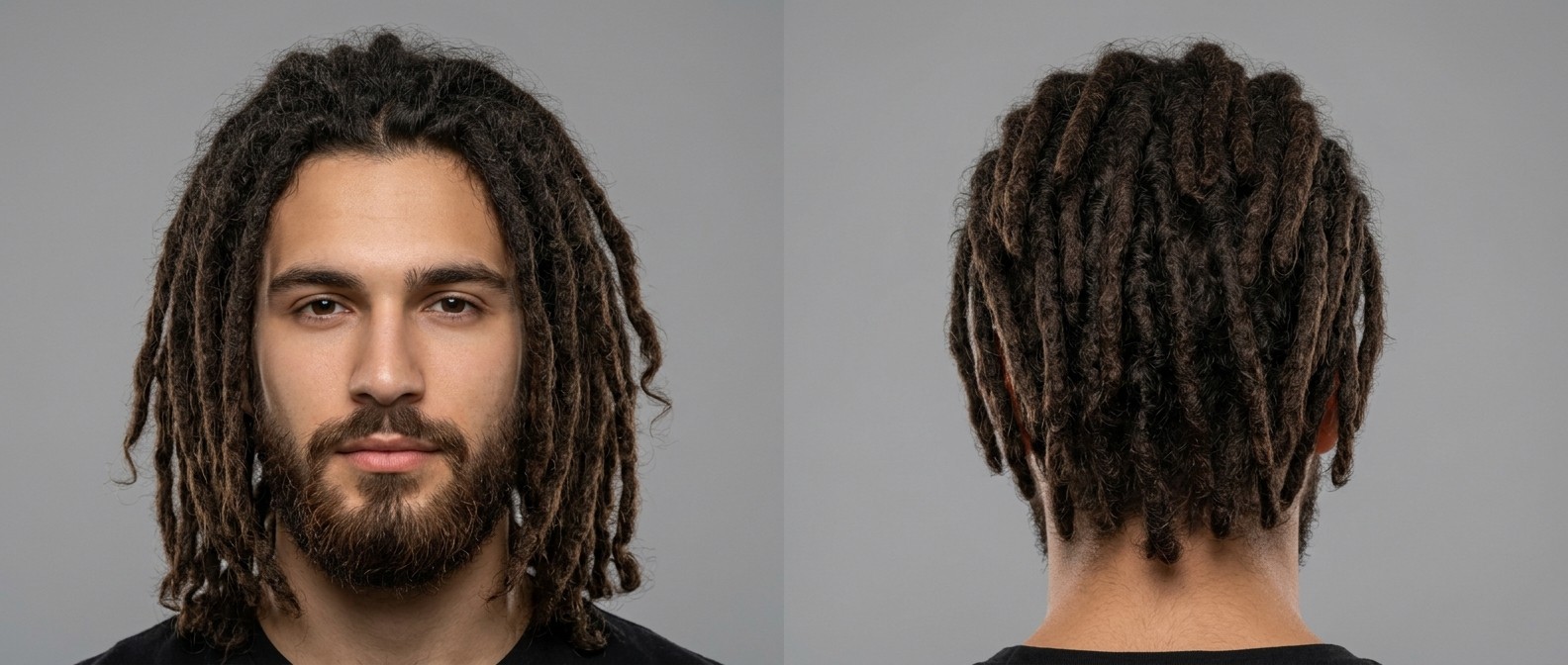
Front and back view of a young adult man with olive skin and a full dark beard wearing long, natural dark brown dreadlocks falling past his shoulders.

Long Natural Freeform Dreadlocks with Full Beard for Thick Hair

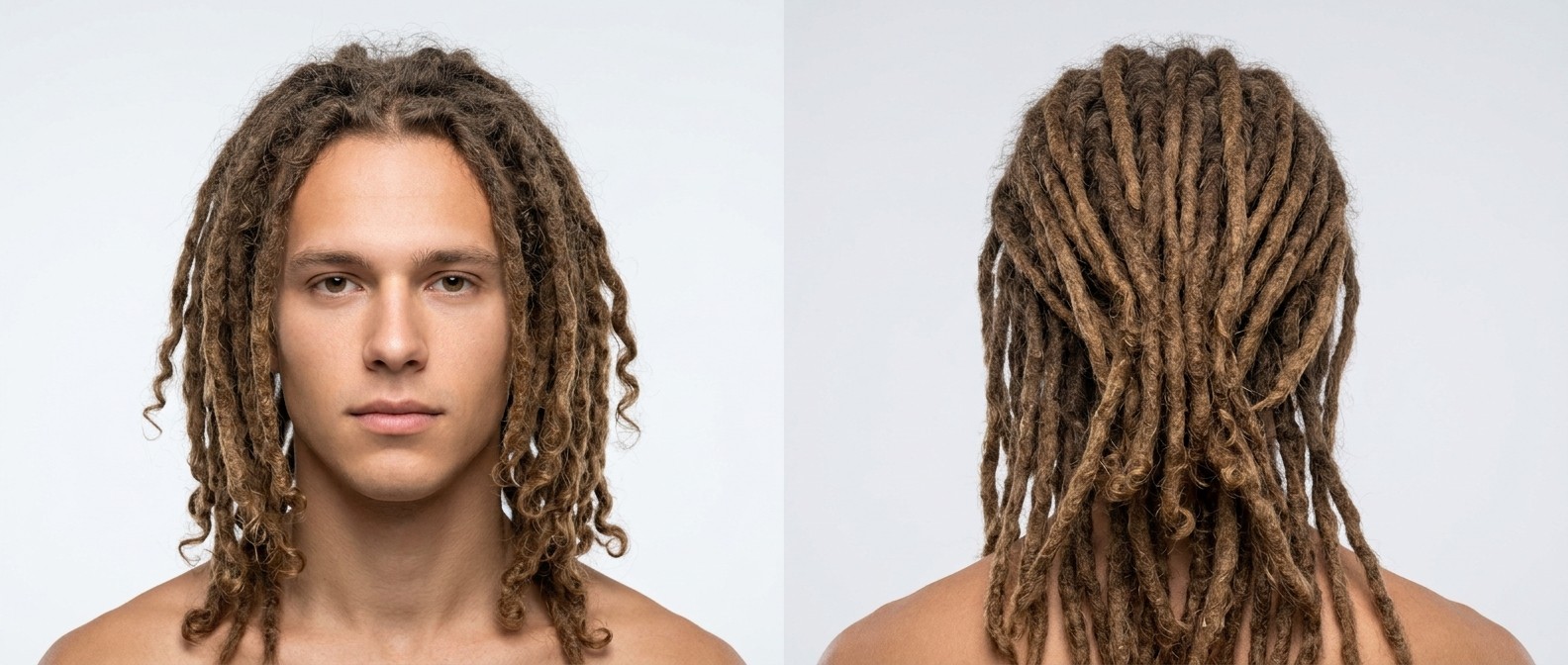
Young Caucasian man with long, natural light brown dreadlocks featuring a middle part and loose, curly type 3 ends, shown from front and back.

Long Natural Light Brown Dreadlocks with Loose Curly Ends

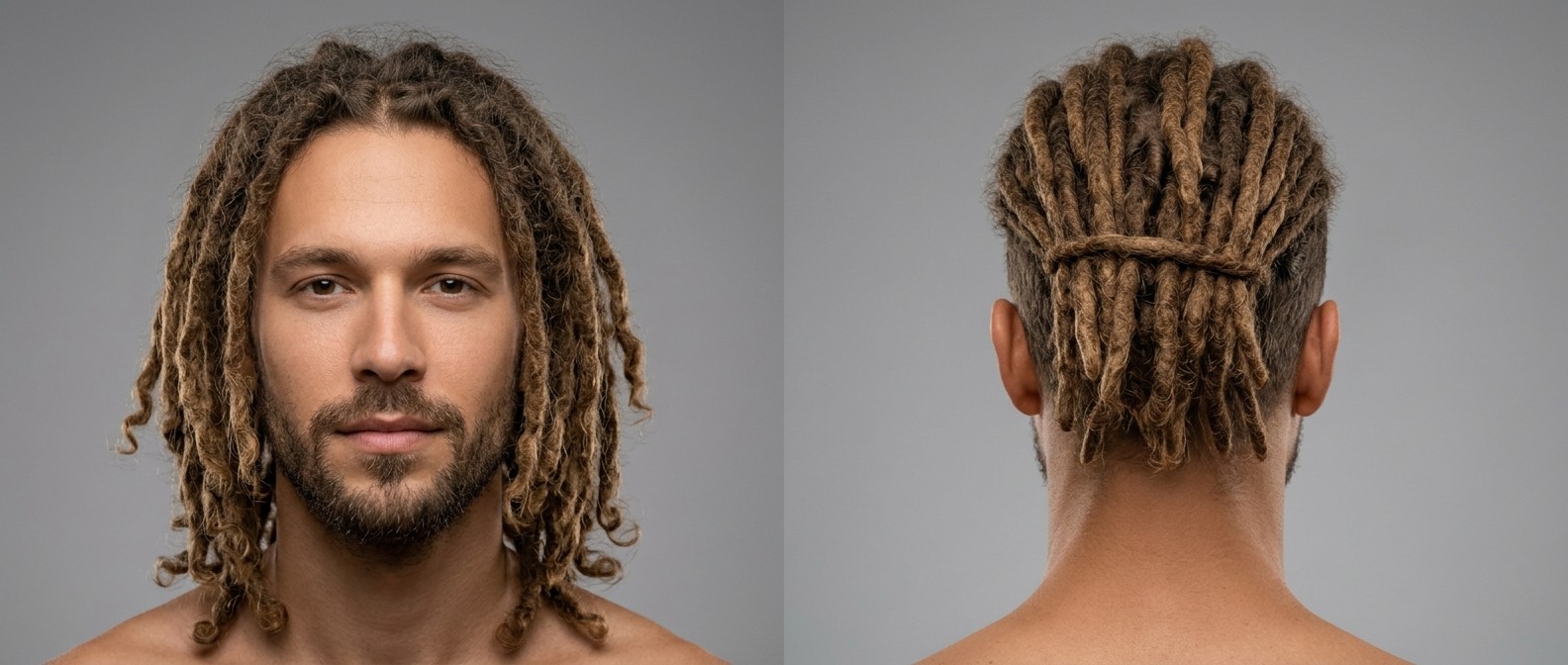
Front and back view of a Caucasian man with a short beard wearing mid-length light brown dreadlocks with loose curly ends, tied back at the nape.

Light Brown Mid-Length Dreadlocks with Loose Curly Ends

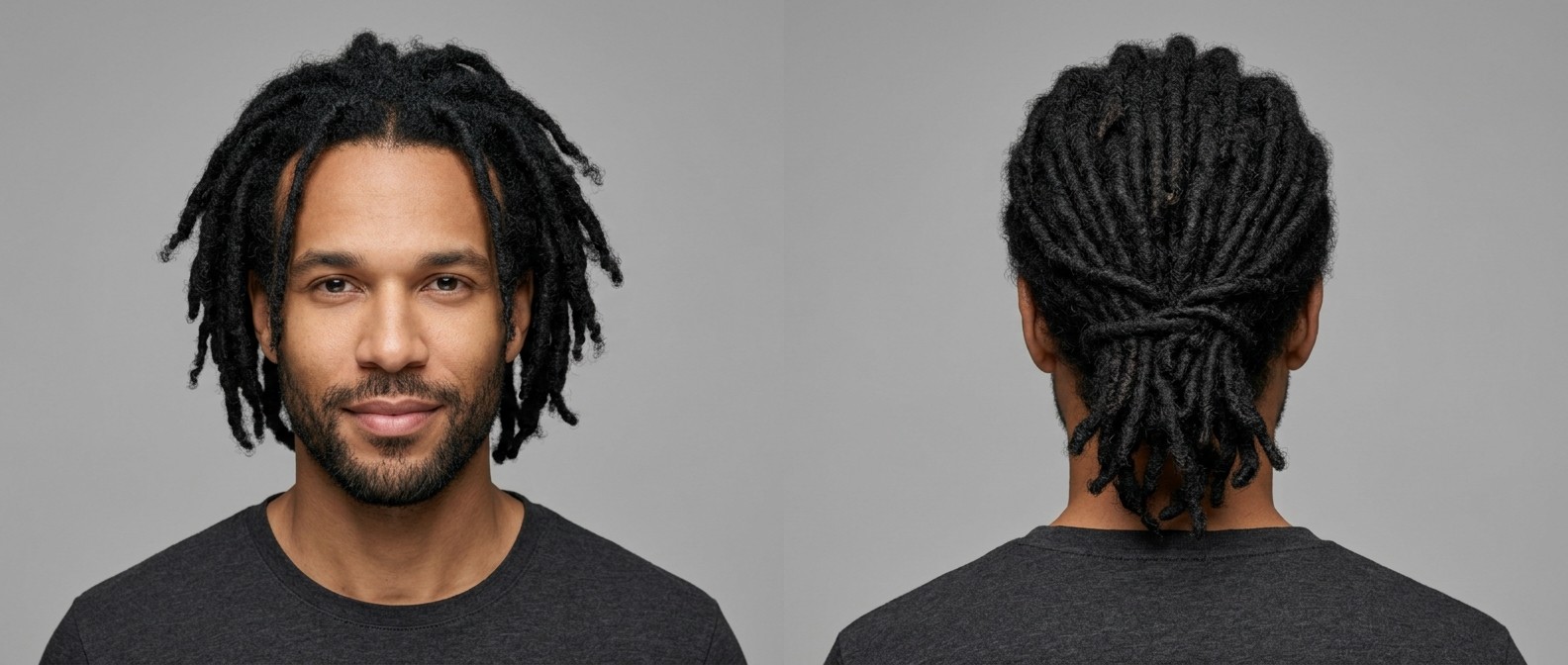
Front and back view of a man with medium skin and a short beard wearing medium-length black dreadlocks tied back in a natural knot.

Medium-Length Cylindrical Dreadlocks with Natural Tied-Back Knot

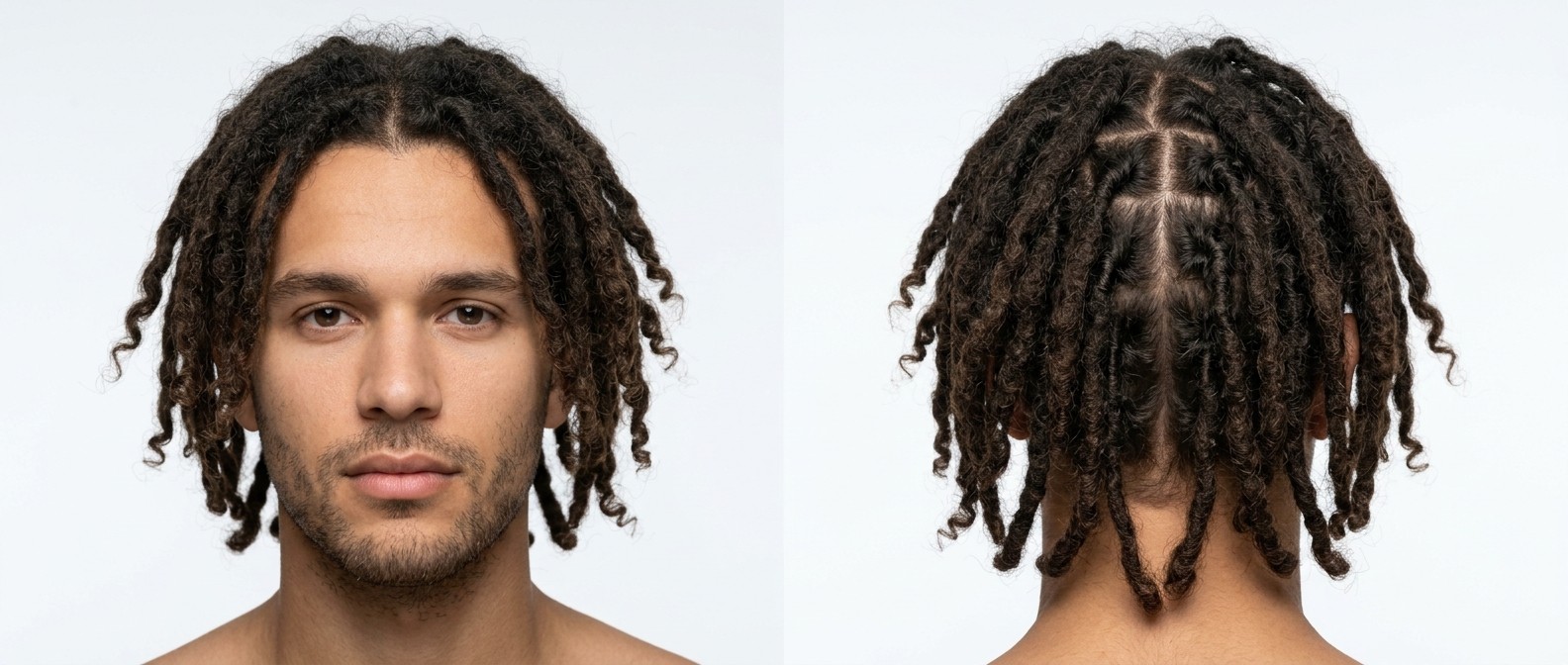
Young man with medium skin and dark brown hair featuring center-parted, medium-length dreadlocks with precise box sectioning and loose curly ends.

Center-Parted Medium Dreadlocks with Distinctive Box Sectioning

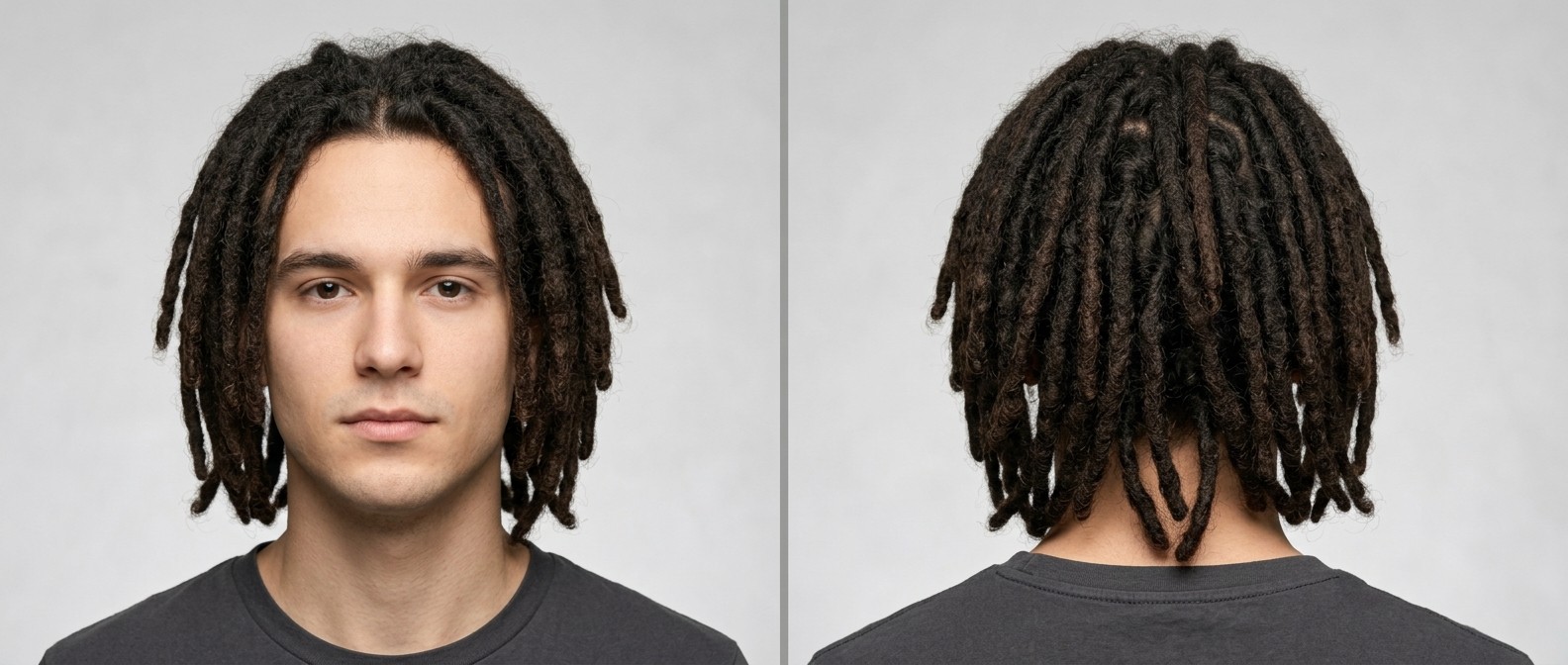
Front and back view of a young Caucasian man showcasing medium-length, dark brown natural dreadlocks falling gracefully past the shoulders.

Medium-Length Dark Brown Natural Dreadlocks with Symmetrical Face-Framing Flow

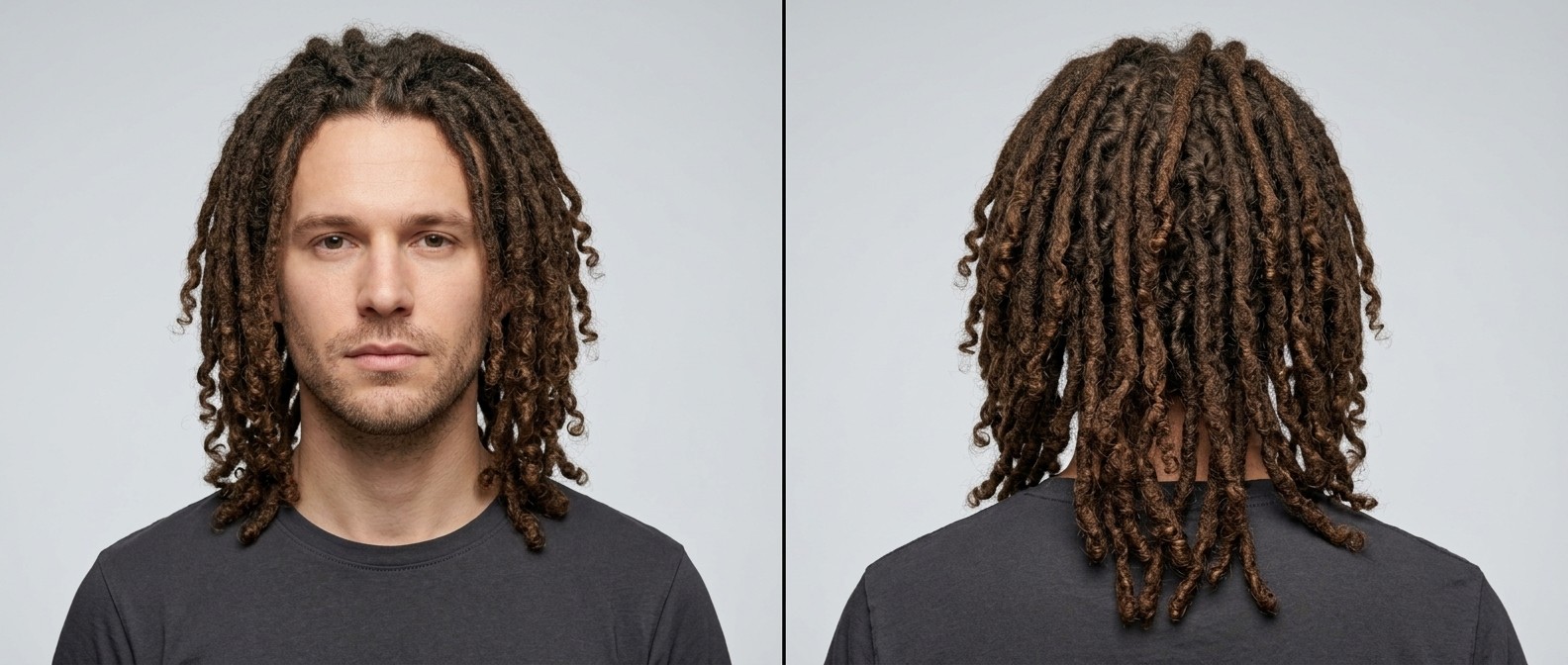
Front and back view of a Caucasian man with shoulder-length brown dreadlocks featuring loose, curly ends, paired with light facial stubble.

Shoulder-Length Medium Dreadlocks with Loose Curly Ends

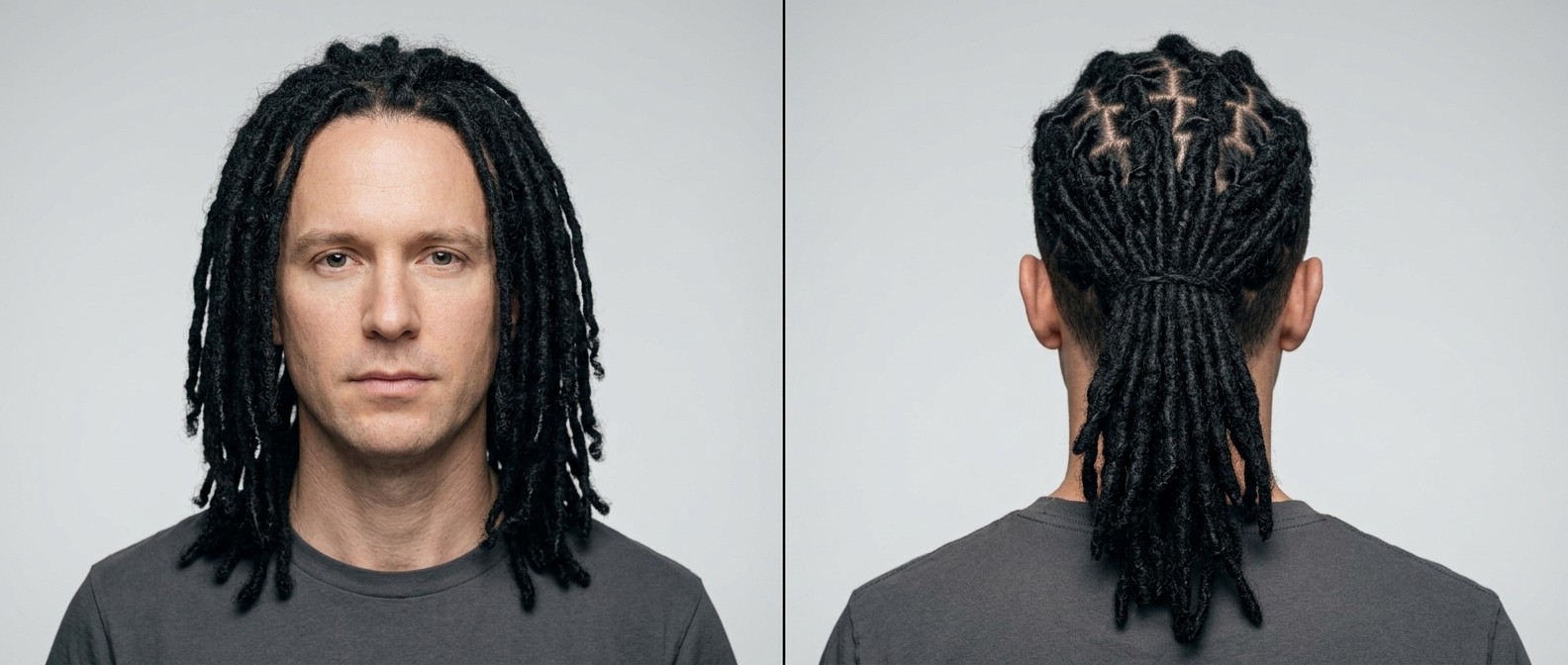
Front and back view of a Caucasian man with long, neat black dreadlocks, featuring a precise geometric scalp parting and a low half-ponytail tie-back.

Long Structured Dreadlocks with Geometric Root Parting

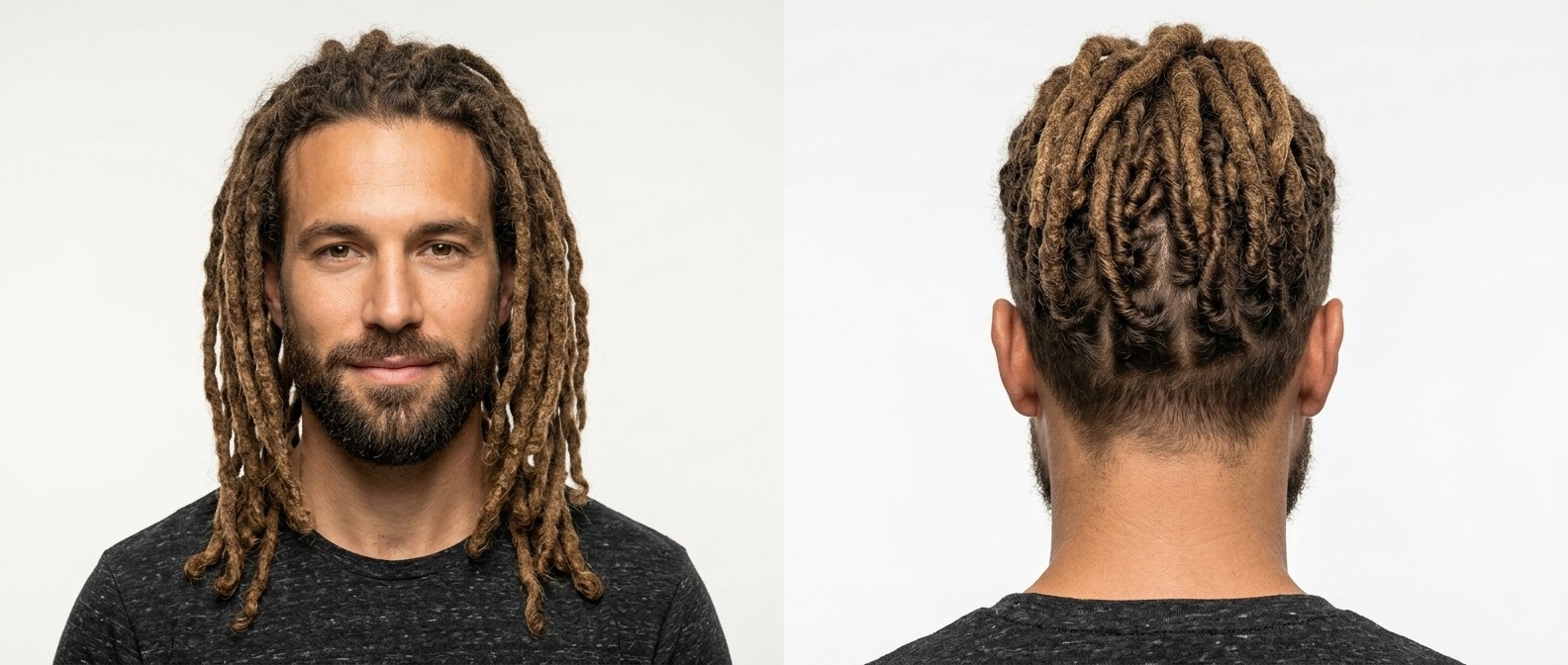
Front and back view of a Caucasian man with a short beard wearing long, light brown cultivated dreadlocks with a geometric root grid and nape undercut.

Long Cultivated Dreadlocks with Grid Parting and Nape Undercut

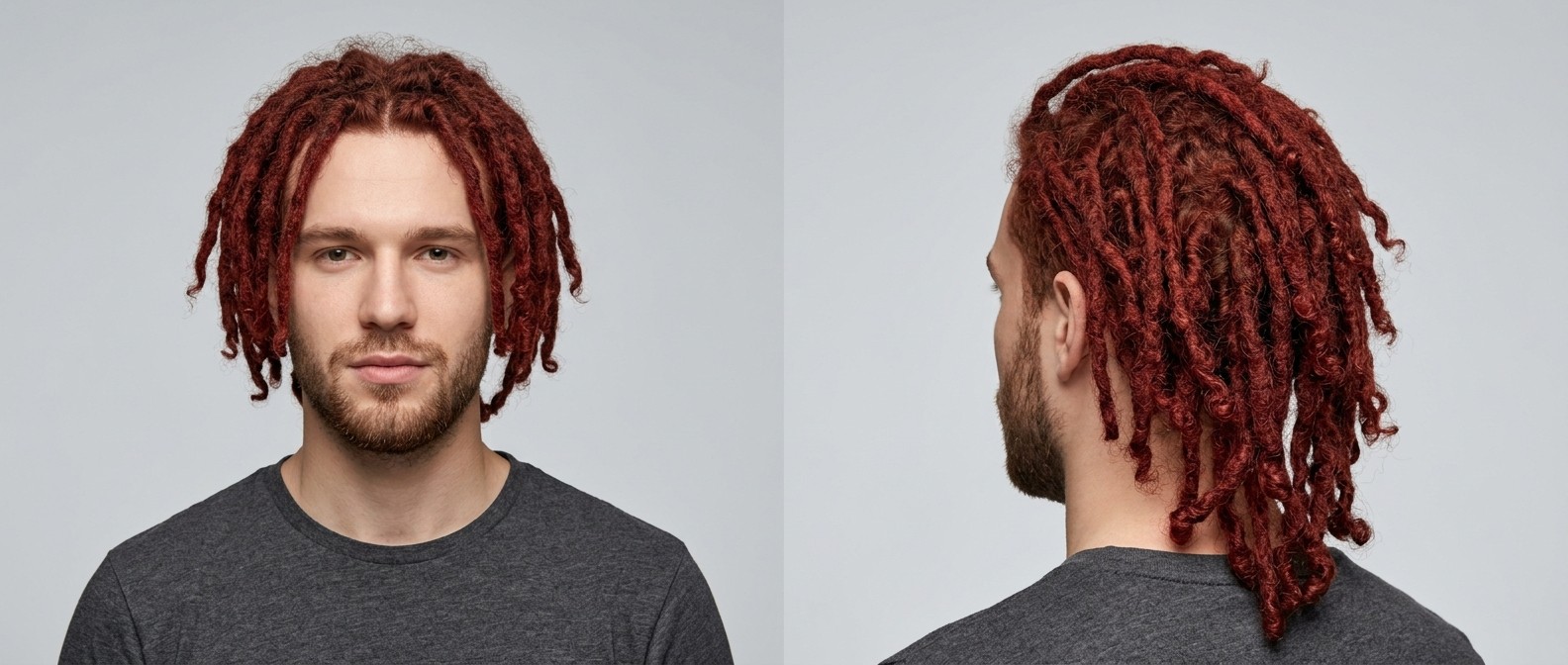
Young Caucasian man with a short beard modeling shoulder-length auburn red dreadlocks with curly ends and a natural center part on a solid grey background.

Shoulder-Length Auburn Dreadlocks with Curly Ends and Natural Flow

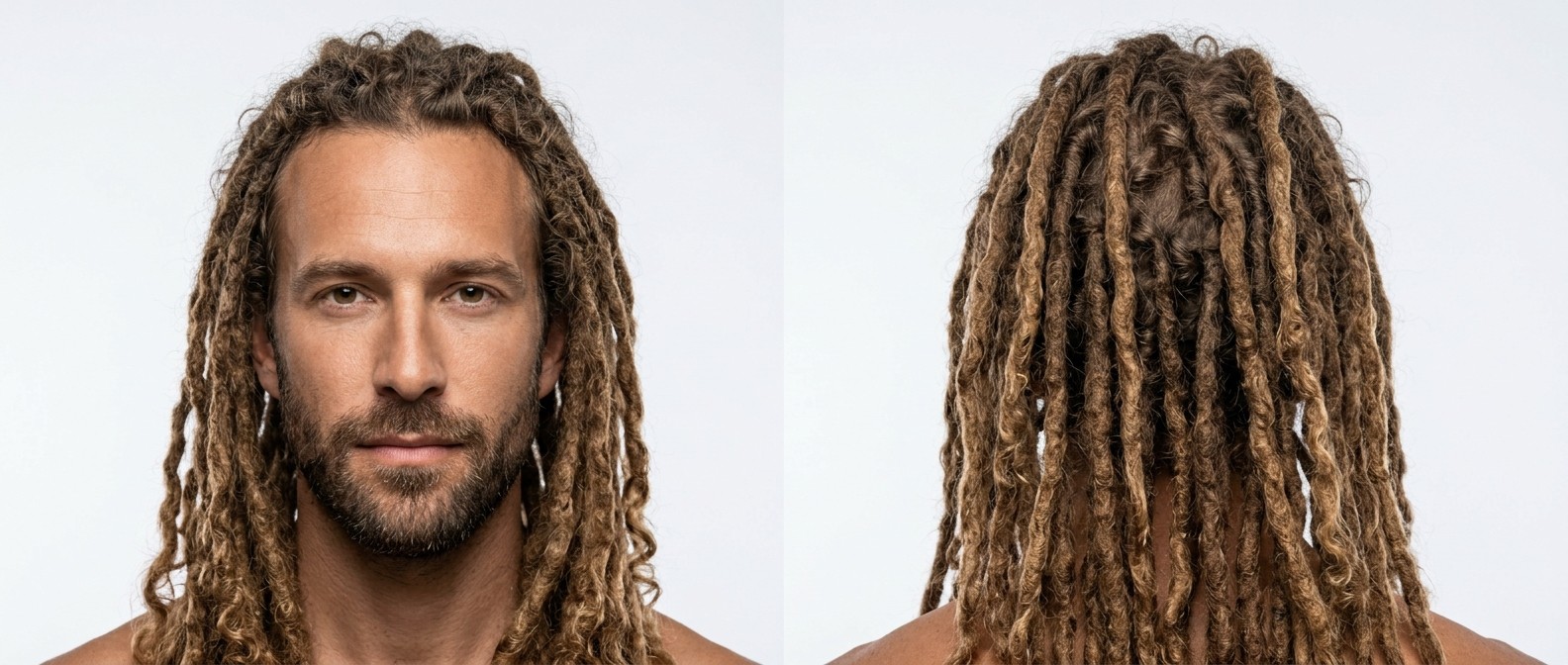
Front and back view of a Caucasian man in his 30s with long, light brown natural dreadlocks, curly unblunted ends, and a neatly trimmed short beard.

Long Natural Light Brown Dreadlocks with Curly Ends and Short Beard

What Are Dreadlocks?

Dreadlocks — commonly called dreads or locs — are sections of hair that have been intentionally matted, twisted, or allowed to naturally tangle into permanent, rope-like strands. Over time, the individual hairs within each section interlock and felt together, creating dense, cohesive cylinders that can't be combed out without cutting. This locking process is gradual, typically taking 6-12 months before locs fully mature, though the timeline varies based on hair type and method.

Dreadlocks represent one of the oldest known hairstyles in human history, with evidence across ancient Egyptian, Indian, Greek, and African cultures. In modern times, they carry deep significance in Rastafarian culture while also being embraced broadly as a fashion statement and expression of individuality. For men, dreads offer a unique combination of boldness and low daily maintenance once established — your hair essentially styles itself.

The appearance of dreads changes dramatically over their lifespan. New locs look rough and unformed, while mature locs become smooth, uniform, and polished. Many men find this evolution deeply personal, with their locs becoming a physical record of time and experience.

Who Should Get Dreadlocks?

Dreadlocks work on virtually all hair types, though the process and timeline differ significantly. Coily hair (type 4) locks fastest and most securely, often forming starter locs within weeks. Curly hair (type 3) takes longer but produces beautiful, uniform locs. Straight hair can loc as well, but it requires more patience and specific techniques like crocheting or backcombing.

  • Minimum hair length to start: 3-6 inches depending on the method used
  • Time commitment: this is a years-long journey — be prepared for 6-18 months of the "ugly stage"
  • Best suited for: patient men who want a long-term, evolving style
  • Not ideal if: you change styles frequently or need to remove them quickly for work

Before starting locs, honestly assess your lifestyle and commitments. Some workplaces still have restrictive grooming policies — know your environment. That said, locs are increasingly accepted in professional settings, and legal protections against hair discrimination are expanding worldwide.

How Dreadlocks Are Started

There are several methods for starting dreadlocks, each producing different results. Two-strand twists are the most popular starter method for textured hair — your loctician twists small sections that gradually mat together over months. Comb coils use a fine-tooth comb to create tiny, tight spirals that loc over time. For straighter hair types, backcombing and crochet hooking force the hair to tangle and interlock artificially.

The freeform method involves simply not combing your hair and allowing it to loc naturally — no manipulation, no products, just patience. This produces organic, irregularly shaped locs with a raw, natural aesthetic. In contrast, maintained or "manicured" locs are started with uniform sections and regularly retwisted to create neat, cylindrical shapes.

Your starting section size determines your final loc thickness. Pencil-width sections produce thin, flexible locs, while larger sections create thick, chunky ones. Most men start with medium sections — about the diameter of a marker — which offer a good balance of coverage and definition.

What to Tell Your Loctician

Find a loctician or natural hair specialist — not just any barber — for your loc journey. Tell them your hair type, desired loc size (thin, medium, or thick), and whether you want a uniform pattern or a more organic look. Discuss the starting method that's best for your texture.

Ask about their retwisting technique — palm rolling is gentler on the scalp than interlocking, but interlocking holds better for active lifestyles. Specify if you want any design elements like a part, a fade on the sides, or a specific pattern. Key question to ask: "How often should I come in for maintenance with my hair type?" A good loctician will give you a personalized schedule rather than a one-size-fits-all answer.

Dreadlock Maintenance by Stage

Loc care changes dramatically as your dreads mature. During the starter/baby stage (months 1-6), handle your locs gently — they're fragile and can unravel easily. Avoid over-washing and keep them covered while sleeping.

  • Baby locs (0-6 months): retwist every 3-4 weeks, wash gently every 2 weeks, avoid heavy products
  • Teenage locs (6-12 months): locs begin to bud and look messy — this is normal. Retwist every 4-6 weeks
  • Mature locs (12+ months): fully locked, can be washed freely, styled, colored — retwist every 6-8 weeks
  • Essential products: residue-free shampoo, lightweight loc oil, rose water spray for moisture
  • Always sleep with a satin bonnet or pillowcase to prevent lint and friction damage

Dreadlock Styles and Variations

Locs with an undercut or fade combine the texture of dreads on top with clean, faded sides — a modern look that's extremely popular and professional-friendly. High-top dreads keep locs only on the crown, creating a dramatic contrast. Freeform locs embrace irregularity and organic growth for a raw, natural aesthetic.

Once your locs mature, styling options explode: loc buns, ponytails, barrel rolls, braided locs, and wrapped styles all become possible. You can add color through dipping or dyeing — mature locs absorb color beautifully. Loc jewelry like beads, cuffs, and wraps add personality and cultural expression. Some men combine different loc sizes, mixing thin and thick for a unique textured look that's entirely their own.

English Español Français Deutsch Português Polski