Add one front-facing photo. We send it to the AI together with this exact cut — and you get a photorealistic preview of yourself wearing it.
1
Your photo
Front view · neutral face · even light
2
This haircut
Already included
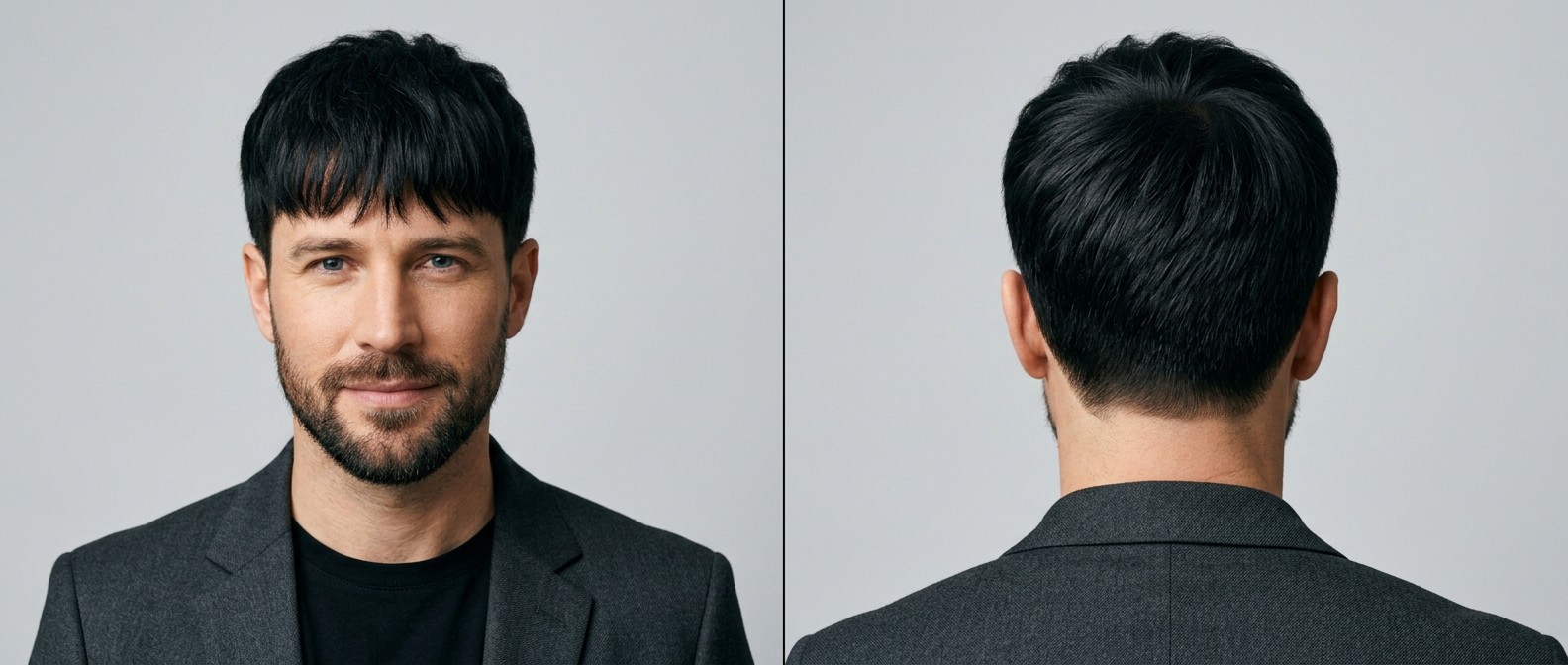
Front and back reference — taken from this page
3
Your preview
Your result appears here
![]()
![]()
Generated for you, not published anywhere
How do you rate this tool?
- Reading your photo
- Matching the cut
- Rendering your preview
How to take a photo that works
Do
- Face the camera straight on
- Even daylight, no harsh shadow
- Head and shoulders in frame
- Hair fully visible, nothing covering it
Avoid
- Hats, caps, hoods, sunglasses
- Steep angles or a tilted head
- Group photos or heavy filters
- Backlight that darkens the face
Textured Heavy Fringe with Natural Taper for Thick Straight Hair
 Top
Medium (5-10 cm)
Top
Medium (5-10 cm)
 Sides
Short (6-20 mm)
Sides
Short (6-20 mm)
 Hair Type
Straight (Type 1)
Hair Type
Straight (Type 1)
 Face Shape
Rectangular
Face Shape
Rectangular
 Maintenance
Low
Maintenance
Low
 Thickness
Thick / Dense
Thickness
Thick / Dense
About This Style
This modern heavy fringe is a masterclass in utilizing thick, dense hair to create a strong, masculine silhouette while strategically managing a receding hairline. By sweeping the medium-length top forward into a slightly textured, blunt-cut bang that rests just above the eyebrows, this style instantly balances a rectangular face shape. The dark, straight hair provides striking visual contrast and natural weight, allowing the fringe to sit perfectly with minimal styling effort. The sides and back are kept neat and short, seamlessly tapering down to the natural neckline without relying on a severe skin fade.
The back view reveals a masterfully executed natural taper that honors the hair's dense growth pattern. Instead of a high-contrast fade that requires constant upkeep, the barber has opted for a softer scissor-over-comb technique that leaves a full, dark canopy at the crown. This crown section is left long enough to lay completely flat, preventing the dreaded spiky look that straight hair often suffers from when cut too short. The transition from the thick top to the neatly tapered nape is seamless, creating a sophisticated, rounded silhouette that looks great from every angle. This conservative yet contemporary approach makes it an incredibly versatile choice for guys in their thirties and forties. It bridges the gap between casual everyday wear and polished professionalism. Paired with a well-groomed short beard, it frames the face exceptionally well, offering a low-maintenance routine that looks effortlessly put together from morning to night.
The back view reveals a masterfully executed natural taper that honors the hair's dense growth pattern. Instead of a high-contrast fade that requires constant upkeep, the barber has opted for a softer scissor-over-comb technique that leaves a full, dark canopy at the crown. This crown section is left long enough to lay completely flat, preventing the dreaded spiky look that straight hair often suffers from when cut too short. The transition from the thick top to the neatly tapered nape is seamless, creating a sophisticated, rounded silhouette that looks great from every angle. This conservative yet contemporary approach makes it an incredibly versatile choice for guys in their thirties and forties. It bridges the gap between casual everyday wear and polished professionalism. Paired with a well-groomed short beard, it frames the face exceptionally well, offering a low-maintenance routine that looks effortlessly put together from morning to night.
Key Features
- Heavy, forward-sweeping top section that expertly utilizes natural hair density to create substantial volume and complete forehead coverage.
- Blunt but carefully point-cut fringe resting just above the brow line to soften the strong angles of a rectangular face shape.
- Clean, conservative side lengths (approximately 10-15mm) that blend smoothly and seamlessly into the heavier top section without a harsh disconnect.
- Natural, softly tapered neckline at the back that grows out organically over several weeks, extending the life of the haircut.
- Distinctive, well-managed crown swirl that directs the thick, straight hair naturally forward toward the forehead to maintain the style's core structure.
- Seamless visual integration with facial hair, perfectly balancing the heavy, dark top canopy with a short, meticulously structured beard.
Getting the Cut
- Request a heavy, textured fringe with the top length left around 5 to 10 centimeters to ensure you have adequate forward coverage for styling.
- Ask the barber to point-cut the fringe straight across, resting just above the eyebrows, which breaks up harsh, solid lines while maintaining the necessary weight.
- Specify a scissor-over-comb technique or a #4 clipper guard on the sides and back to keep a soft, conservative length rather than a tight, aggressive skin fade.
- Instruct them to leave substantial weight at the parietal ridge (the upper sides) to prevent the straight hair from sticking out and to maintain a strong, square silhouette.
- Ask for a natural, softly tapered neckline at the nape rather than a blocked or artificially squared-off finish, ensuring a much softer and more forgiving grow-out phase.
- Request that the hair at the crown be left slightly longer so it lays completely flat and flows naturally into the forward-swept top section without spiking up.
- Explicitly mention that you want to conceal a receding hairline, so the directional styling must be cut to fall forward effortlessly without splitting at the temples.
Daily Routine
- Start your morning routine by lightly towel-drying your hair after a shower, leaving it slightly damp to help guide the thick, straight strands into position.
- Apply a dime-sized amount of lightweight styling cream or a high-quality sea salt spray, working it evenly through the top section from the crown moving forward.
- Use a standard blow dryer set on medium heat and medium speed, directing the airflow strictly forward from the back of your head toward your forehead.
- While blow-drying, use your fingers or a wide-tooth comb to gently pull the hair into place, ensuring the heavy fringe lays perfectly flat across your brow.
- Once the hair is completely dry to the touch, take a very small scoop of matte clay or styling paste, rubbing it vigorously between your hands until it becomes warm and invisible.
- Lightly pat the warmed product over the surface of the fringe and crown to tame any rogue flyaways and to add a subtle, piecy texture to the blunt cut.
- Pinch a few small sections of the fringe directly above your eyebrows to create deliberate separation and a natural, unstudied finish that doesn't look too rigid.
Products & Tools
- Matte styling clay or texturizing paste (low to medium hold) to provide definition and separation without adding unwanted shine or stiffness to the straight hair.
- Lightweight pre-styling cream or sea salt spray applied to damp hair to help control the dense volume and encourage the strands to lay flat during blow-drying.
- Standard blow dryer equipped with a concentrator nozzle attachment to direct the airflow precisely forward and downward during the styling process.
- Wide-tooth comb or a vented styling brush to effortlessly detangle thick strands and guide the hair into its natural downward growth pattern.
- High-quality clarifying shampoo used weekly to remove daily product buildup and keep the dense canopy of hair feeling fresh, clean, and lightweight.
Maintenance
- Schedule regular barber visits every 5 to 8 weeks to maintain the precise length of the heavy fringe so it doesn't overgrow and obstruct your vision.
- Wash your hair every 2 to 3 days using a high-quality balancing shampoo; over-washing thick, straight hair can strip natural oils and cause unwanted frizz.
- Strictly avoid heavy pomades, waxes, or high-shine gels, as these will weigh the fringe down and make the style look greasy or unnaturally separated.
- If you wake up with stubborn bedhead, simply mist the front section with water from a spray bottle and quickly blow-dry it downward to easily reset the shape.
- Keep your short beard neatly trimmed and edged every few days to maintain a sharp, deliberate contrast against the more casual, textured appearance of the fringe.
Best For
Men with rectangular or oblong face shapes, as the heavy, horizontal fringe visually shortens the length of the face and adds excellent proportional balance.
Thick, dense, straight hair types (Type 1) that naturally want to lay flat and possess the necessary weight to hold a solid, geometric shape throughout the day.
Guys experiencing a receding hairline or thinning at the temples, as the forward-swept top completely and naturally covers the corners of the forehead.
Busy professionals in their 30s and 40s who require a quick, reliable 5-minute morning routine that still looks exceptionally polished and intentionally styled.
Pro Tips
- Never allow the barber to cut the fringe while it is soaking wet if you have a strong cowlick; straight hair shrinks as it dries, and you risk the bangs sitting awkwardly high above the eyebrows.
- If your thick hair feels too heavy or unmanageable during the hot summer months, ask your barber to aggressively texturize the top canopy without reducing the overall length or coverage.
- Resist the urge to push the hair to the side or part it; this specific cut is masterfully designed to be worn straight forward to maximize hairline coverage and maintain its modern, blunt aesthetic.
Related Hairstyles
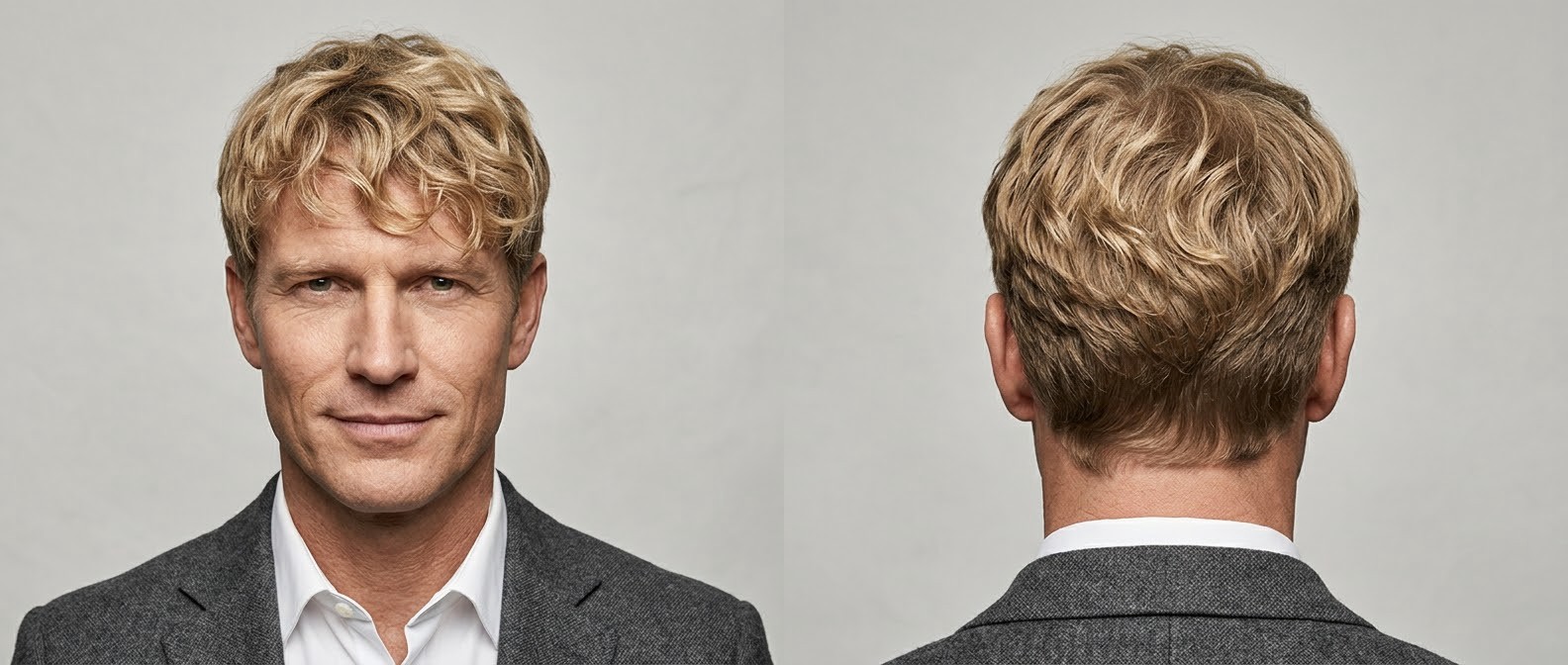
Fringe
Textured Wavy Fringe with Soft Scissor Taper for Mature Men
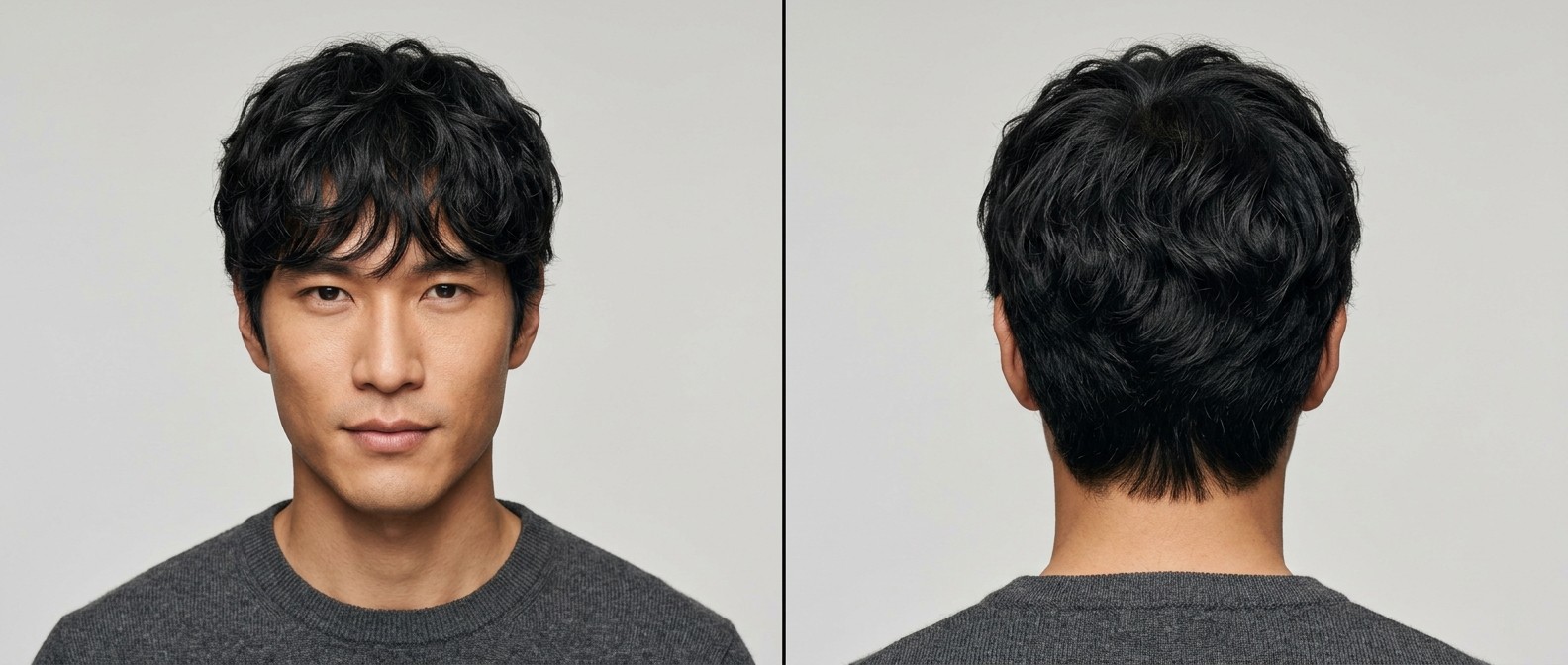
Fringe
Effortless Textured Wavy Fringe with Medium Layered Sides
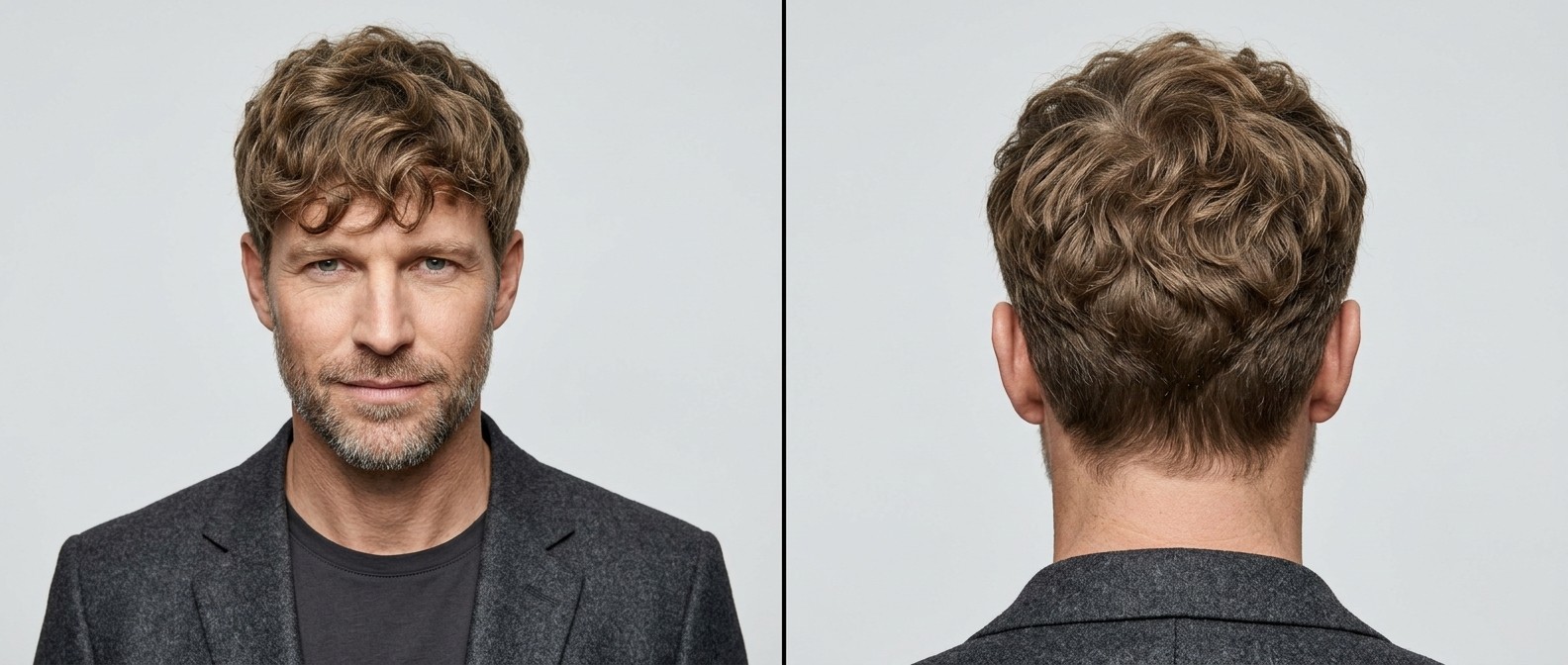
Fringe
Textured Wavy Fringe with Soft Tapered Sides for Mature Men
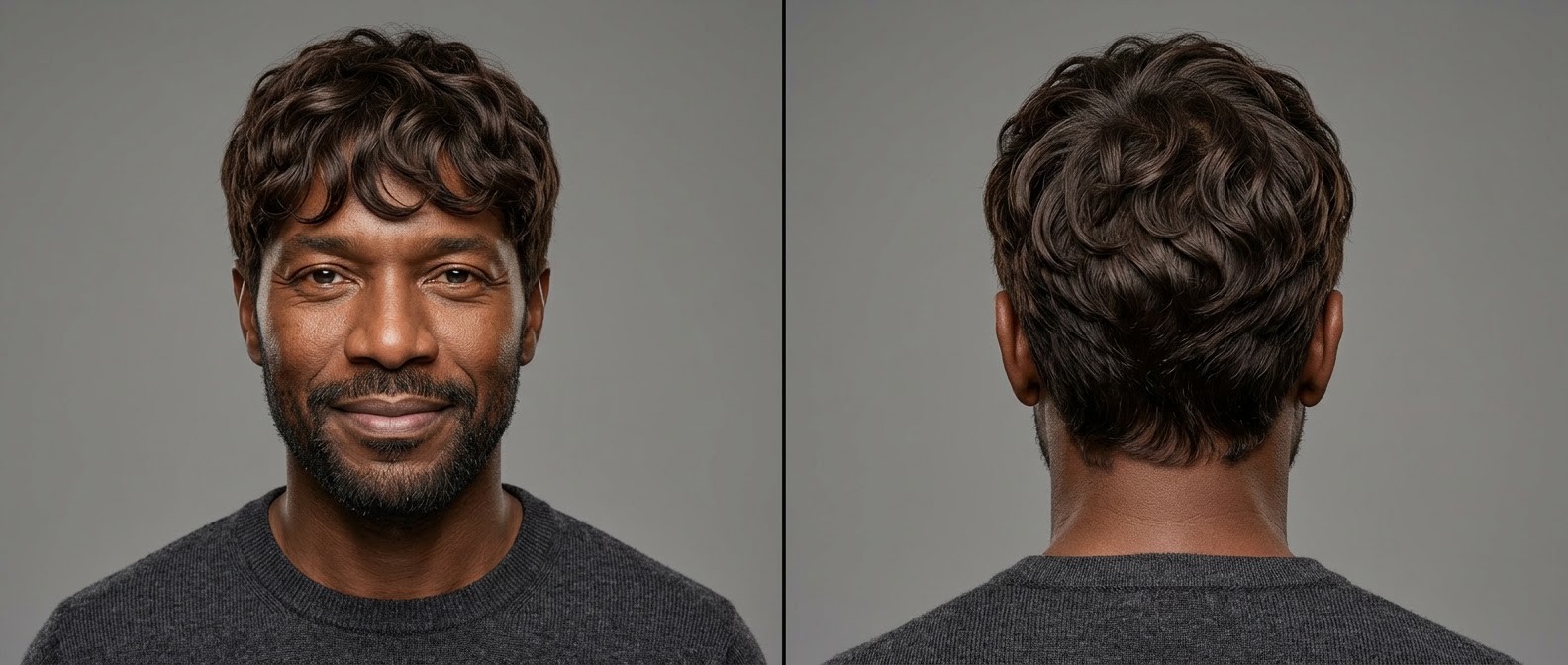
Fringe
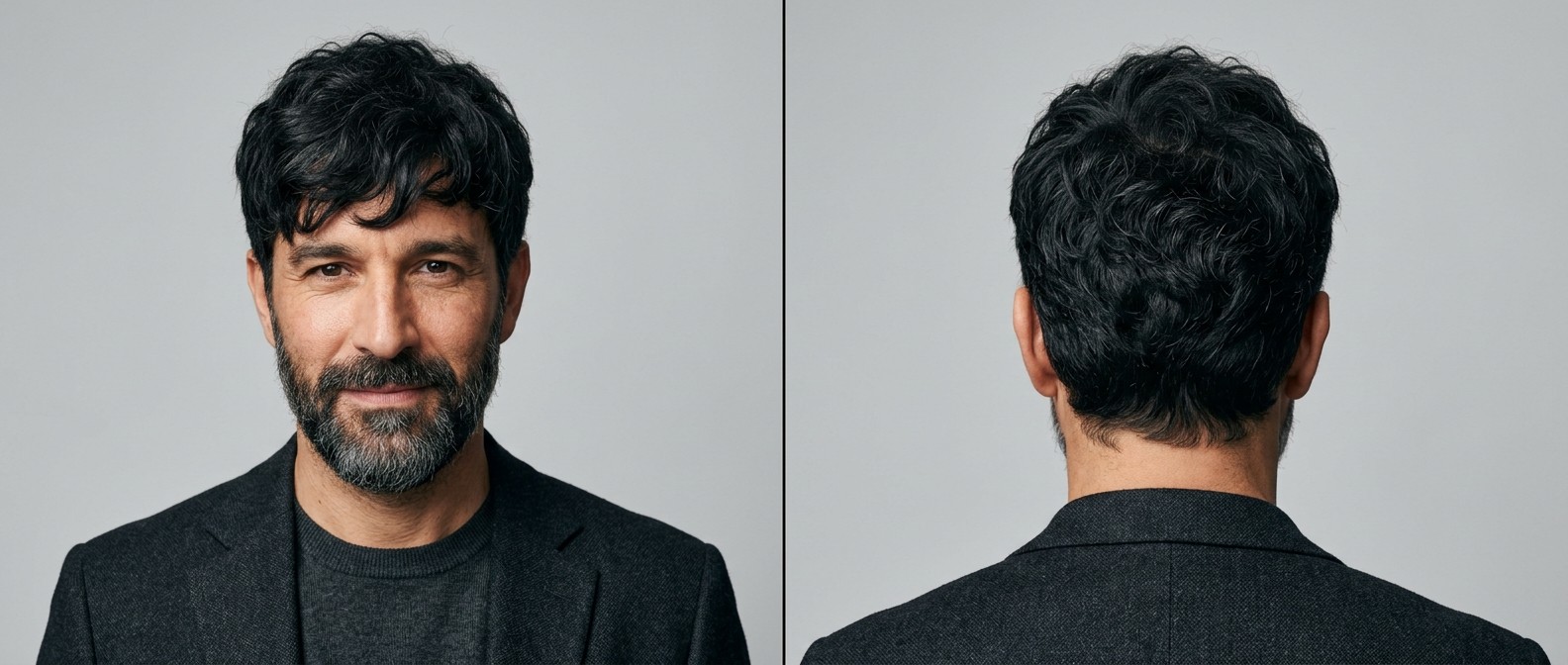
Wavy Textured Fringe with Soft Layered Taper for Mature Men
Fringe
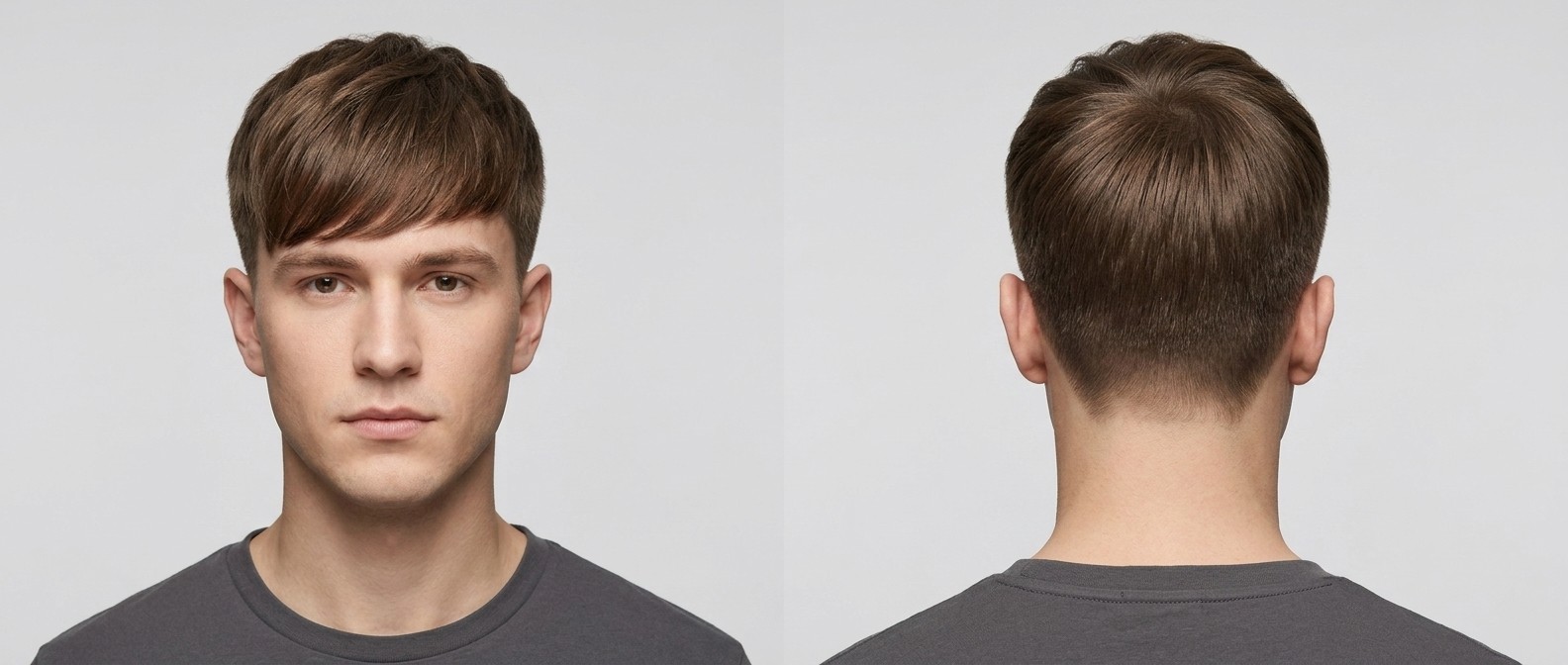
Textured Asymmetrical Fringe with Tapered Short Sides
Fringe