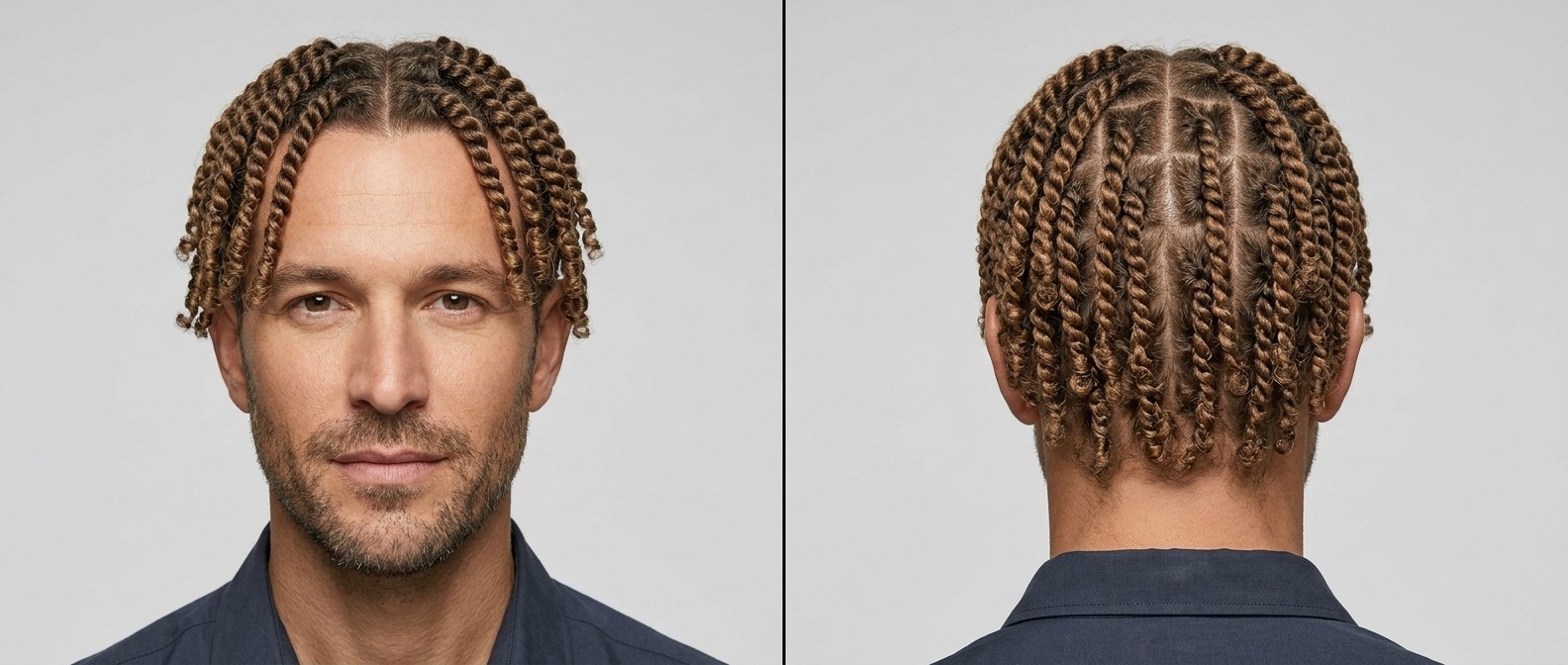
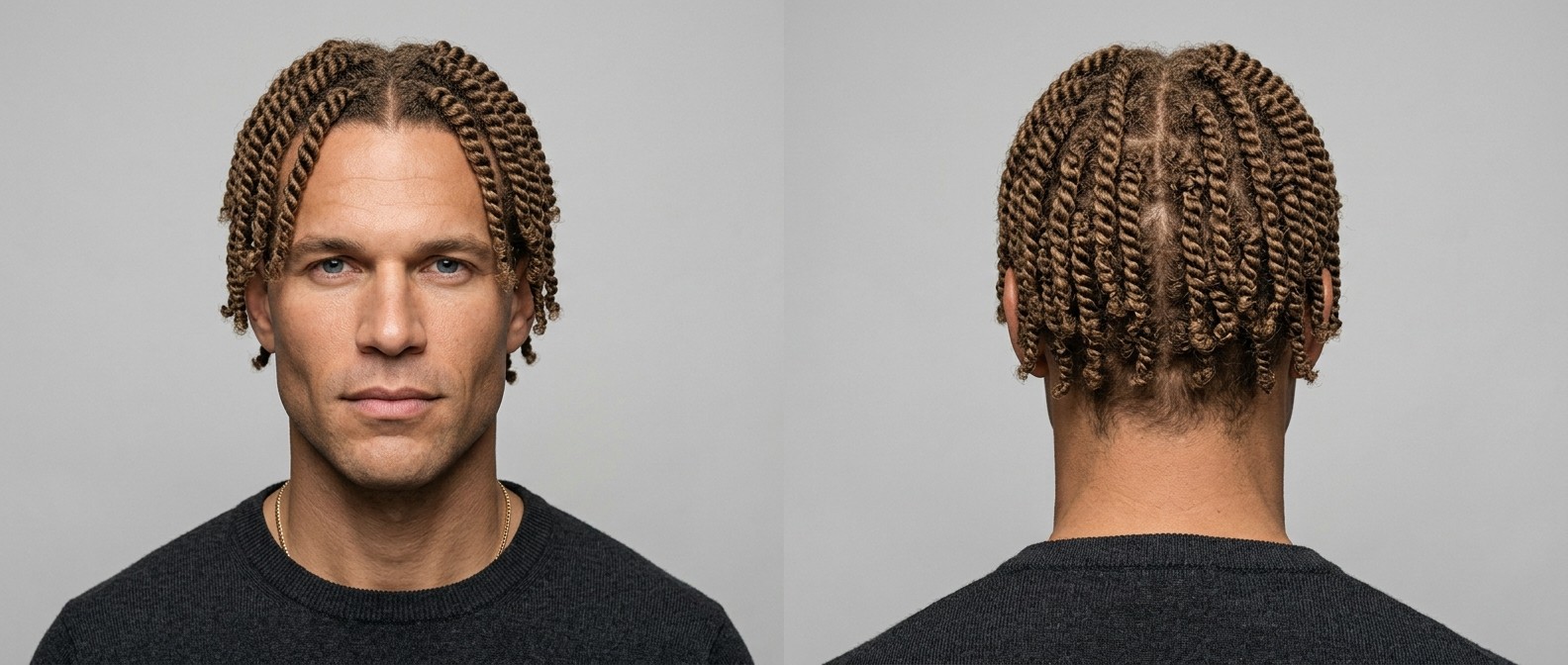
Light Brown Two-Strand Box Twists with Center Parting
 Top
Long (10-20 cm)
Top
Long (10-20 cm)
 Sides
Short (6-20 mm)
Sides
Short (6-20 mm)
 Hair Type
Curly (Type 3)
Hair Type
Curly (Type 3)
 Face Shape
Diamond
Face Shape
Diamond
 Maintenance
Medium
Maintenance
Medium
 Thickness
Medium / Normal
Thickness
Medium / Normal
About This Style
This striking variation of two-strand twists showcases meticulous sectioning and a bold, highly artistic aesthetic. Characterized by its highly visible, geometrically precise box partings across the entire scalp, the style transforms medium-thick, Type 3 curly hair into a structured, architectural masterpiece. The hair is divided down the middle with a strong, razor-straight center part, allowing the light brown twists to cascade naturally down the sides of the head. This downward flow beautifully reaches the cheekbones and jawline, perfectly framing the distinct, sharp angles of a diamond face shape while highlighting the subtle facial stubble.
Ideal for the creative professional or the modern gentleman, this look commands immediate attention while maintaining a surprisingly low-maintenance daily routine. While the initial installation requires significant time, patience, and a skilled hand, your day-to-day styling is incredibly minimal. The twists offer a fantastic protective style that locks in essential moisture and showcases the hair's natural curly texture in a deliberate, controlled manner. It effortlessly bridges the gap between structured, high-end grooming and expressive personal freedom, making it an exceptional choice for mature men seeking a distinguished yet unconventional appearance.
Ideal for the creative professional or the modern gentleman, this look commands immediate attention while maintaining a surprisingly low-maintenance daily routine. While the initial installation requires significant time, patience, and a skilled hand, your day-to-day styling is incredibly minimal. The twists offer a fantastic protective style that locks in essential moisture and showcases the hair's natural curly texture in a deliberate, controlled manner. It effortlessly bridges the gap between structured, high-end grooming and expressive personal freedom, making it an exceptional choice for mature men seeking a distinguished yet unconventional appearance.
Key Features
- Meticulous geometric box parting across the entire scalp, creating a highly visible, grid-like visual base that adds architectural interest.
- Distinct and razor-straight center part that dictates the symmetrical, downward flow of the twists, perfectly framing the face.
- Tightly coiled two-strand twists utilizing 10-20 cm of hair length, resulting in a beautifully textured, rope-like finish.
- Clean, sharp edges around the perimeter (6-20 mm) that provide a subtle, neat contrast to the longer, free-hanging twisted sections.
- Natural downward-falling silhouette that beautifully complements and softens the angular jawline characteristic of a diamond face shape.
- Naturally curled and sealed ends that prevent the style from unraveling while adding a polished, refined touch to the light brown hair.
Getting the Cut
- Request a thorough clarifying wash and a deep conditioning treatment to perfectly prepare your Type 3 curls for the extensive twisting process.
- Ask for a highly precise grid pattern of box sections across the entire head, ensuring the squares are perfectly symmetrical and evenly spaced.
- Specify a razor-sharp center part starting directly from the front hairline and extending all the way to the crown to guide the style's overall symmetry.
- Instruct the stylist to create firm, uniform two-strand twists using the full 10-20 cm top length, twisting with consistent tension from the root down to the ends.
- Ask them to apply a high-quality, lightweight twisting cream or butter during the process to ensure a smooth, frizz-free finish without leaving heavy white buildup.
- Request that the very perimeter of the hairline and nape be meticulously cleaned up with trimmers, keeping the edges neat (around 6-20 mm) to maintain a sharp, groomed contrast.
- Have the barber secure the ends of each individual twist by carefully coiling your natural curl pattern around their finger with a touch of medium-hold styling gel.
Daily Routine
- Start your quick 5-10 minute morning routine by lightly misting the twists with a hydrating liquid leave-in conditioner or a simple water spray bottle to awaken the scalp and hair.
- Gently massage a few drops of a premium, lightweight hair oil (such as argan, jojoba, or sweet almond) directly into your scalp, carefully tracing the exposed box partings to prevent dryness.
- Use your fingertips to carefully smooth down the length of each hanging twist, taming any minor overnight frizz or flyaways without pulling apart the two-strand structure.
- If any of the twist ends have begun to loosen or unravel overnight, apply a tiny dab of lightweight styling gel to your index finger and thumb, then re-twirl the end to seal it.
- Strictly avoid using any combs, brushes, or heavy styling tools on the twists themselves, as this will immediately cause severe frizz and ruin the integrity of the individual sections.
- Finish your routine by lightly patting the twists into their natural downward-falling position, ensuring the center part remains clearly defined and your face is framed symmetrically.
Products & Tools
- Lightweight twisting cream or moisturizing hair butter (medium hold, natural finish) for the initial installation and long-term moisture retention.
- Premium hydrating scalp oil (like argan, jojoba, or sweet almond oil) to keep the exposed grid partings deeply nourished and completely flake-free.
- Fine-tooth metal rat tail comb specifically designed for creating razor-sharp geometric box parts and a perfectly straight center line.
- Continuous fine mist spray bottle filled with filtered water or a liquid leave-in conditioner for your daily morning refreshment routine.
- High-quality silk or satin durag, bonnet, or pillowcase to rigorously protect the twists from friction and frizz while you sleep.
Maintenance
- Schedule a professional stylist visit every 3-4 weeks to have the twists completely taken down, the hair deeply cleansed, and the style meticulously re-installed.
- Limit full hair washing to once every week or two while the twists are installed to prevent them from prematurely unraveling and developing excessive frizz.
- Always sleep wearing a secure silk or satin durag or bonnet to minimize nighttime friction, which is the absolute primary cause of premature style degradation.
- Strictly avoid heavy, wax-based pomades or thick gels that cause severe product buildup at the roots, making it incredibly difficult to wash out of a twisted style.
- Cleanse your exposed scalp partings lightly with a targeted astringent or witch hazel on a cotton swab if your scalp feels excessively oily or itchy between full washes.
Best For
Face Shapes: Exceptionally ideal for Diamond and Oval face shapes, as the natural downward-falling twists beautifully frame the face and soften highly angular cheekbones and jawlines.
Hair Types: Perfectly suited for Type 3 curly hair with medium to normal thickness, as this specific texture can firmly hold the two-strand twist structure without easily unraveling.
Age Ranges: Highly excellent for mature men aged 45 and older who are actively seeking a distinguished, artistic, and unique protective style that embraces their natural hair texture.
Lifestyle: Best suited for creative, artistic, or flexible professional environments where bold, expressive personal grooming is not only accepted but openly celebrated and encouraged.
Pro Tips
- Ensure your hair is completely detangled, deeply conditioned, and slightly damp before starting the twisting process to guarantee the smoothest, most uniform, and frizz-free results.
- Never twist the hair too tightly at the scalp root; excessive tension can easily lead to traction alopecia, hairline recession, and severe scalp discomfort over time.
- During colder, drier winter seasons, significantly increase your use of lightweight scalp oils to prevent the exposed geometric box partings from becoming dry, itchy, and visibly flaky.
- Remember that this highly structural style requires a distinct, natural curl pattern (Type 3 or higher) to effectively hold the two-strand twist together naturally without needing rubber bands.
Related Hairstyles
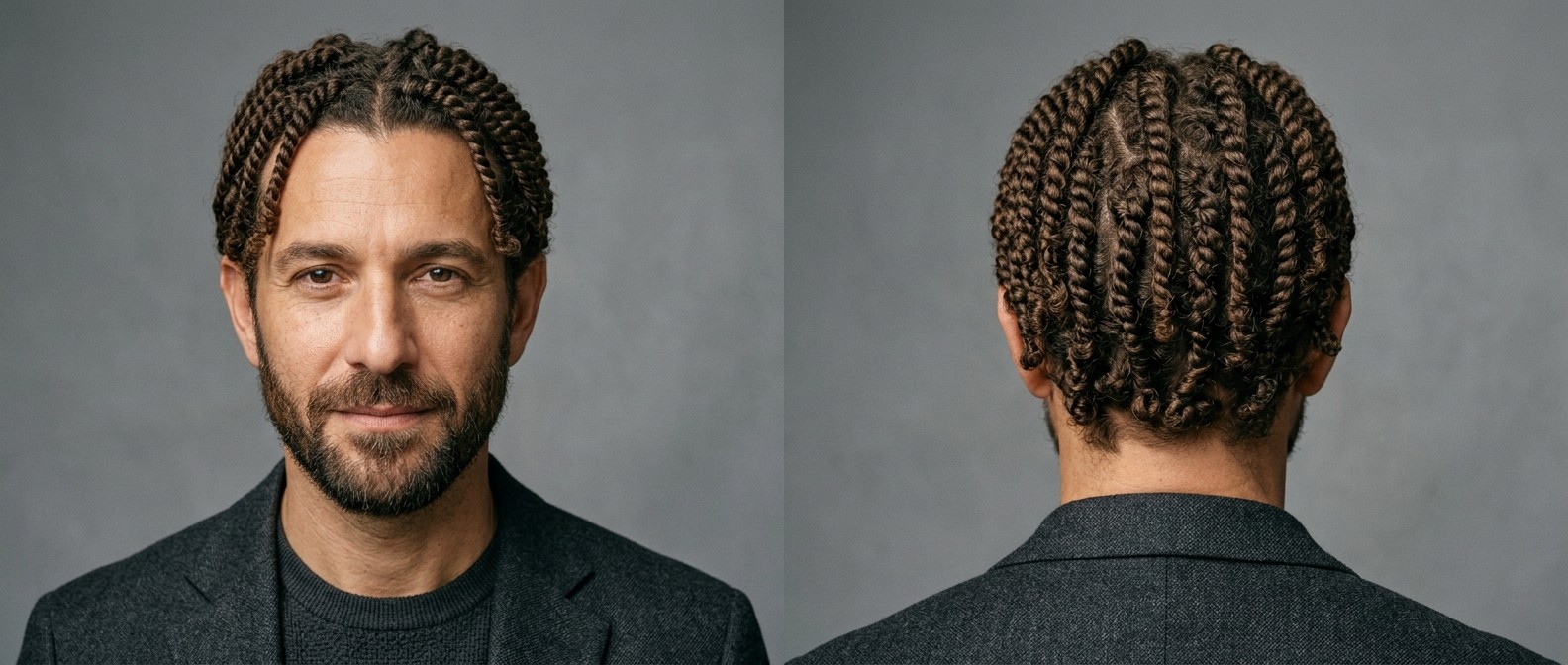
Twists
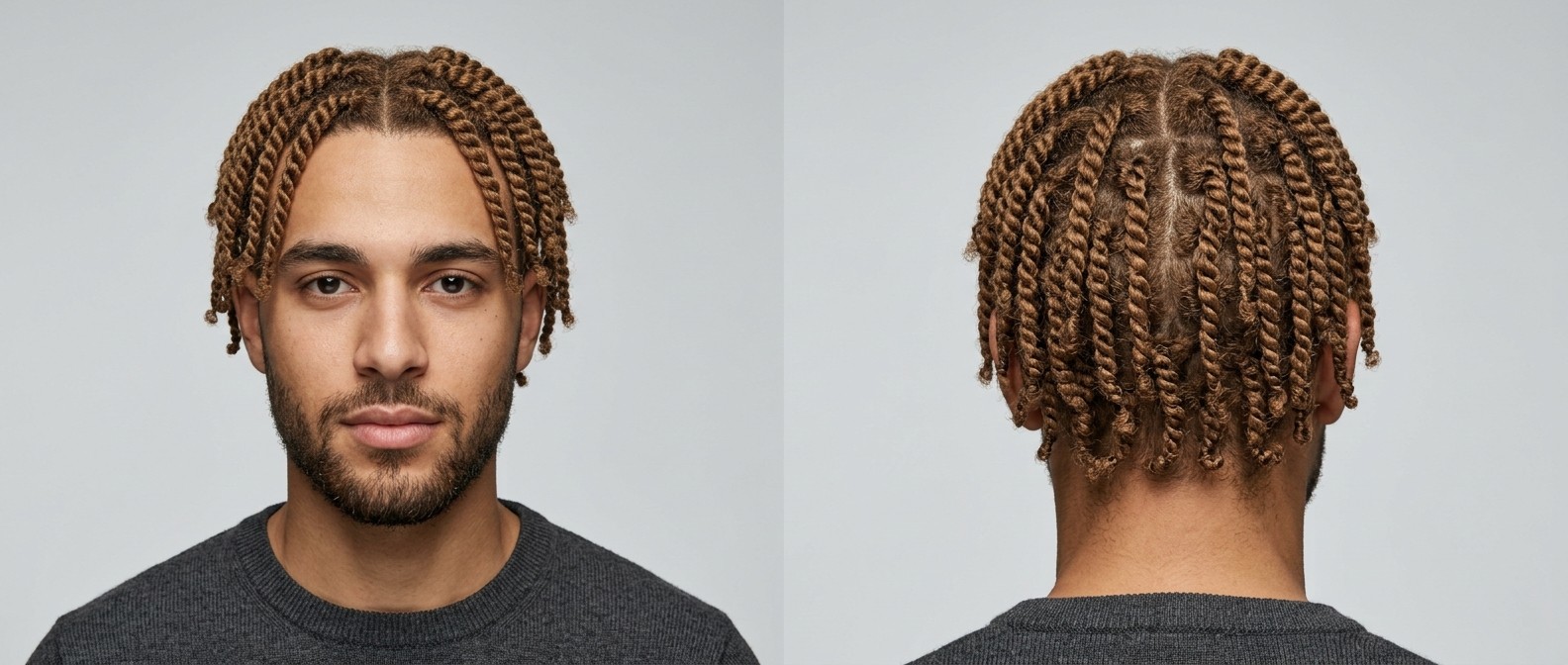
Mature Two-Strand Rope Twists with Clean Center Part
Twists
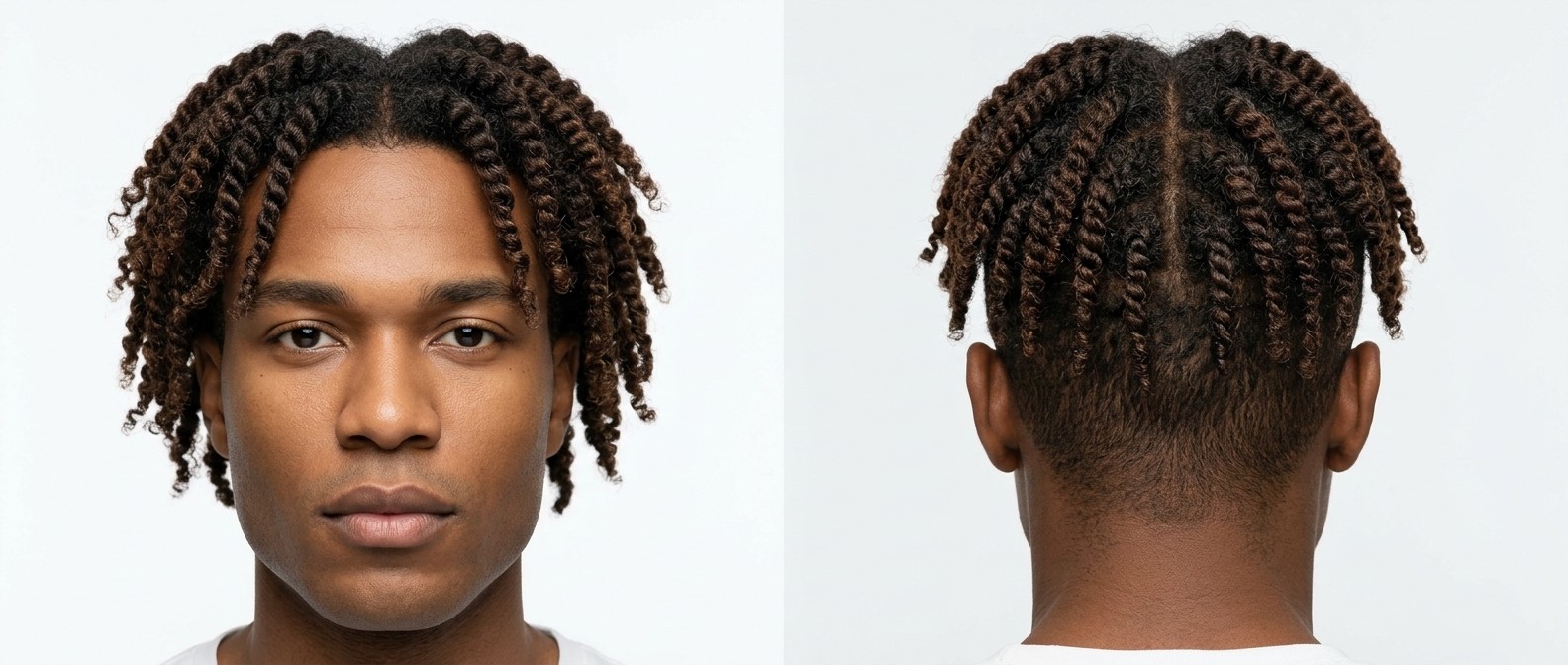
Symmetrical Middle-Parted Two-Strand Twists for Light Brown Hair
Twists
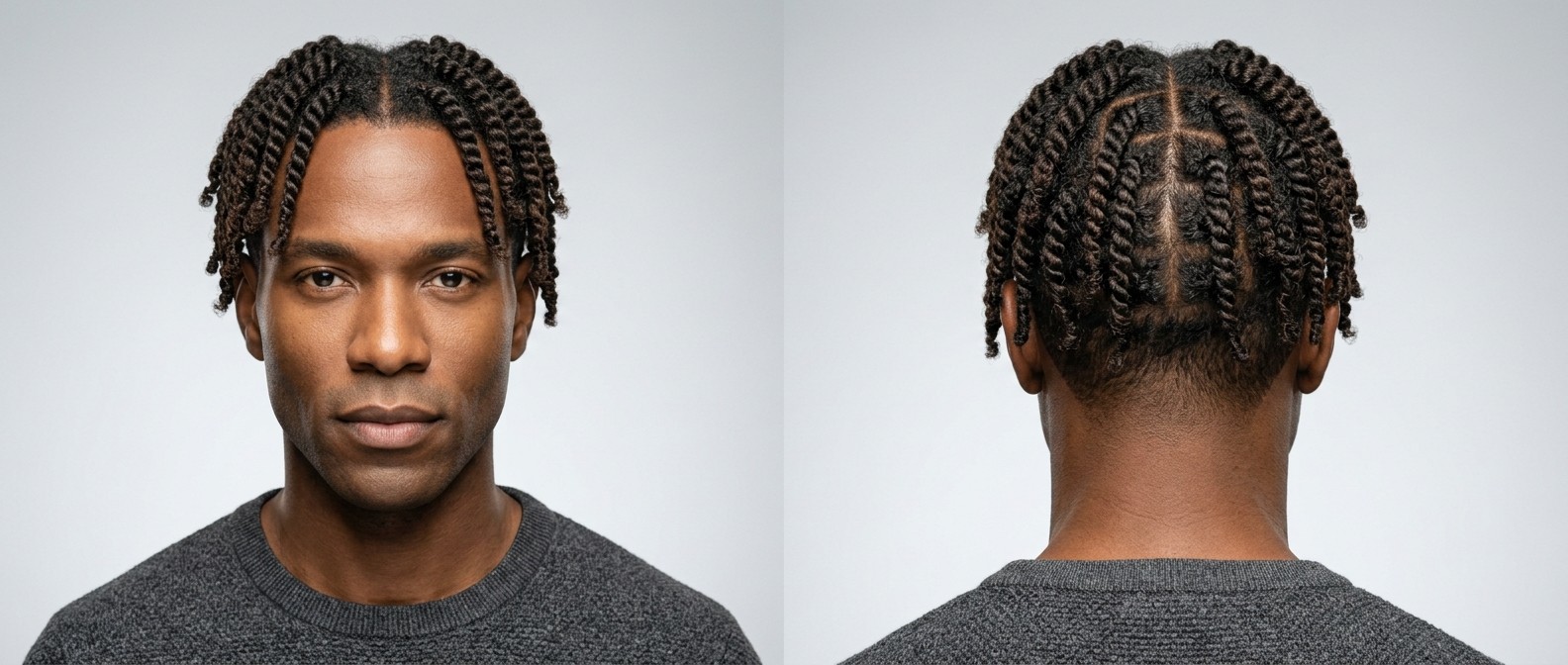
Distinctive Middle-Parted Two-Strand Twists with Tapered Nape
Twists
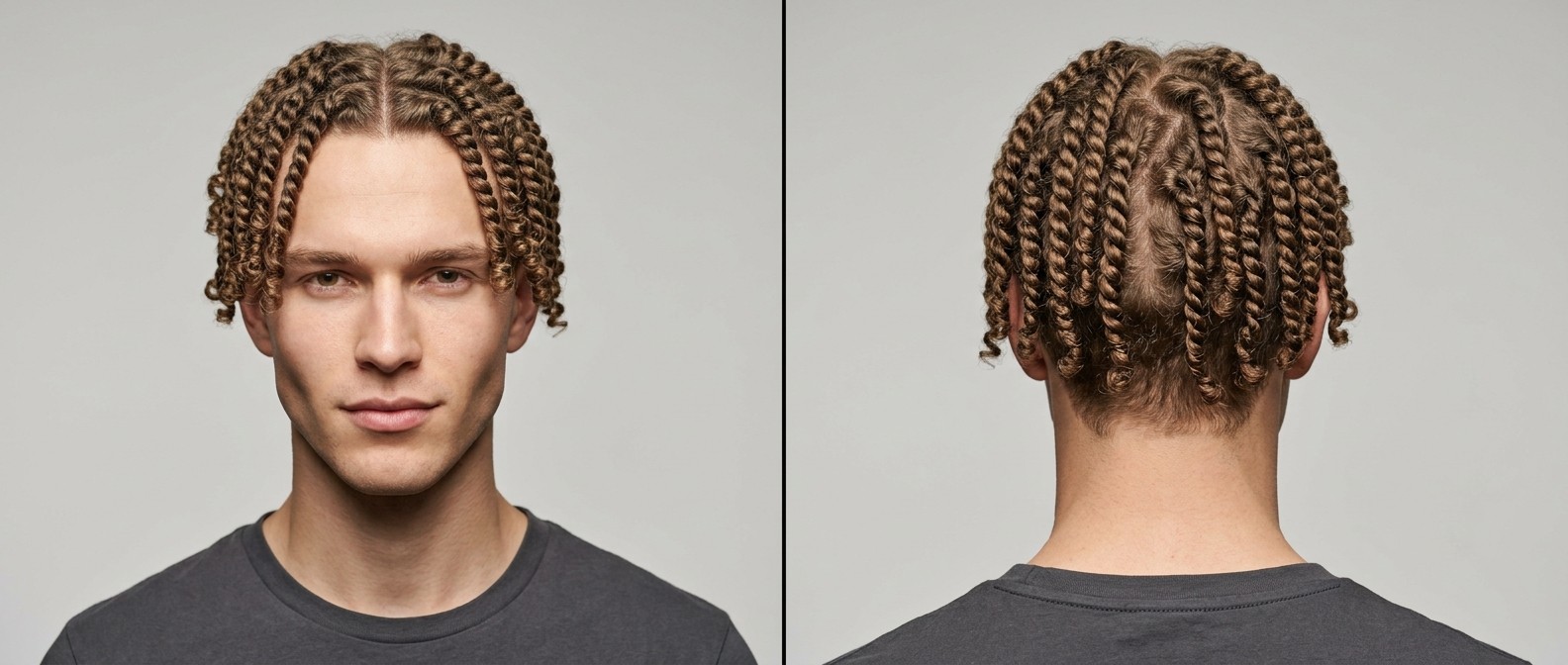
Neat Two-Strand Twists with Center Part and Low Nape Taper
Twists
Center-Parted Two-Strand Twists for Medium Curly Hair
Twists