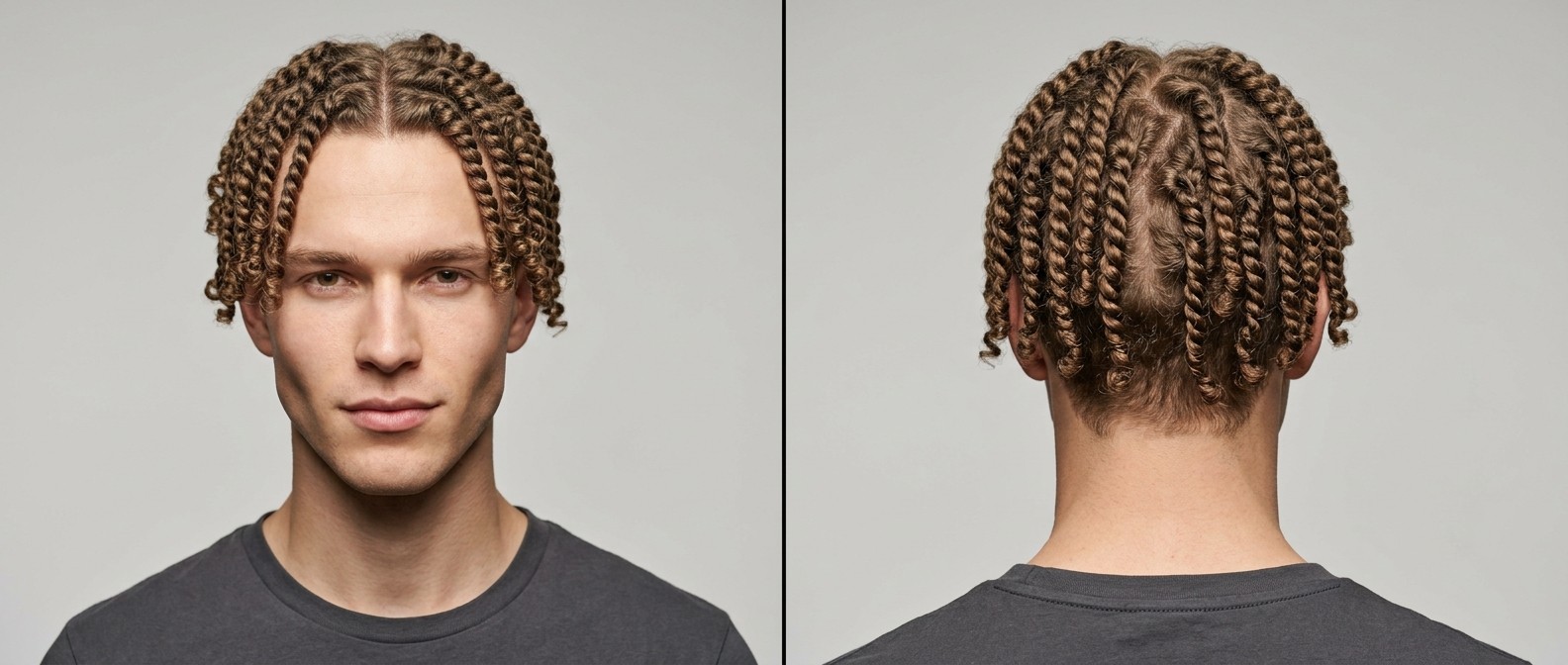
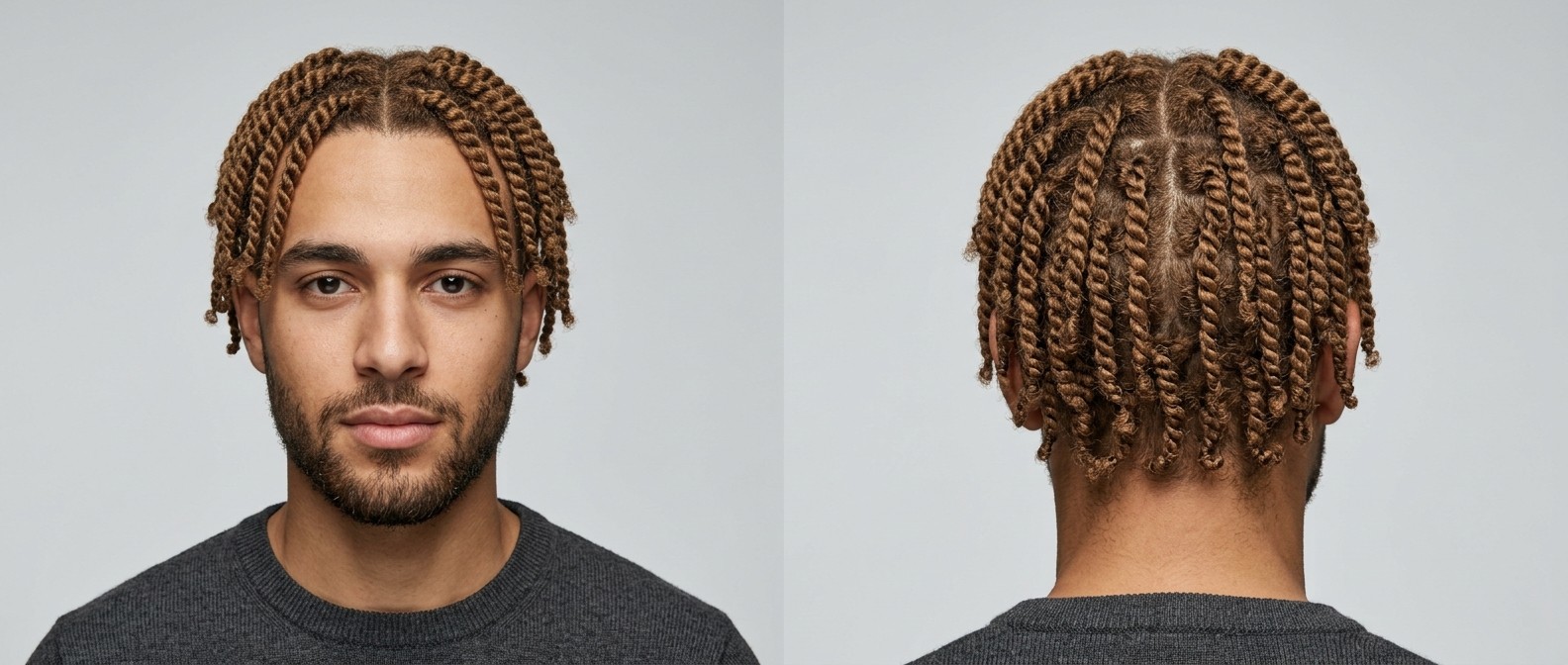
Center-Parted Two-Strand Twists for Medium Curly Hair
 Top
Medium (5-10 cm)
Top
Medium (5-10 cm)
 Sides
Medium (2-5 cm)
Sides
Medium (2-5 cm)
 Hair Type
Curly (Type 3)
Hair Type
Curly (Type 3)
 Face Shape
Diamond
Face Shape
Diamond
 Maintenance
Medium
Maintenance
Medium
 Thickness
Medium / Normal
Thickness
Medium / Normal
About This Style
The center-parted two-strand twist is a bold, highly artistic hairstyle that brings structured definition and architectural geometry to naturally curly, Type 3 hair. Looking closely at the visual presentation in the provided imagery, this variation features a razor-sharp, perfectly symmetrical middle part that divides the head, allowing the medium-length twists to cascade evenly down the sides and back. The twists themselves are meticulously crafted, showcasing a tight, rope-like coiled structure that deliberately unravels just slightly at the very ends to reveal the natural, bouncy curl pattern. The exposed scalp creates a striking geometric grid pattern, emphasizing the precision of the sectioning and adding a highly textured contrast between the smooth skin and the dense hair. From the back profile, the twists fall in a staggered, layered formation, ensuring the head retains a natural, rounded silhouette without looking overly flat or uniformly blunt. This look is exceptionally well-suited for individuals in creative industries, artists, or those with an avant-garde personal style looking to make a statement. Because it frames the face symmetrically like curtains, it beautifully complements diamond face shapes by adding necessary width to the forehead and jawline while softening sharp, prominent cheekbones. It offers a unique and highly effective way for men with light brown, curly hair to achieve a protective yet incredibly stylish aesthetic that requires very minimal daily manipulation once the foundation is properly set by a professional.
Key Features
- Prominent, razor-sharp center part dividing the hair perfectly symmetrically from the low front hairline all the way to the back crown.
- Evenly distributed two-strand twists measuring roughly 5 to 10 centimeters in length, providing uniform coverage across the top, sides, and back.
- Striking exposed scalp grid created by precise, boxed or brick-layered sectioning at the root of each individual twist.
- Natural curly texture (Type 3) left deliberately loose at the very tips, creating a softer, unraveled, coiled finish that adds movement.
- Medium-length back and sides that seamlessly integrate into the overall twisted canopy without relying on a traditional clipper fade or taper.
- Uniform, face-framing silhouette that hangs downward, adding dynamic movement, structural weight, and a distinct curtain effect.
- High-contrast visual appeal generated by the distinct light brown hair color standing out against the lighter scalp visible through the precise parts.
Getting the Cut
- Request a thorough consultation and a scissor-only trim to establish a uniform medium length (around 5 to 10 cm) evenly across the top, sides, and back.
- Ask for a highly precise, dead-center parting extending from your low front hairline all the way back to the crown, ensuring perfect facial symmetry.
- Instruct the stylist to create uniform, square-shaped sections across the entire scalp using a metal pintail comb to form a clean, highly visible grid pattern.
- Specify the two-strand twist technique, ensuring the tension is firm enough at the roots to maintain the exposed parting lines but not so tight that it causes scalp discomfort.
- Ask the loctician or stylist to intentionally leave the last half-inch of the hair untwisted to allow your natural Type 3 curls to coil freely at the ends.
- Request a clean but entirely natural hairline cleanup using trimmers, strictly avoiding any harsh push-backs on your naturally low front hairline.
- Ensure the back nape area is gently detailed with scissors or trimmers to blend cleanly with the lowest row of twists without creating a high bald fade.
- Ask for a lightweight twisting butter to be used during the process to ensure the light brown hair retains a natural shine without heavy, greasy buildup.
Daily Routine
- Begin your morning routine by lightly misting the twists with a hydrating aloe vera leave-in conditioner or a continuous water spray bottle to awaken and refresh the texture.
- Apply a dime-sized amount of lightweight styling cream or twisting butter to your fingertips, rubbing them together to warm the product before application.
- Gently massage the product down the shaft of each twist, smoothing from the root to the tip, following the downward direction of the hair flow to minimize frizz.
- Use a small, precise amount of edge control or medium-hold pomade along the center part, tapping it in to keep stray hairs flattened and the dividing line incredibly crisp.
- Take a moment to individually finger-coil the loose, curly ends of the twists to redefine the natural Type 3 ringlets at the bottom of the style.
- Allow the hair to air dry completely; strictly avoid using a blow dryer, as the forced hot air will create unwanted frizz, expand the hair shaft, and disrupt the neat twist pattern.
- Finish the routine with a light spray of a natural hair oil blend, such as argan or jojoba, to seal in the moisture and add a healthy, non-greasy shine to your light brown hair.
Products & Tools
- Lightweight twisting butter or curl-enhancing styling cream with a medium hold and natural, non-greasy finish.
- Hydrating botanical leave-in conditioner spray to maintain essential moisture without creating heavy product buildup.
- High-quality rat-tail comb featuring a fine metal pintail, essential for creating razor-sharp parts and precise scalp grid sections.
- Natural oil blend, such as argan, jojoba, or sweet almond oil, to effectively seal in moisture and provide a healthy, vibrant sheen.
- Edge control paste or light pomade specifically designed to tame flyaways along the prominent center part and the front hairline.
- Premium silk or satin durag, or a lined bonnet, for crucial overnight protection to prevent friction and keep the twists from unraveling.
Maintenance
- Schedule a professional barber or loctician visit every 3 to 4 weeks to have the twists meticulously taken down, detangled, washed, and re-twisted.
- Limit full, aggressive hair washing to once a week or every two weeks, utilizing a targeted applicator bottle to cleanse the scalp directly.
- Always sleep with your hair securely wrapped in a silk or satin durag to drastically minimize friction, prevent morning frizz, and protect the grid.
- Strictly avoid using heavy, wax-based products or thick gels that can cause difficult-to-remove, white buildup within the crevices of the twists.
- Gently separate any individual twists that begin to mat together at the roots using slightly oiled fingertips to maintain the distinct, boxed sections.
- Incorporate a weekly scalp massage using a lightweight essential oil blend to promote blood circulation and prevent dryness in the exposed grid areas.
Best For
Diamond and oval face shapes, as the symmetrical, curtain-like drape of the twists perfectly balances wide cheekbones and sharp jawlines.
Men possessing Type 3 curly hair that has medium to normal thickness, providing the ideal amount of grip and volume for two-strand twists.
Individuals aged 18 to 25 who are actively looking for a highly expressive, creative, and uniquely artistic personal aesthetic.
Lifestyles and professions that permit bold, non-traditional grooming styles, such as fashion, music, visual arts, or creative agencies.
Those seeking a reliable, medium-maintenance protective style that significantly reduces the need for complex daily styling routines.
Pro Tips
- A common, damaging mistake is twisting the hair far too tightly at the root; this can cause traction alopecia, bumps, and severe discomfort.
- During dry winter months, proactively increase your usage of leave-in moisture sprays to prevent the highly exposed scalp grid from becoming dry or flaky.
- If your hair leans toward the finer side, ask your stylist to use slightly larger sections for each twist to ensure they look full rather than stringy.
- To easily transition this look for a more formal or athletic event, you can gently gather the twists at the back of the head into a low, neat ponytail.
- When washing the style at home, wear a thin wig cap or stocking cap over the twists to scrub the scalp without unraveling the hair structure.
Related Hairstyles
Twists
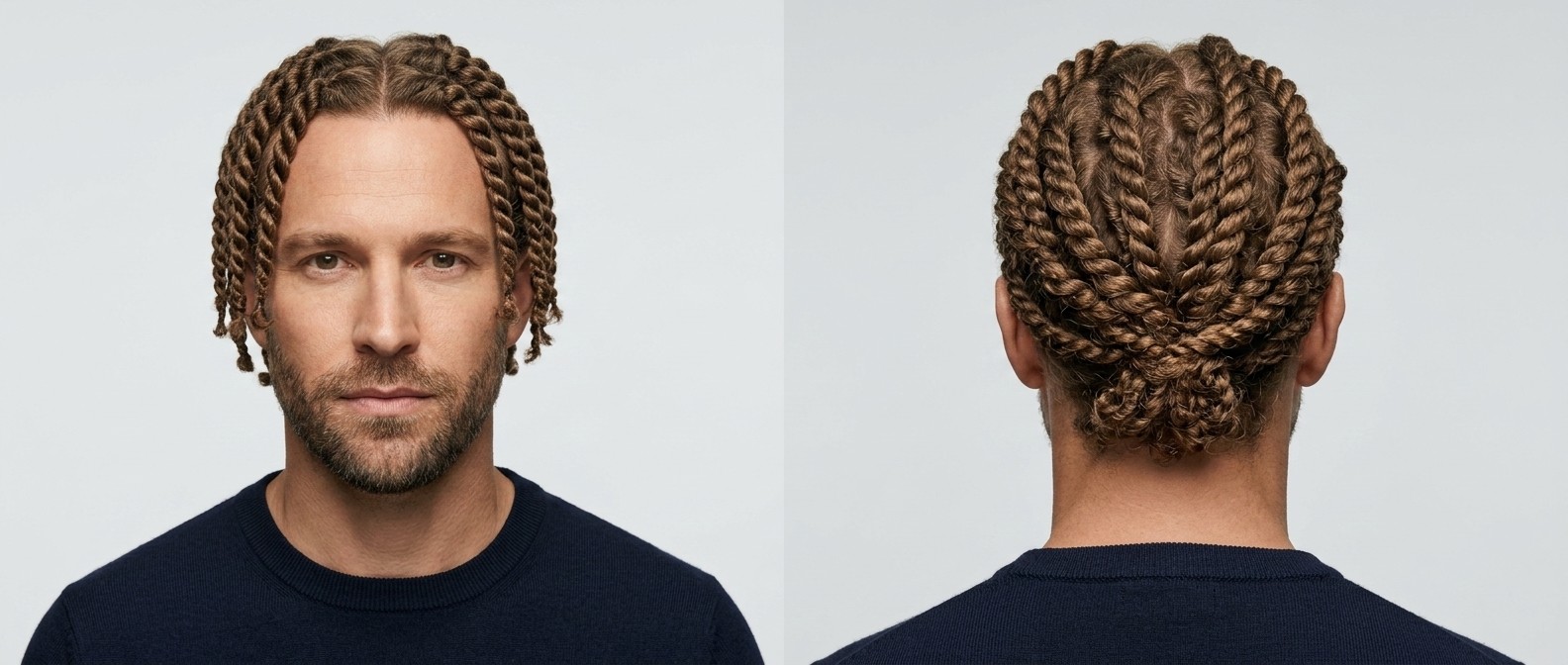
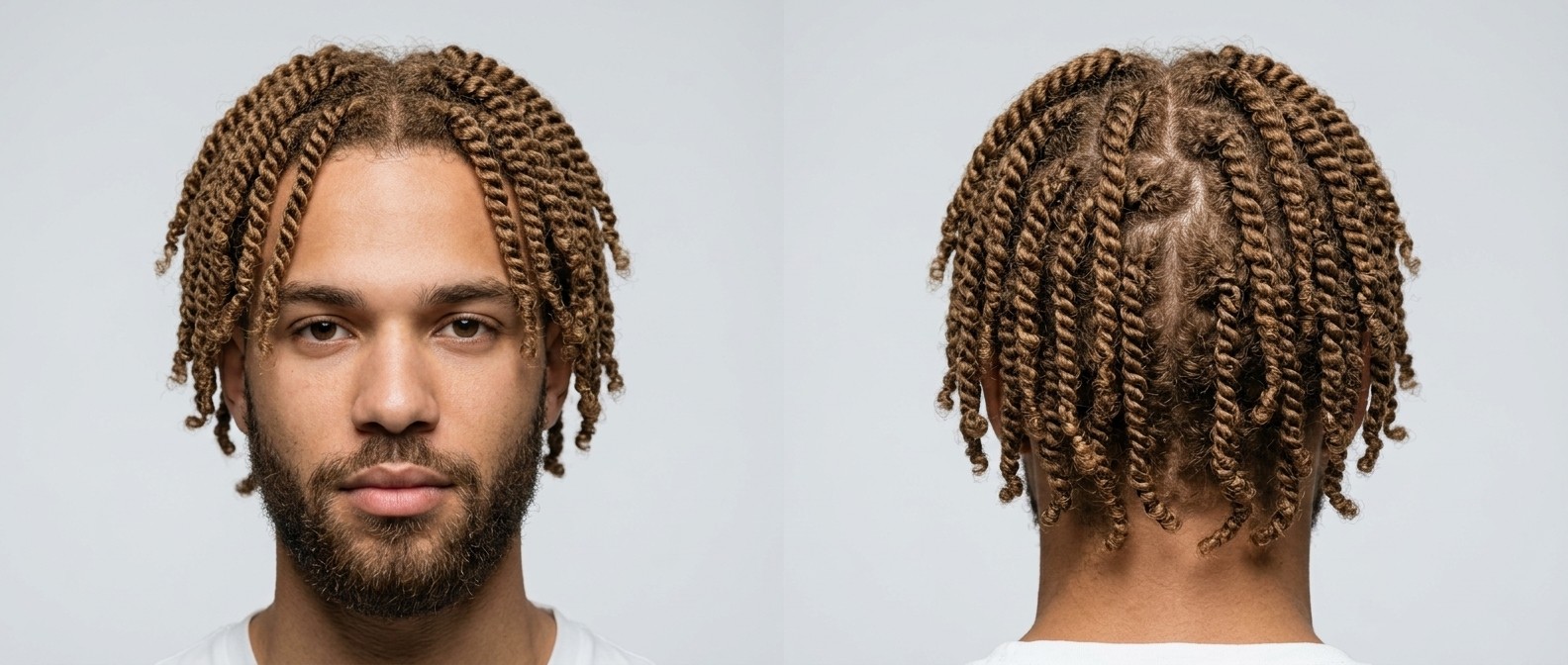
Pulled-Back Two-Strand Rope Twists with Face-Framing Tendrils
Twists
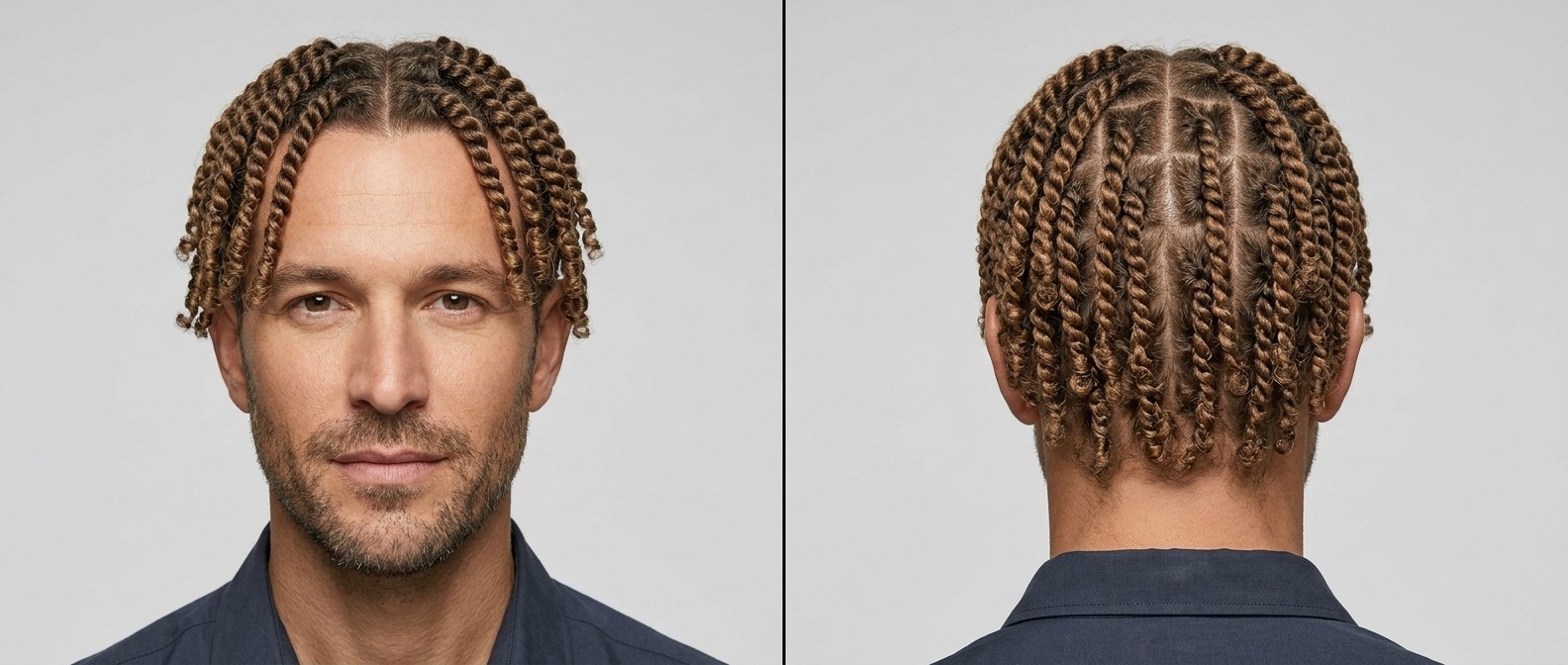
Symmetrical Two-Strand Twists with Center Part and Groomed Beard
Twists
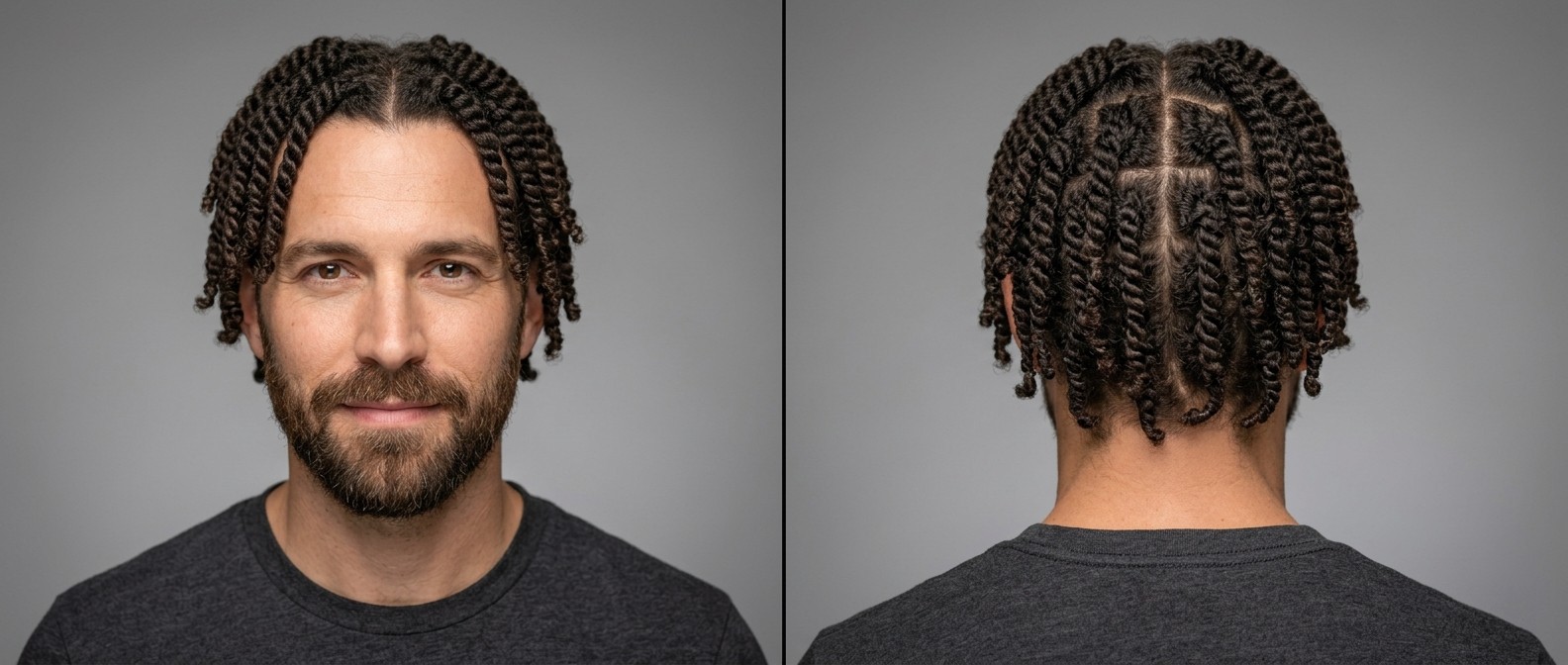
Light Brown Two-Strand Box Twists with Center Parting
Twists
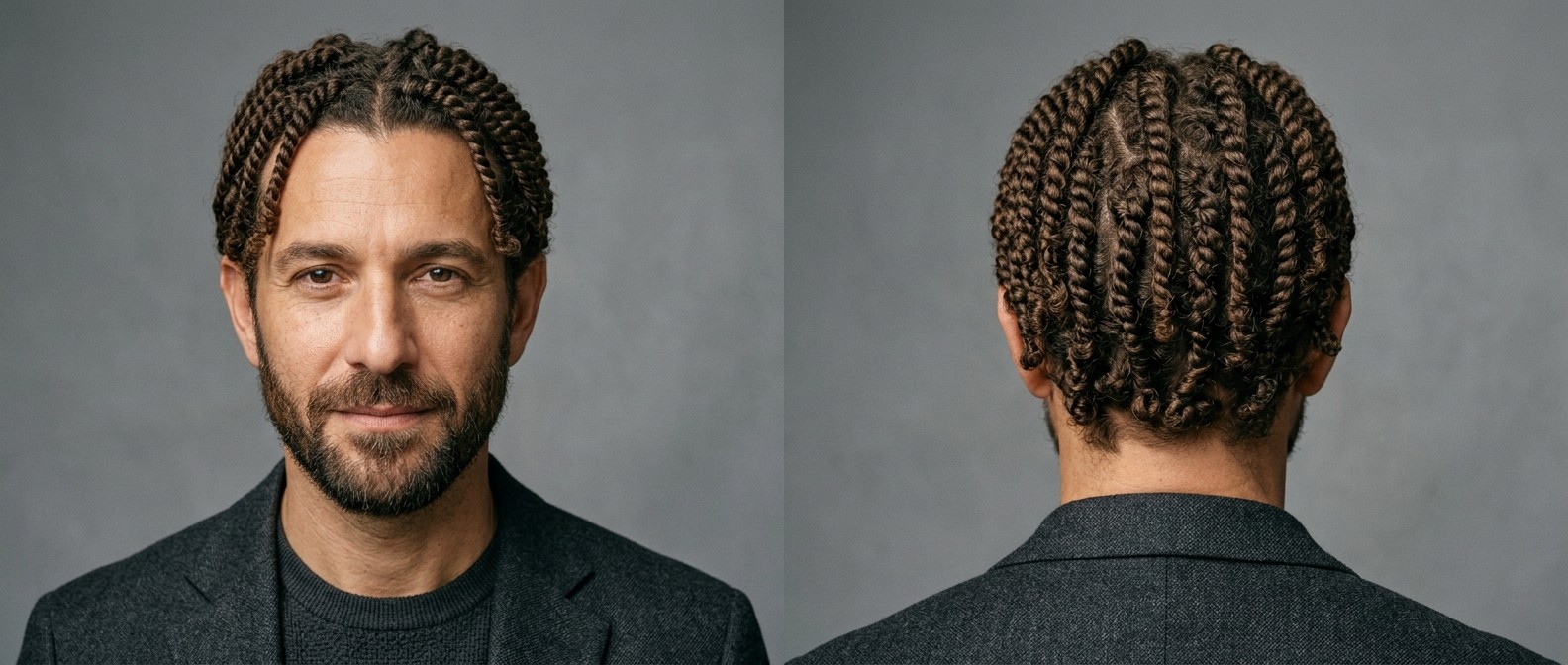
Structured Two-Strand Twists with Geometric Box Parts
Twists
Mature Two-Strand Rope Twists with Clean Center Part
Twists