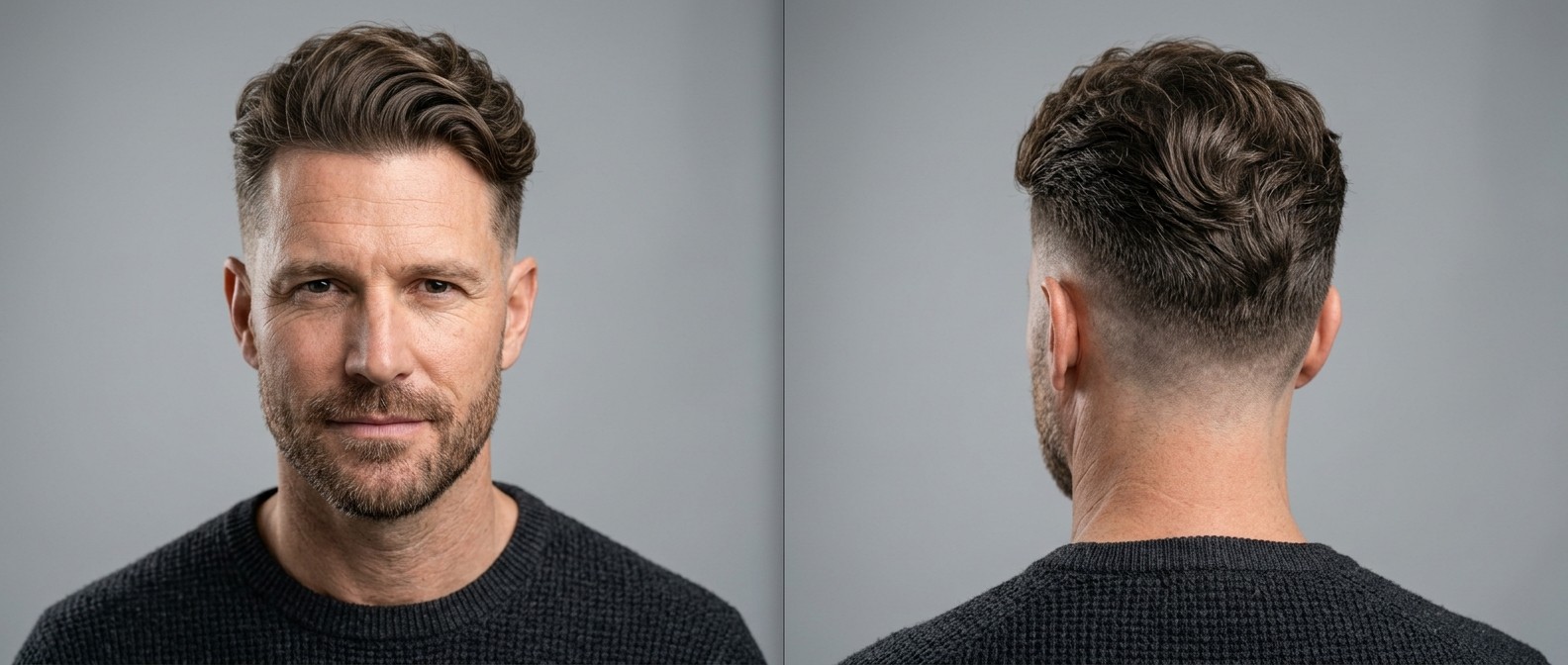
Add one front-facing photo. We send it to the AI together with this exact cut — and you get a photorealistic preview of yourself wearing it.
1
Your photo
Front view · neutral face · even light
2
This haircut
Already included
Front and back reference — taken from this page
3
Your preview
Your result appears here
![]()
![]()
Generated for you, not published anywhere
How do you rate this tool?
- Reading your photo
- Matching the cut
- Rendering your preview
How to take a photo that works
Do
- Face the camera straight on
- Even daylight, no harsh shadow
- Head and shoulders in frame
- Hair fully visible, nothing covering it
Avoid
- Hats, caps, hoods, sunglasses
- Steep angles or a tilted head
- Group photos or heavy filters
- Backlight that darkens the face
Wavy Swept-Back Undercut Fade with Textured Volume
 Top
Medium (5-10 cm)
Top
Medium (5-10 cm)
 Sides
Very Short (1-6 mm)
Sides
Very Short (1-6 mm)
 Hair Type
Wavy (Type 2)
Hair Type
Wavy (Type 2)
 Face Shape
Square
Face Shape
Square
 Maintenance
Medium
Maintenance
Medium
 Thickness
Thick / Dense
Thickness
Thick / Dense
About This Style
This wavy swept-back undercut fade is an absolute masterclass in balancing dense, thick hair with a clean, highly professional aesthetic. By keeping the sides aggressively short and faded right up to the parietal ridge, the style effectively removes excess bulk where it is not needed, pushing all the visual focus to the rich, wavy texture on top. The medium-length upper canopy allows your natural Type 2 waves to form beautiful, sweeping arcs that add significant height and dimension, which perfectly complements and elongates a strong, square jawline. Looking at the rear profile, the fade drops subtly to accommodate the natural shape of the head, ensuring the crown is seamlessly blended into the heavy texture at the back.
What makes this specific variation truly exceptional is how it gracefully incorporates a natural widow's peak. Instead of fighting the hairline or attempting to mask it, the hair is intentionally styled with an upward and backward trajectory, turning a potential styling challenge into a highly distinguished feature. It is an incredibly refined choice for the mature gentleman aged forty-five and older who desires a modern, stylish edge without sacrificing appropriateness for a strict corporate or business office environment. When paired with a neatly trimmed stubble beard that connects seamlessly into the side fade, it projects an aura of confidence, life experience, and impeccable grooming standards.
What makes this specific variation truly exceptional is how it gracefully incorporates a natural widow's peak. Instead of fighting the hairline or attempting to mask it, the hair is intentionally styled with an upward and backward trajectory, turning a potential styling challenge into a highly distinguished feature. It is an incredibly refined choice for the mature gentleman aged forty-five and older who desires a modern, stylish edge without sacrificing appropriateness for a strict corporate or business office environment. When paired with a neatly trimmed stubble beard that connects seamlessly into the side fade, it projects an aura of confidence, life experience, and impeccable grooming standards.
Key Features
- Aggressive high fade on the sides and back, transitioning smoothly from a 1mm skin-close length up to 6mm at the weight line.
- Disconnected yet softly blended undercut transition at the parietal ridge, keeping the overall silhouette tight, clean, and remarkably square.
- Medium length top measuring 5 to 10 centimeters, heavily point-cut to remove dead weight and dramatically enhance the natural wavy texture.
- Sweeping, backward-flowing hair direction that creates substantial front volume while laying flatter and more controlled near the crown.
- Strategic integration of the widow's peak, utilizing the natural hairline to dictate the upward sweep and separation of the front fringe.
- Subtly dropped fade at the nape of the neck, maintaining a clean and sharp rear profile that grows out naturally over several weeks.
Getting the Cut
- Request a high skin fade or a #0 (1.5mm) to #2 (6mm) fade on the sides and back, dropping slightly just below the crown to maintain a natural head shape.
- Ask for a disconnected undercut at the parietal ridge, but request a slight clipper-over-comb blend right at the transition line so it does not look like a harsh bowl cut.
- Instruct your barber to leave 5 to 10 centimeters of length on top, specifically keeping the front fringe slightly longer to allow for that swept-back, voluminous front.
- Ask for heavy point-cutting and texturizing shears throughout the top canopy; this is absolutely crucial for thick, dense hair to prevent it from looking like a solid block and to encourage the natural wave pattern.
- Specify that you want to embrace your widow's peak, asking them not to line up the front with trimmers but rather leave the hairline natural so the hair can be swept back seamlessly.
- Have them taper the nape of the neck to a clean zero, blending smoothly into your stubble beard at the sideburns for a cohesive facial hair transition.
Daily Routine
- Start your morning routine with freshly washed, towel-dried hair that is still slightly damp to the touch, ensuring your thick hair is pliable and ready to absorb product.
- Apply a nickel-sized amount of pre-styling sea salt spray or a light volumizing mousse directly to the roots of the top hair to build a strong foundation for the required height.
- Using a high-quality blow dryer set on medium heat and high speed, direct the airflow from the front of your hairline backward while using a vented brush to lift and pull the hair up and back.
- Once the hair is approximately 80% dry, put the brush down and switch to using your fingers to scrunch and push the hair backward; this specific action will activate and define your natural Type 2 waves.
- Scoop a dime-sized amount of matte styling paste or medium-hold clay, emulsify it completely between your palms until it disappears, and work it evenly through the top hair from back to front, then front to back.
- Pinch and twist individual wavy sections near the front hairline to create that piecey, textured look, and gently push the sides of the top section down so the overall silhouette remains square.
- Lock the style firmly in place with a quick 10-second blast of cold air from the blow dryer to close the hair cuticle and set the product for all-day office wear.
Products & Tools
- Matte styling paste or clay offering a medium, pliable hold with a natural, low-shine finish to keep the style looking effortless rather than greasy.
- Pre-styling sea salt spray or thickening tonic to add essential grit, texture, and volume to dense hair without weighing the roots down.
- High-quality blow dryer equipped with a concentrator nozzle attachment for precise, directional airflow during the styling process.
- Vented skeleton brush to maximize airflow during the initial drying phase and build significant root lift at the front hairline.
- Wide-tooth comb for safely sectioning damp hair and detangling before applying your pre-styling products.
Maintenance
- Schedule regular barber visits every 3 to 4 weeks to maintain the crispness of the 1-6mm faded sides and prevent the undercut transition from looking sloppy or overgrown.
- Wash your hair 2 to 3 times a week with a high-quality moisturizing shampoo to keep the thick, wavy texture hydrated, soft, and easy to manage.
- Use a lightweight, nourishing conditioner after every single wash to prevent the mid-lengths and ends from becoming brittle, frizzy, or uncooperative.
- Strictly avoid heavy, oil-based pomades or strong-hold wet gels that will severely weigh down your natural waves and make your dense hair look unnecessarily greasy.
- Sleep on a silk or satin pillowcase to drastically reduce overnight friction, which helps maintain your wave pattern and prevents severe morning bedhead and frizz.
Best For
Square and oval face shapes, as the exceptionally tight sides beautifully enhance the jawline while the top volume elongates the face perfectly.
Thick, dense hair types, particularly those with a natural Type 2 wave pattern that can be utilized for effortless, built-in texture.
Men aged 45 and older looking for a distinguished, highly age-appropriate style that still carries a very modern, stylish edge.
Business and corporate professionals who require a reliable, sharp, and commanding appearance that holds up flawlessly throughout a busy workday.
Gentlemen with a prominent widow's peak who want a highly flattering, structural way to incorporate their natural hairline into their daily style.
Pro Tips
- Do not over-apply your styling clay; thick hair can easily look clumped and lose its natural wavy movement if weighed down by too much heavy product.
- If you live in a particularly humid climate, finish your styling routine with a light dusting of texture powder at the roots to absorb excess moisture and maintain all-day volume.
- When transitioning to this cut for the first time, ensure your barber leaves enough weight at the crown to prevent the hair from sticking straight up, which is a common mistake with very dense hair.
- To perfectly blend the style with facial hair, use a beard trimmer holding a #1 guard on your stubble, tapering it slightly shorter exactly where it meets the ear to match the high fade.
Related Hairstyles
Undercut
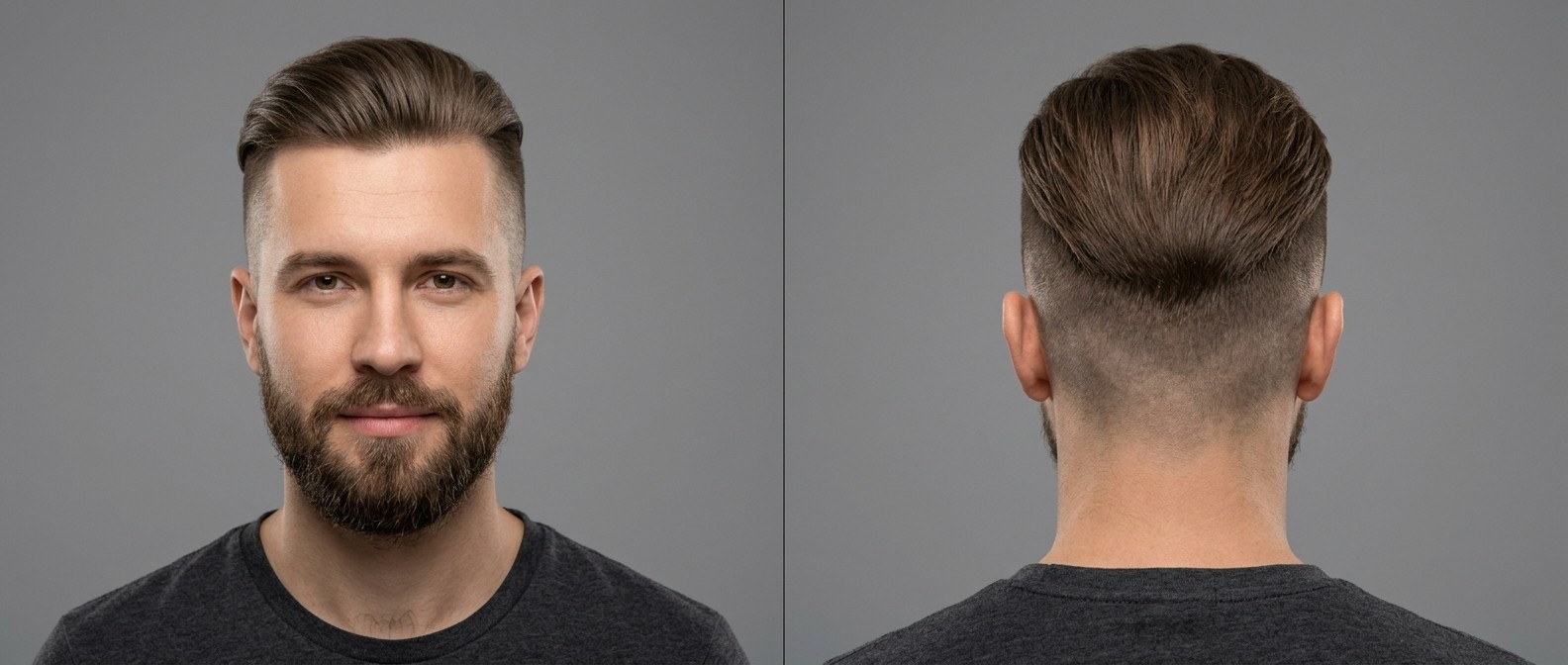
Swept-Back Disconnected Undercut with High Fade
Undercut
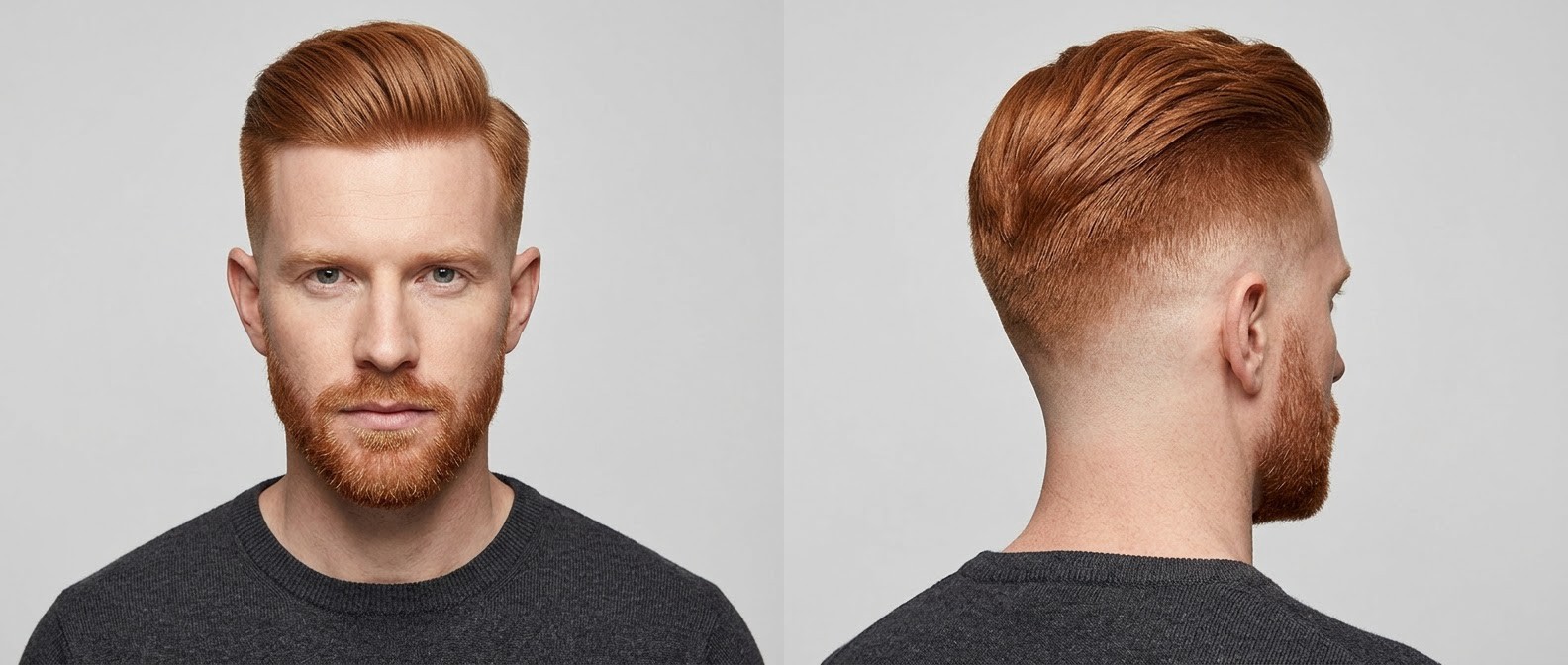
Swept-Back Disconnected Undercut Skin Fade for Thick Hair
Undercut
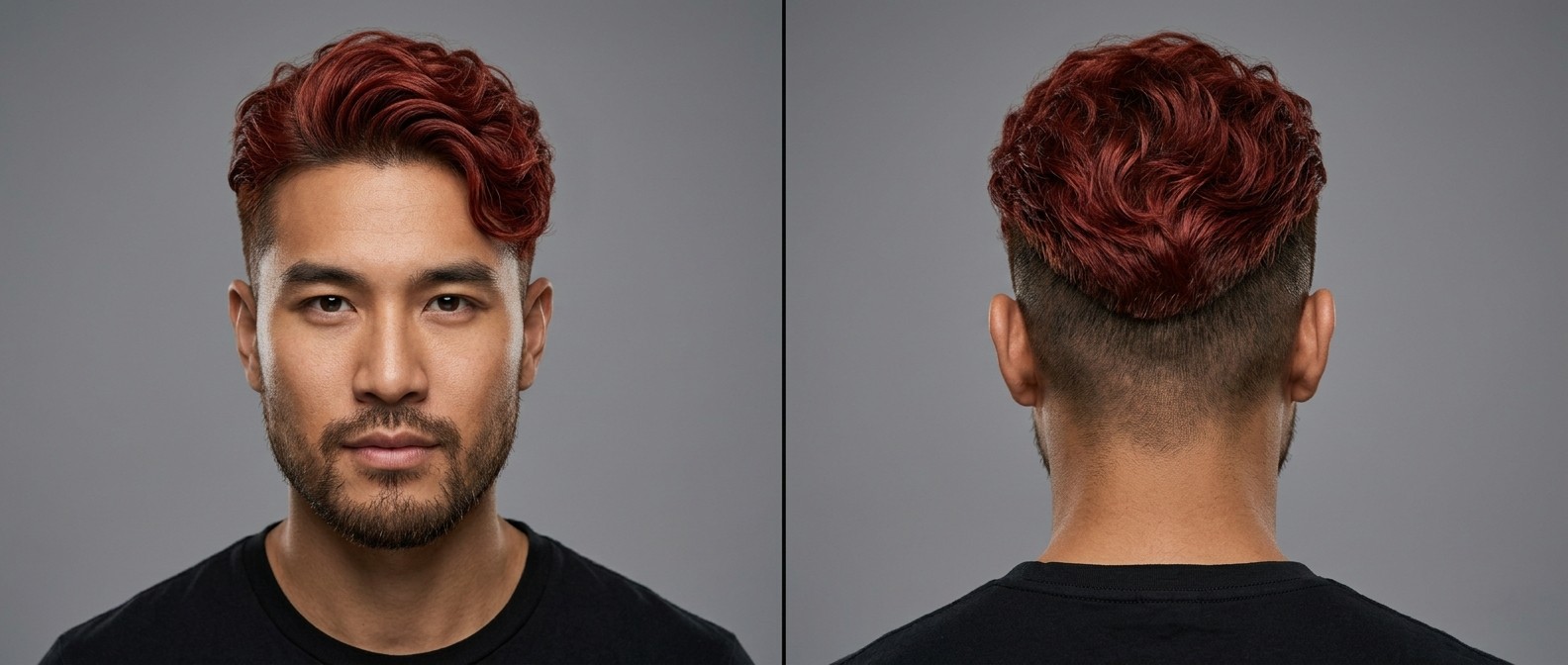
Red Wavy Undercut with Skin Fade and Swept-Back Textured Fringe
Undercut
Classic Swept-Back Skin Fade Undercut for Thick Hair
Undercut
Professional Wavy Undercut Skin Fade with Swept-Back Texture
Undercut