Add one front-facing photo. We send it to the AI together with this exact cut — and you get a photorealistic preview of yourself wearing it.
1
Your photo
Front view · neutral face · even light
2
This haircut
Already included
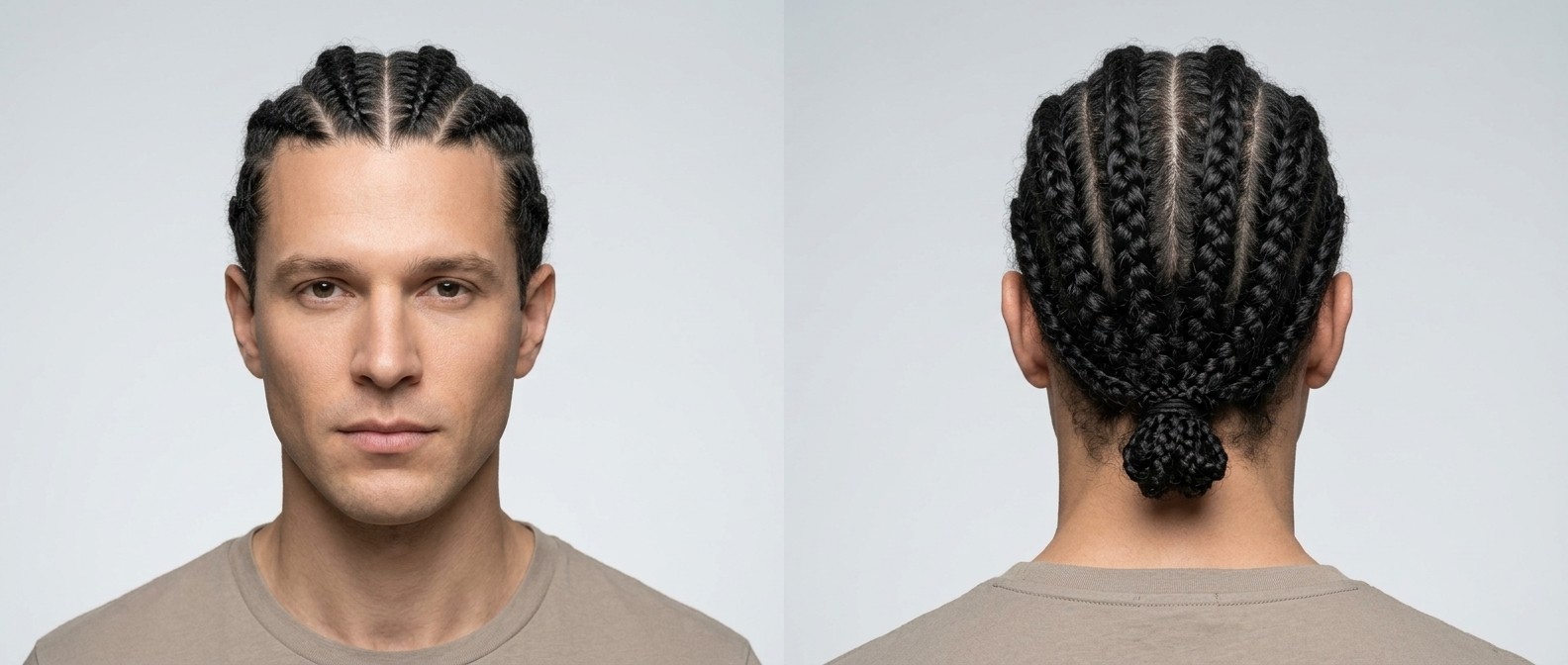
Front and back reference — taken from this page
3
Your preview
Your result appears here
![]()
![]()
Generated for you, not published anywhere
How do you rate this tool?
- Reading your photo
- Matching the cut
- Rendering your preview
How to take a photo that works
Do
- Face the camera straight on
- Even daylight, no harsh shadow
- Head and shoulders in frame
- Hair fully visible, nothing covering it
Avoid
- Hats, caps, hoods, sunglasses
- Steep angles or a tilted head
- Group photos or heavy filters
- Backlight that darkens the face
Classic Straight Back Cornrows with a Low Bun for Men
 Top
Long (10-20 cm)
Top
Long (10-20 cm)
 Sides
Medium (2-5 cm)
Sides
Medium (2-5 cm)
 Hair Type
Curly (Type 3)
Hair Type
Curly (Type 3)
 Face Shape
Oval
Face Shape
Oval
 Maintenance
Medium
Maintenance
Medium
 Thickness
Thick / Dense
Thickness
Thick / Dense
About This Style
The classic straight-back cornrow style offers an impeccably clean and structured aesthetic that commands attention while remaining highly practical. In this variation, the hair is sectioned into perfectly symmetrical, thick rows running from the front hairline entirely down to the nape of the neck. Because your hair is dense and naturally curly (Type 3), the braids hold their intricate shape exceptionally well, creating a raised, three-dimensional texture alongside the crisp, exposed scalp partings. The ends are smartly gathered and secured into a compact, tightly wrapped low bun at the back, preventing loose ends from fraying or brushing uncomfortably against your collar.
This protective style is an outstanding choice for an active lifestyle or if you simply want a completely hands-off morning routine. It frames an oval face beautifully by keeping lateral volume flat against the head and drawing the eye backward, which naturally highlights a strong jawline and balanced bone structure. Whether you are hitting the gym for an intense workout, heading out to a casual weekend gathering, or navigating a relaxed professional space, this braided look delivers durability and striking visual appeal.
This protective style is an outstanding choice for an active lifestyle or if you simply want a completely hands-off morning routine. It frames an oval face beautifully by keeping lateral volume flat against the head and drawing the eye backward, which naturally highlights a strong jawline and balanced bone structure. Whether you are hitting the gym for an intense workout, heading out to a casual weekend gathering, or navigating a relaxed professional space, this braided look delivers durability and striking visual appeal.
Key Features
- Symmetrical, straight-back braiding pattern originating directly from the natural front hairline.
- Distinct, clean partings that expose the scalp and emphasize the precise geometric design of the rows.
- Thick, raised braid texture supported by dense, curly (Type 3) hair that locks the style in place.
- All hair, including the medium-length sides and long top, is fully and seamlessly incorporated into the rows.
- A tightly secured, compact braided bun located exactly at the nape of the neck for a neat finish.
- Flat, streamlined silhouette that closely hugs the natural contours of the head without adding bulk.
- Clean, unadulterated hairline without sharp edge-ups or synthetic enhancements, keeping it casual.
Getting the Cut
- Request a thorough consultation with a stylist or braider who is highly experienced in handling Type 3 thick, curly hair.
- Ask for a classic straight-back cornrow pattern consisting of approximately 6 to 8 medium-to-thick, evenly spaced rows.
- Specify that the partings between the braids must be completely straight, symmetrical, and cleanly sectioned with a professional rat-tail comb.
- Instruct the braider to incorporate all hair from the shorter sides and the longer top seamlessly into the continuous rows.
- Ensure the braiding tension is firm enough to secure the thick hair for weeks, but not so tight that it pulls uncomfortably at the delicate front hairline.
- Ask to leave the natural hairline exactly as it is, avoiding harsh clipper line-ups or color enhancements for a more natural, everyday aesthetic.
- Request that the loose braided ends at the nape of the neck be gathered, twisted, and tied into a small, secure knot or bun using a snag-free elastic band.
Daily Routine
- Carefully remove your silk or satin durag or sleep bonnet in the morning to reveal your perfectly preserved straight-back braids.
- Inspect the cornrows and the exposed scalp partings in the mirror to ensure no major frizz or flyaways have developed overnight.
- Since this protective style requires absolutely zero daily styling products, simply use the palms of your hands to gently pat down any minor stray hairs.
- Check the small braided bun at the back of your neck to ensure the elastic hair tie is still firmly secure and hasn't loosened while you were sleeping.
- If the bun feels loose or sloppy, simply unwrap the braided ends and re-tie them tightly into a compact knot right at the nape of the neck.
- Apply a very light dab of natural scalp oil to the exposed partings using your fingertips only if your scalp feels dry or tight, though this step is entirely optional.
- Step out the door; your protective hairstyle is completely ready for the day in under one minute without any need for heat tools, brushes, or heavy pomades.
Products & Tools
- Professional rat-tail comb (used strictly by the braider for creating incredibly precise, straight partings across the scalp).
- Snag-free elastic hair ties (essential to secure the braided bun at the nape of the neck without causing tension or breakage).
- High-quality satin or silk durag or bonnet (an absolute necessity for nighttime protection to prevent friction, moisture loss, and frizz).
- Lightweight, natural scalp oil or soothing serum (optional, low-hold, natural finish to alleviate dryness or itchiness between wash days).
- Note: Absolutely no daily styling pomades, heavy gels, or blow dryers are required once the hair is securely braided into this low-maintenance style.
Maintenance
- Wear a premium silk or satin durag every single night to strictly protect the braids from pillow friction and significantly prolong the neatness of the style.
- Wash your scalp every 1 to 2 weeks using a heavily diluted clarifying shampoo, focusing entirely on the exposed skin and avoiding vigorous rubbing of the actual braids.
- Pat the cornrows completely dry with a soft microfiber towel immediately after washing; never leave them damp in order to prevent mildew or unpleasant odors.
- Strictly avoid using heavy moisturizing creams, waxes, or thick gels while braided, as these will inevitably cause severe, hard-to-remove product buildup in the crevices.
- Visit your trusted stylist every 3 to 4 weeks to carefully take down the braids, thoroughly detangle the shed hair, and reinstall the style to prevent long-term root damage.
Best For
Face Shapes: Ideal for oval, square, and diamond facial structures, as the pulled-back, flat nature of the style highlights strong bone structure and facial symmetry.
Hair Types: Perfectly suited for dense, curly (Type 3) or coily hair textures that possess the natural grip needed to hold a firm, long-lasting braid structure.
Lifestyles: An excellent option for highly active men, dedicated athletes, or anyone seeking a completely low-maintenance, ready-to-go daily grooming routine.
Occasions: Seamlessly suits casual everyday settings, intense gym sessions, and relaxed modern professional environments where protective styles are embraced.
Pro Tips
- Never allow your stylist to braid the hair too tightly; excessive tension at the front hairline can quickly lead to traction alopecia and permanent, irreversible hair loss.
- If your scalp feels itchy during the first few days of a fresh braid-up, lightly tap or pat the area instead of scratching it with your nails to avoid frizzing up the roots.
- During the intense summer months, be sure to apply a lightweight spray sunscreen to the exposed scalp partings to prevent painful and damaging sunburns.
- Always give your hair a breather for at least a few days between long-term braiding sessions to let your scalp rest, breathe, and fully recover from the tension.
Related Hairstyles
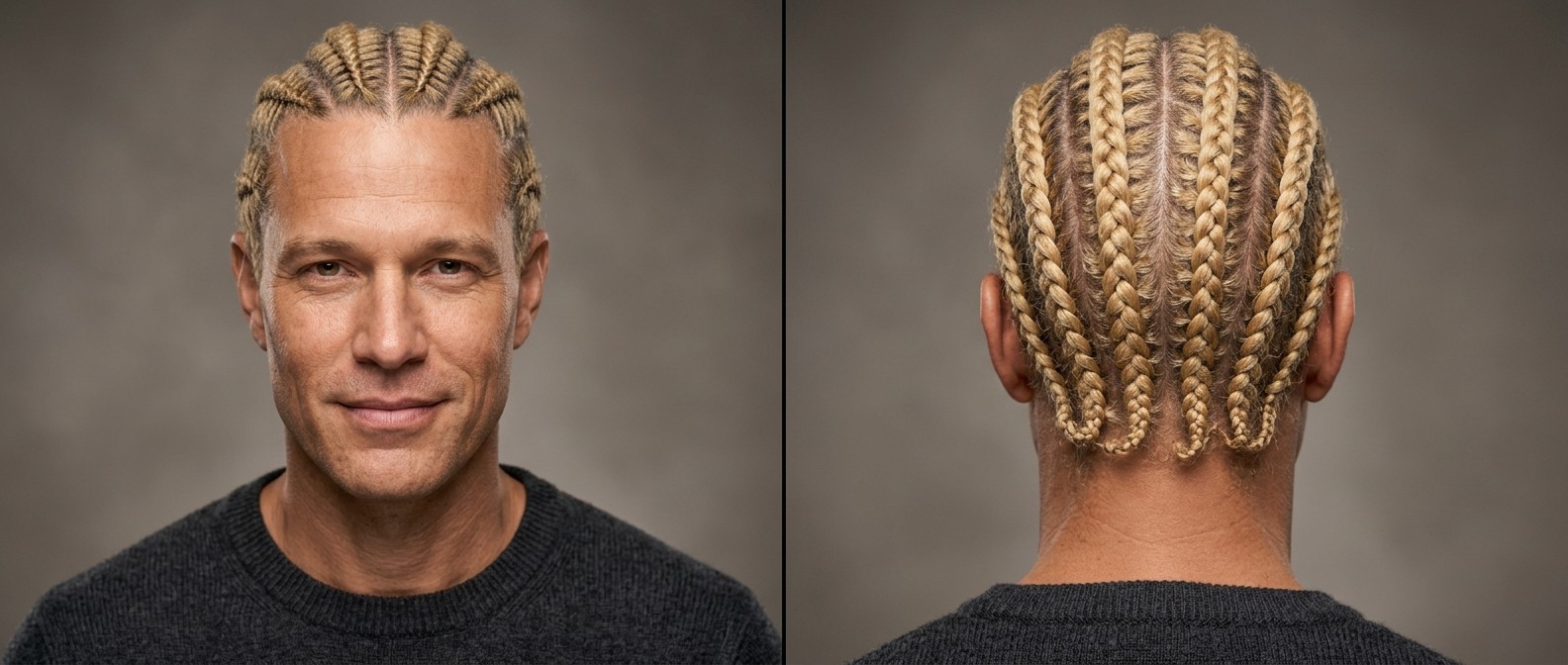
Cornrows
Men's Blonde Straight-Back Cornrows for Medium-Long Hair
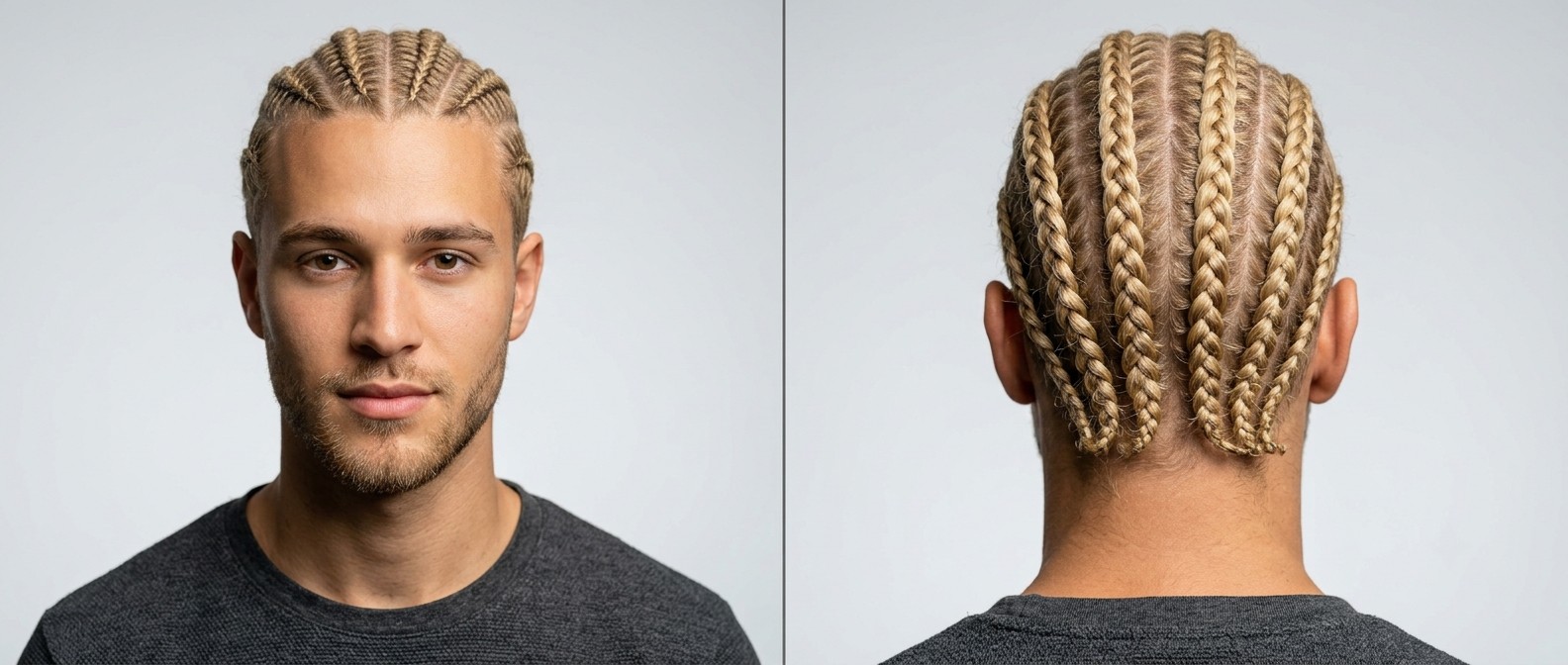
Cornrows
Classic Straight-Back Blonde Cornrows for Medium Length Hair
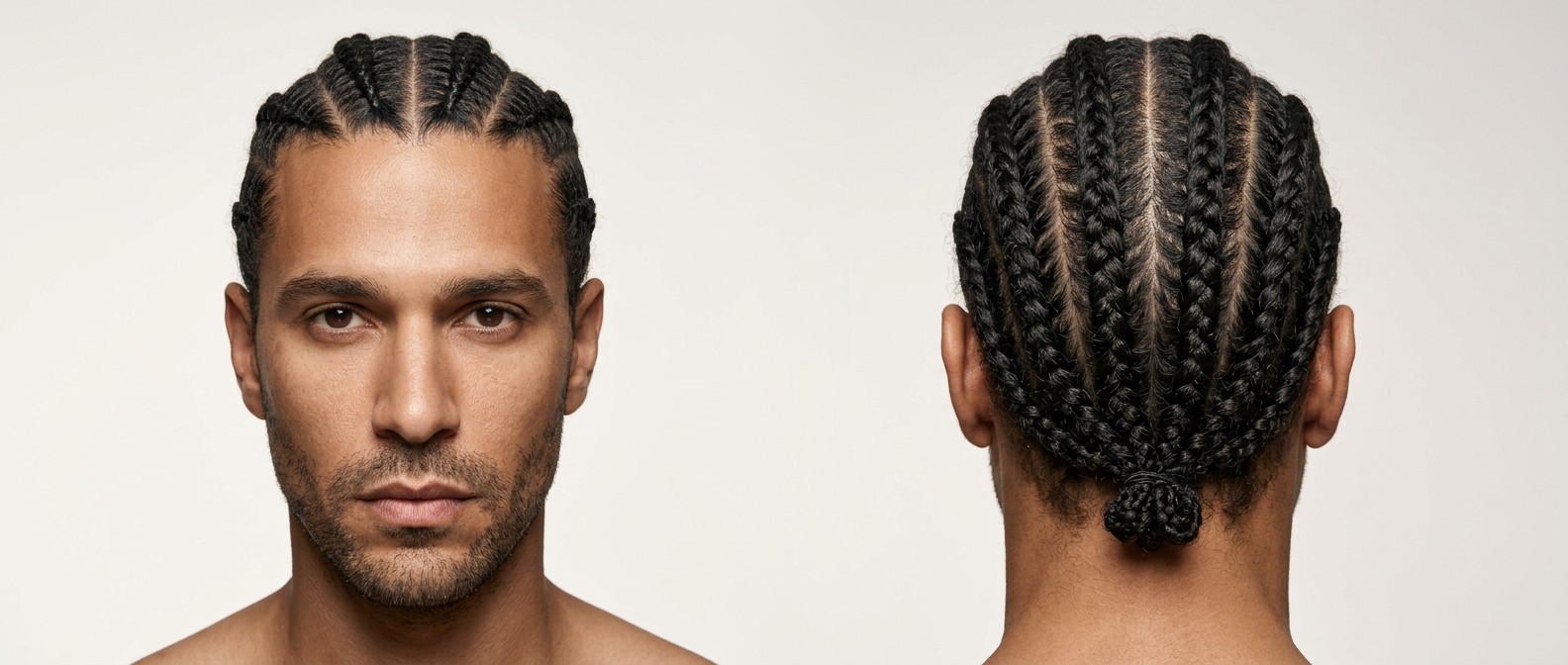
Cornrows
Classic Straight-Back Cornrows Featuring a Neat Nape Knot
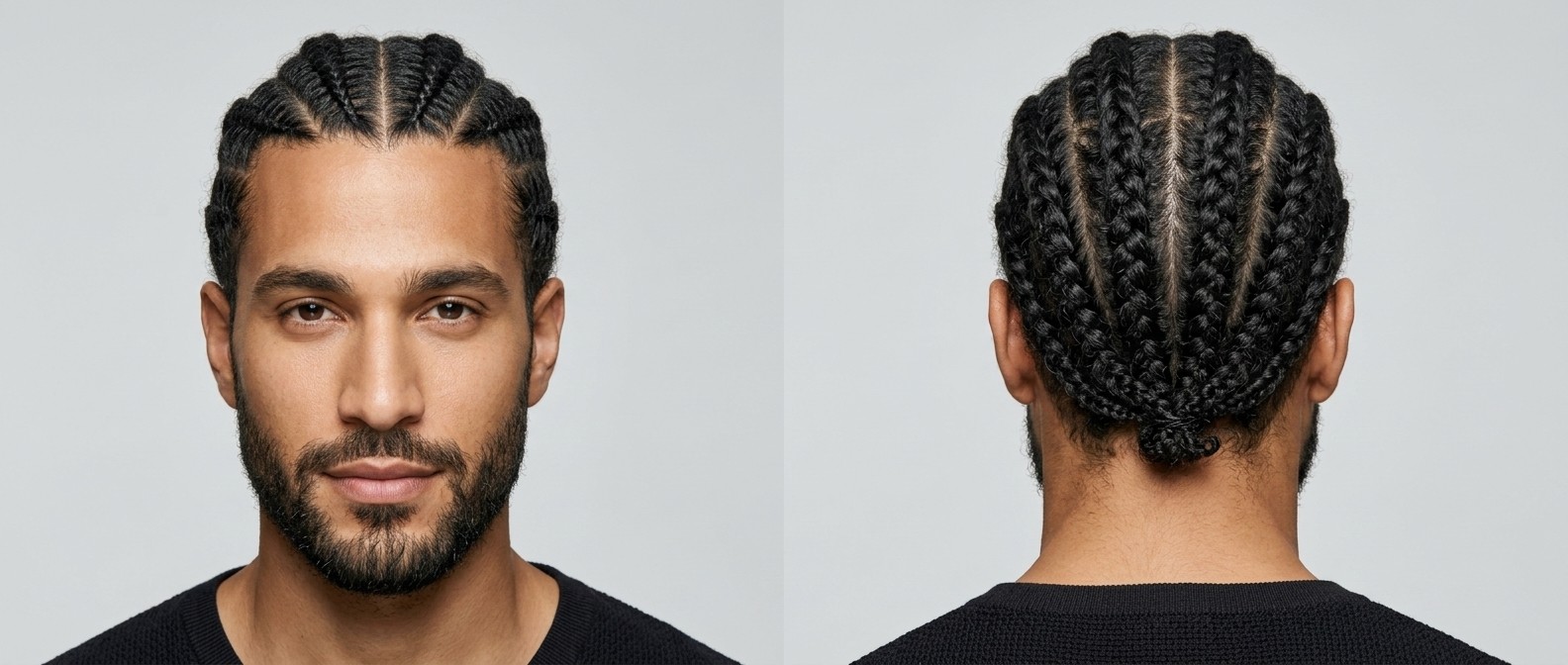
Cornrows
Classic Straight-Back Cornrows with Neat Nape Knot and Beard
Cornrows
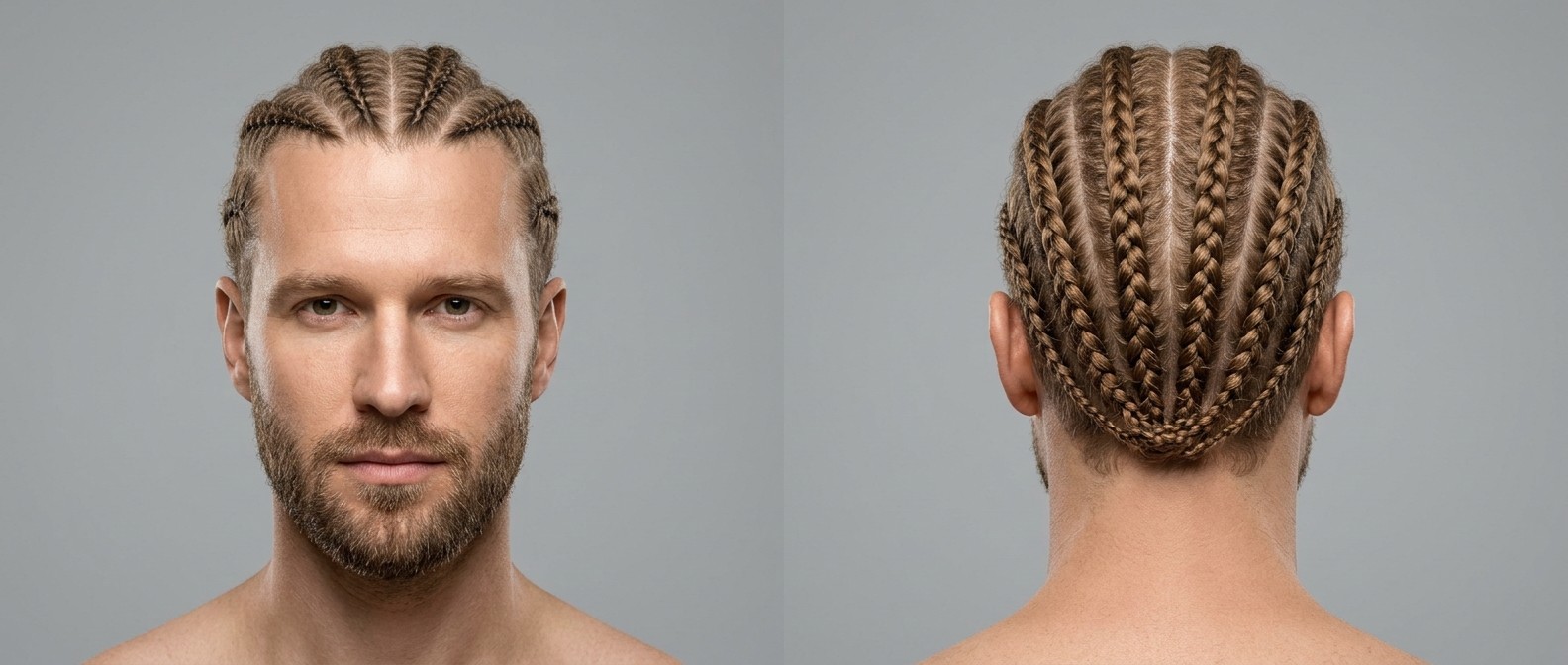
Straight-Back Symmetrical Cornrows for Thick Light Brown Hair
Cornrows