How to Style and Manage Wavy Flow Hair: The Ultimate Men's Guide
Master the art of the wavy flow. Discover expert tips on growing it out, essential hydration routines, and the exact styling techniques needed for effortless, natural waves.

Achieving the perfect wavy flow is a rite of passage for men seeking a relaxed, effortlessly masculine aesthetic. Often associated with professional athletes, surfers, and Hollywood leading men, this mid-length style relies entirely on embracing your natural texture rather than fighting it. If you have a natural bend, kink, or wave to your hair, you are already halfway there. However, managing that texture so it looks intentional rather than unkempt requires a specific approach to grooming.
The journey to phenomenal mid-length hair is not just about letting it grow and hoping for the best. It requires an understanding of your hair's unique hydration needs, mastering new drying techniques, and completely overhauling your product arsenal. Let's break down the exact steps, techniques, and routines required to cultivate and maintain an exceptional wavy flow.
The Anatomy of the Perfect Wavy Flow
Understanding the mechanics of wavy hair is the first step toward mastering this look. Unlike straight hair, which falls flat and can look lifeless when grown out, or tightly coiled hair, which builds volume outward, wavy hair sits right in the golden middle. The hallmark of authentic Flow Hair is the sweeping backward motion that sits comfortably behind the ears, creating a dynamic, windswept appearance.
The flow thrives on natural movement. You want the hair to shift when you turn your head and naturally fall back into place. Contrast this with a traditional Slicked Back style, which relies on heavy, high-hold pomades to plaster the hair to the scalp. The flow needs breathing room. The secret lies in the hair's weight distribution. If the hair is too heavy, the waves stretch out and look flat at the roots. If it is cut too short, the waves will not have enough length to form their natural "S" shape.
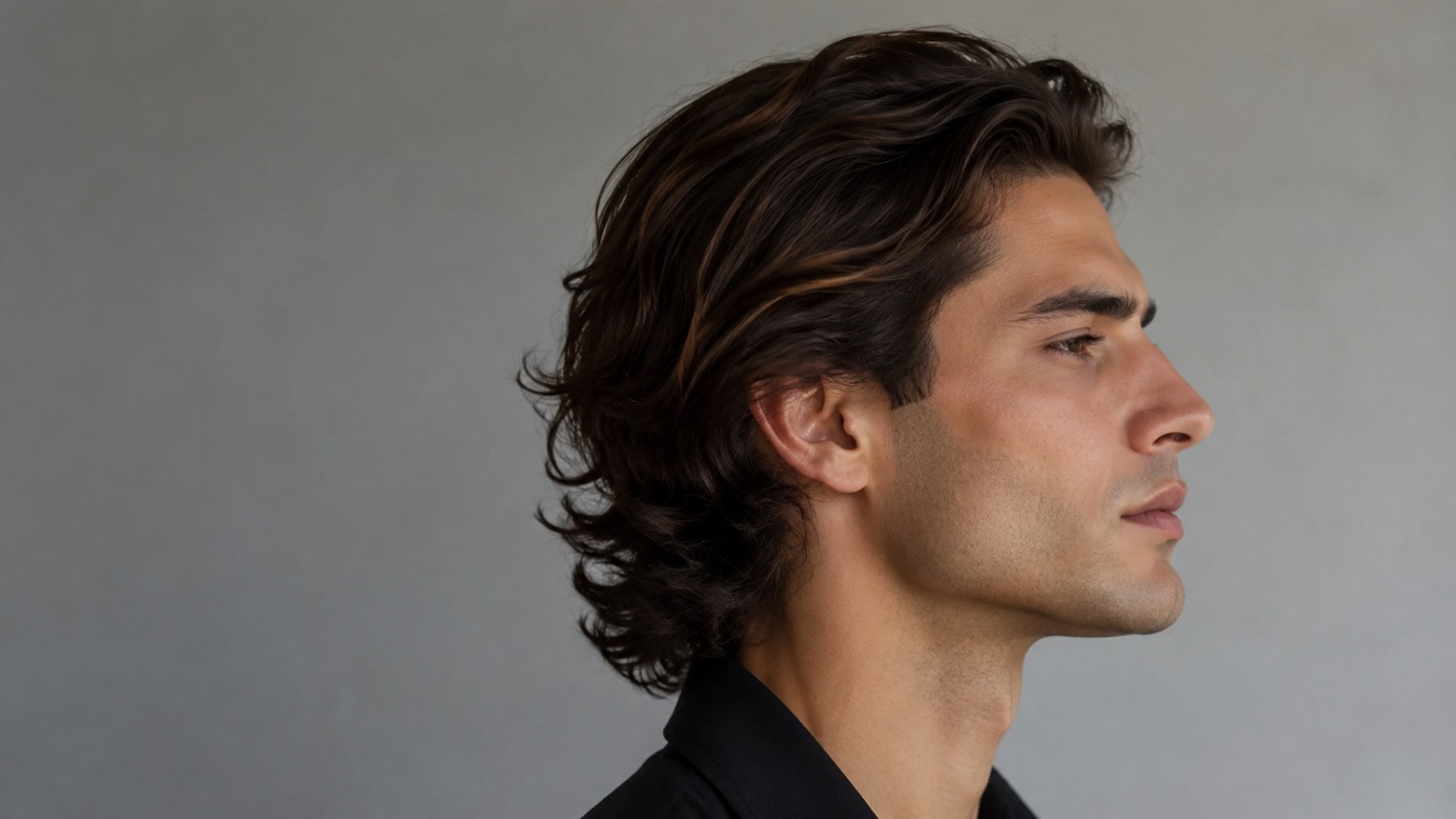
To achieve the ideal silhouette, the hair on top needs to be long enough to reach the back of the crown, while the sides should easily tuck behind the ears. The back should gently graze the nape of the neck, curling slightly upward or outward depending on your specific wave pattern. It is a style defined by its effortless nature, but creating that "effortless" look actually requires deliberate structural planning.
Navigating the Awkward Growth Phase
Growing out your hair requires monumental patience. Transitioning from a short barber cut to a mid-length flow is a process that typically takes six to ten months, depending on your starting point and natural growth rate. Many men abandon their journey around month four or five when the hair starts looking like an unkempt Shag rather than a deliberate, stylish flow.
The secret to surviving this transition is strategic maintenance. You cannot simply avoid the barber chair for a year, especially once the sides are no longer supported by the crisp lines of a Taper. Instead, you need to schedule maintenance trims every eight to ten weeks. When you sit in the chair, communicating effectively with your barber becomes crucial. You must explicitly state that you are growing your hair out into a flow. Your barber's job during this phase is not to remove length from the top, but rather to clean up the neckline, trim around the ears, and most importantly, remove bulk.
Barbers use techniques like point cutting and slide cutting to remove internal weight without sacrificing the external length. This prevents your hair from mushrooming outward into a spherical shape. By keeping the perimeter neat and the internal layers textured, you can maintain a professional appearance even while pushing through the most difficult months of hair growth.
Essential Washing and Conditioning Routine
If you take away only one piece of advice for managing wavy hair, let it be this: moisture is your greatest ally. Wavy hair is naturally more prone to dryness and frizz than straight hair. This happens because sebum, the natural conditioning oil produced by your scalp, has a much harder time traveling down a wavy hair shaft than a straight one. As your hair gets longer, the ends become increasingly starved for moisture.
The harsh, sulfate-heavy shampoos you used when your hair was short will completely destroy a wavy flow. They strip away the natural oils, leaving the hair brittle, frizzy, and impossible to control. You need to drastically reduce your shampoo frequency. For most men with wavy hair, shampooing one to two times a week with a gentle, sulfate-free cleanser is more than enough. On the days you do not shampoo, you should still rinse your hair thoroughly with warm water to remove sweat and environmental dust.
Conditioning, on the other hand, should happen almost every time your hair gets wet. A high-quality, hydrating conditioner is non-negotiable. When applying conditioner, focus entirely on the mid-shafts and ends of your hair, avoiding the scalp to prevent a greasy buildup. Leave the conditioner in for at least three to five minutes while you finish the rest of your shower. If your hair is particularly coarse, many of the principles found in the daily care routine for curly and heavily wavy hair apply perfectly to thick flow styles, emphasizing hydration above all else.
Core Styling Techniques for Wavy Hair
How you handle your hair immediately after stepping out of the shower dictates exactly how your flow will look for the rest of the day. Resist the urge to vigorously rub your head with a standard terrycloth towel. This aggressive friction roughs up the hair cuticle, shatters your natural wave clumps, and guarantees a frizzy, untamable outcome.
Instead, gently pat and squeeze the excess moisture out of your hair using a microfiber towel or an old, soft cotton t-shirt. You want the hair to remain damp, not dripping wet, when you begin the styling process. Once the hair is damp, take a wide-tooth comb—never a fine-tooth comb or a stiff brush—and gently detangle your hair, sweeping it straight back from your forehead.
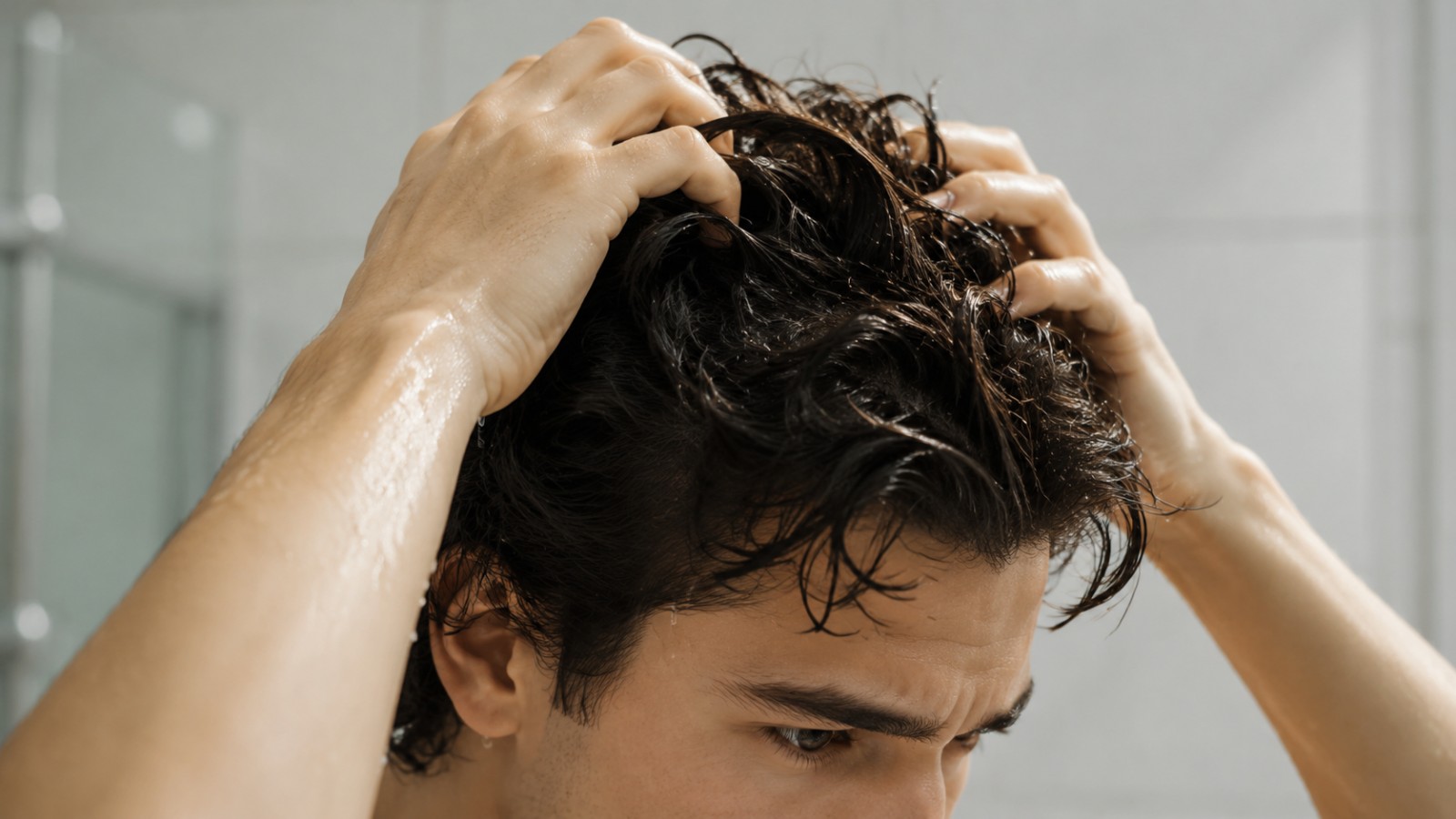
At this stage, you want to apply your foundational styling products. Use your fingers to rake the product evenly from the roots to the ends. Once the product is distributed, use a technique called "scrunching." Cup the ends of your hair in your palms and gently push upward toward the scalp, squeezing lightly. This encourages the natural wave pattern to activate and clump together.
For the drying phase, air drying is generally the safest and most effective method for wavy flow hair. It prevents heat damage and allows the waves to settle naturally. However, if you are short on time or want more volume, you can use a blow dryer. The critical rule here is that you must use a diffuser attachment on low heat and low speed. A diffuser spreads the airflow out over a larger area, drying the hair gently without blowing the waves apart. Regular blow-drying without a diffuser will simply blast your hair into a frizzy, straight-ish mess, and the directional airflow tricks explained in our guide to mastering the blow dryer should only be borrowed with a diffuser fitted.
The Ultimate Product Arsenal for Wavy Hair
Navigating the grooming aisle can be overwhelming when you are transitioning to longer hair. The heavy pomades and rigid gels of your past belong in the trash. Wavy flow hair requires products that offer hydration, texture, and flexible control. If you are used to traditional barber products, choosing the right styling product like pomade, wax, or clay requires a shift in perspective. You are no longer locking hair into place; you are guiding it.
Here is the essential product toolkit you need to maintain and style a wavy flow:
- Leave-in Conditioner: This is the foundation of your routine. Applied to damp hair, it locks in moisture, smooths the cuticle, and prevents frizz throughout the day. It acts as a primer for any other products you apply.
- Sea Salt Spray: The ultimate texturizer for wavy hair. It mimics the gritty, voluminous effect of ocean water, adding thickness and enhancing the natural wave pattern without weighing the hair down.
- Lightweight Styling Cream: A cream provides a soft, pliable hold and a natural shine. It is perfect for taming flyaways and keeping the flow swept back behind the ears while allowing the hair to move freely.
- Matte Paste or Clay: Used sparingly, a small dab of matte paste warmed thoroughly in the hands can provide targeted hold at the roots for extra volume, or at the ends to piece out the texture for a slightly more rugged appearance.
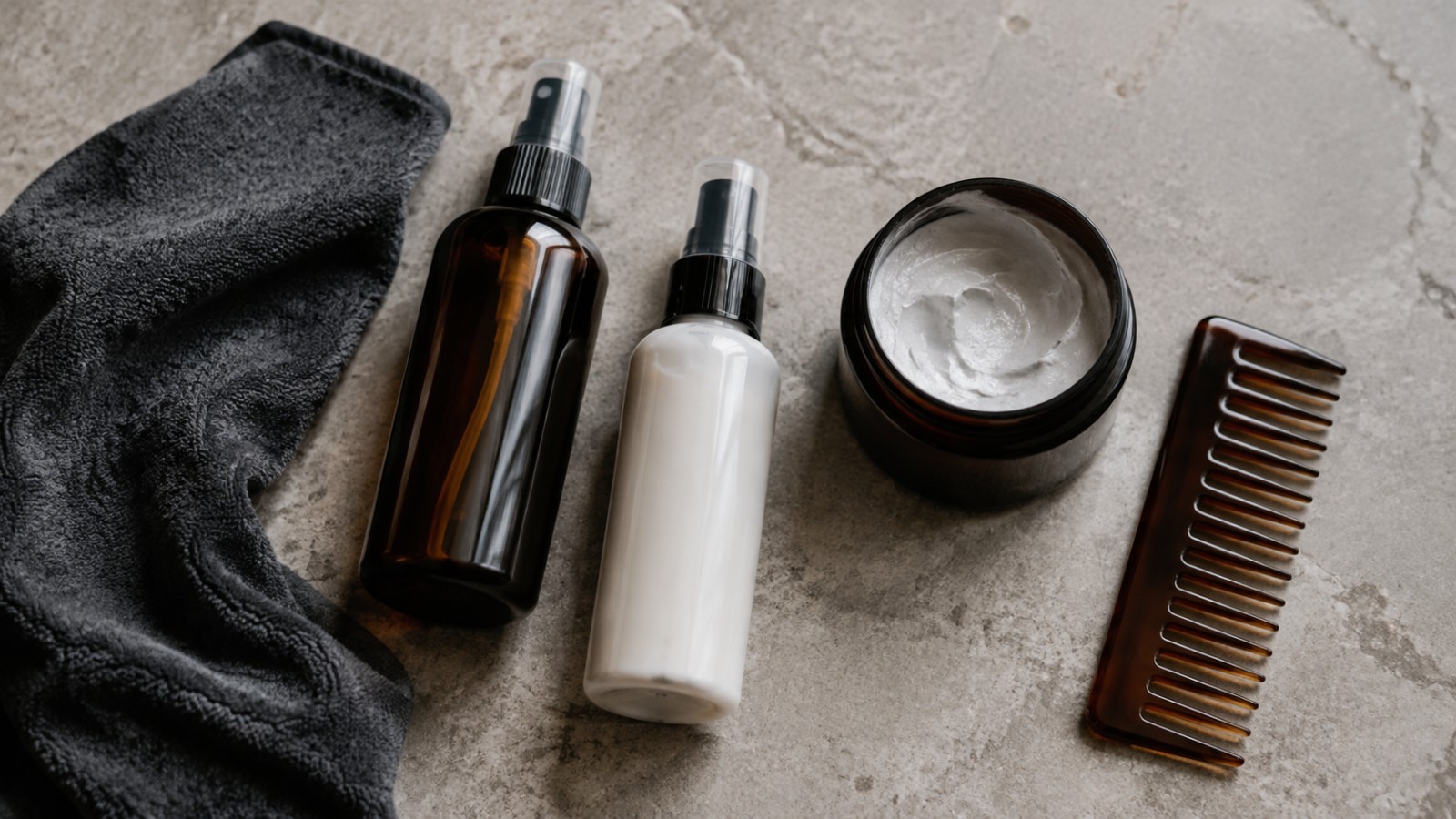
When applying these products, remember that less is always more. You can always add a little extra cream if your hair feels too loose, but if you over-apply, your hair will look greasy and weighed down, forcing you to wash it and start the entire process over. Combining a good leave-in conditioner with targeted sea salt spray techniques for medium messy looks is often the exact formula needed for the perfect flow.
Adapting the Flow to Your Face Shape
While the classic flow is pushed straight back, the beauty of mid-length wavy hair is its versatility. How you part and direct the flow can dramatically alter how it complements your face shape. Understanding your bone structure allows you to tailor the style to highlight your best features.
If you have an oval or diamond face shape, the traditional swept-back look works flawlessly, showcasing your balanced proportions. For men with rounder faces, you want to avoid adding too much width at the sides. Instead, focus on building volume at the top and crown to elongate the face, keeping the sides tucked tightly behind the ears. If your hair grows past the shoulders, a Long Layered shape keeps that width under control by removing bulk through the mid-lengths.
If you have a prominent forehead or a receding hairline, pushing all the hair straight back might not be the most flattering option. Instead, allow the hair to fall naturally to the sides. You can easily transition a standard flow into a Curtains style by establishing a loose middle or slightly off-center part. The natural waves will frame your face beautifully, providing coverage while maintaining that effortless, relaxed aesthetic. Similarly, letting a few textured strands fall across the forehead can create a handsome Medium Messy fringe that adds character and ruggedness to your overall look.
Nighttime Care and Next-Day Refreshing
A great wavy flow does not just happen during your morning routine; it requires a bit of nighttime strategy. Tossing and turning on a standard cotton pillowcase creates friction that draws moisture out of your hair and leaves you waking up with a tangled, frizzy bird's nest. Swapping your standard pillowcase for a silk or satin pillowcase allows your hair to glide smoothly over the surface, preserving your wave pattern and retaining vital moisture.
When you wake up on day two or day three after a wash, your waves might look a bit flattened or chaotic. Do not reach for the shampoo. Instead, use a spray bottle filled with water to lightly mist your hair. You do not want it soaking wet, just damp enough to reactivate the styling products already in your hair. Scrunch in a tiny amount of lightweight styling cream or a quick spritz of sea salt spray, let it air dry for ten minutes, and your flow will bounce right back to life.
Mastering the wavy flow is an exercise in patience and proper hair health. By ditching harsh shampoos, embracing deep hydration, and learning to work with your natural texture rather than against it, you can achieve that perfectly relaxed, windswept look that never goes out of style.