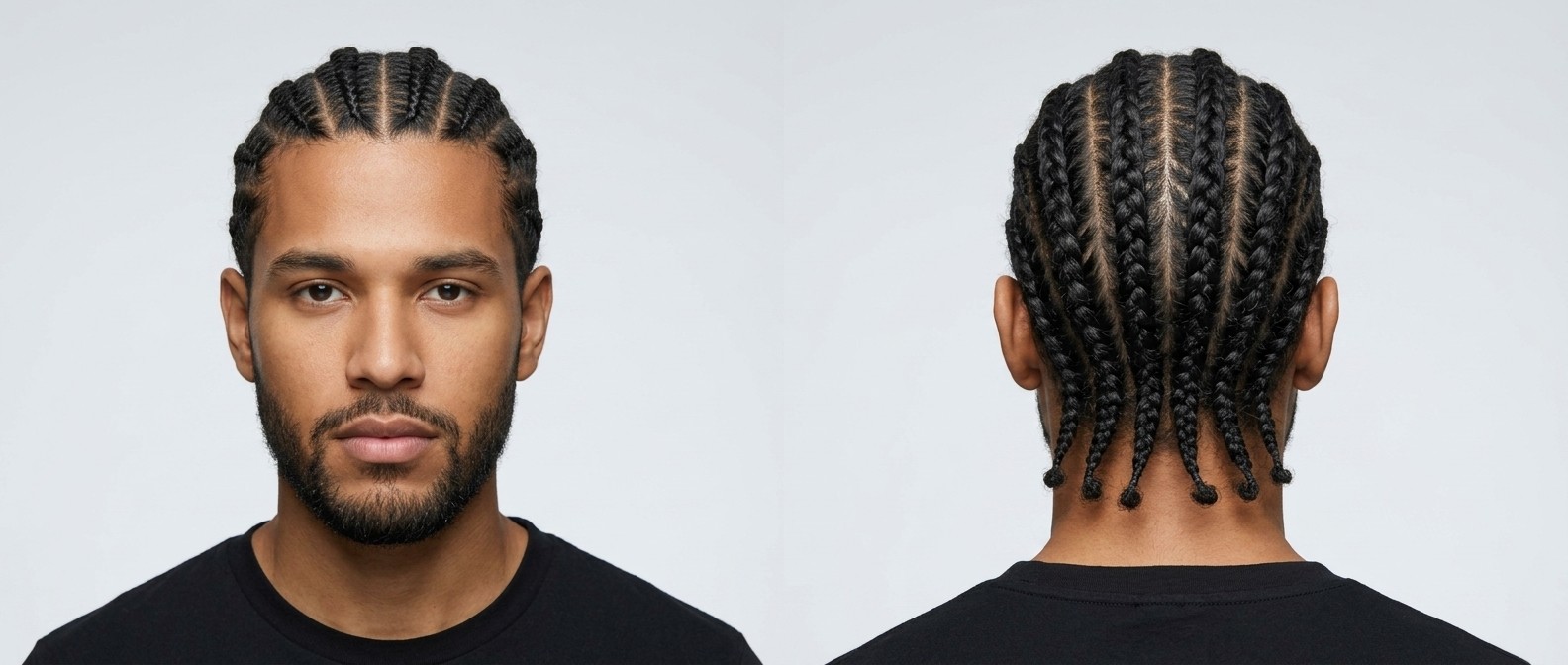
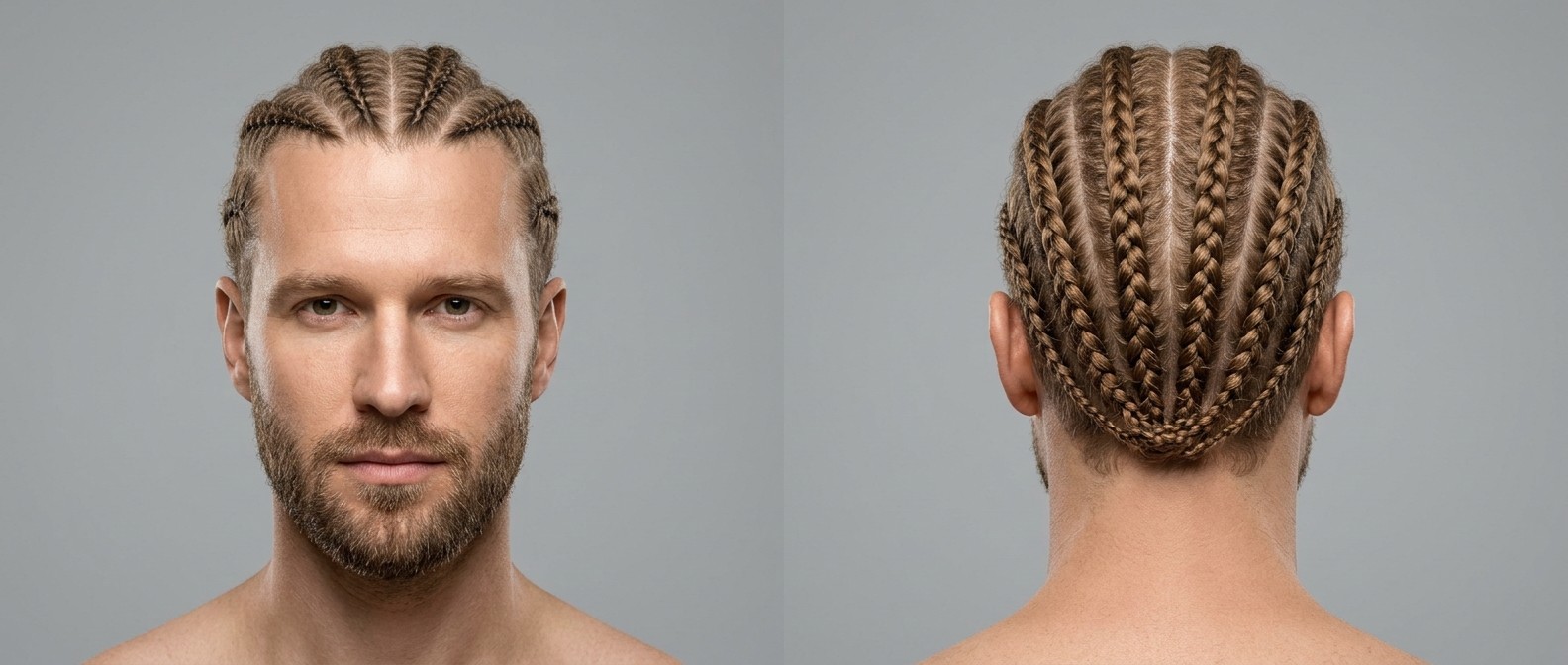
Classic Straight-Back Cornrows for Thick Curly Hair
 Top
Long (10-20 cm)
Top
Long (10-20 cm)
 Sides
Medium (2-5 cm)
Sides
Medium (2-5 cm)
 Hair Type
Curly (Type 3)
Hair Type
Curly (Type 3)
 Face Shape
Rectangular
Face Shape
Rectangular
 Maintenance
Medium
Maintenance
Medium
 Thickness
Thick / Dense
Thickness
Thick / Dense
About This Style
These classic straight-back cornrows offer a timeless, artistic aesthetic that perfectly showcases thick, dense hair. The style features symmetrical, impeccably clean parting lines that run vertically from the low front hairline straight down to the nape of the neck. Each braid is tightly woven, sitting flat against the scalp to create a sleek, streamlined silhouette that contrasts beautifully with a sharp, short beard. This protective style not only looks incredibly sharp but also serves a practical purpose, keeping your Type 3 curly hair neatly secured, protected from environmental damage, and entirely out of your face throughout the day.
Ideal for rectangular face shapes, the vertical lines of the braids help to complement your strong jawline and facial symmetry without adding unnecessary width to the sides of your head. Whether you are navigating a fast-paced creative workspace, hitting the gym, or heading out for an artistic event, this low-maintenance daily look requires practically zero styling time in the morning while consistently delivering maximum visual impact and cultural pride.
Ideal for rectangular face shapes, the vertical lines of the braids help to complement your strong jawline and facial symmetry without adding unnecessary width to the sides of your head. Whether you are navigating a fast-paced creative workspace, hitting the gym, or heading out for an artistic event, this low-maintenance daily look requires practically zero styling time in the morning while consistently delivering maximum visual impact and cultural pride.
Key Features
- Symmetrical straight-back braiding pattern extending flawlessly from the front hairline all the way down to the nape of the neck.
- Deep, precisely sectioned parting lines that expose the scalp, creating a striking geometric contrast against the dark hair.
- Tightly woven, flat-laying plaits engineered to effortlessly manage and control thick, dense Type 3 curly hair textures.
- Tapered braid ends that are meticulously secured with subtle, small knots to prevent any premature unraveling of the style.
- Sleek, low-profile overall silhouette that seamlessly integrates with and highlights a well-groomed, precisely lined short beard.
- Natural low hairline integration, utilizing the hair's natural density to create thick, uniform braids from root to tip.
Getting the Cut
- Request a thorough wash, deep conditioning treatment, and a full detangling session before any parting begins to ensure a completely smooth braiding process.
- Ask your professional braider for a classic straight-back cornrow pattern, aiming for approximately six to eight evenly spaced braids across the top and sides of your head.
- Specify that the parting lines must be razor-sharp and perfectly symmetrical, using a fine-tooth rat-tail comb to create immaculate vertical sections.
- Request a firm but comfortable braiding tension—it needs to be tight enough to hold the thick Type 3 curls securely, but not so tight that it strains your low hairline or damages the scalp.
- Instruct the stylist to feed the medium-length side hair smoothly into the main braids, maintaining a unified, sleek look without any stray hairs poking through.
- Ask them to secure the ends of the long top hair (10-20 cm) with extremely small, discreet knots or tiny clear elastics right at the nape of the neck.
- Request a crisp, sharp edge-up along the front hairline and temples using professional trimmers to enhance the geometric precision of the finished style.
Daily Routine
- Remove your protective silk or satin durag gently in the morning to reveal your perfectly preserved, frizz-free straight-back cornrows.
- Apply a lightweight, hydrating scalp oil directly to the exposed parting lines using a dropper to soothe the skin and prevent any flaking or dryness throughout the day.
- Spray a light, even mist of leave-in conditioner or a dedicated braid refreshing spray over the entire head to hydrate the woven hair and restore its natural, healthy sheen.
- Smooth down any minor flyaways or frizz along the top of the braids using a small amount of styling mousse, pressing it gently into the hair with the flat palms of your hands.
- Use a soft-bristle toothbrush or a dedicated edge brush with a small dab of strong-hold edge control gel to flawlessly lay down the baby hairs along your front hairline.
- Tie a durag back on your head for about ten to fifteen minutes while you finish getting ready; this helps to lock the moisture and edge control firmly into place.
- Remove the durag before heading out the door, ensuring your straight-back braids look pristine, polished, and require absolutely zero additional touch-ups for the rest of the day.
Products & Tools
- Lightweight scalp soothing oil (infused with tea tree or jojoba) to deeply maintain skin hydration and aggressively prevent any flaking.
- High-quality braid sheen spray or liquid leave-in conditioner to keep your Type 3 curls properly moisturized without creating heavy product buildup.
- Strong-hold, completely flake-free edge control gel for keeping the front hairline crisp and baby hairs perfectly laid down.
- Foaming wrap mousse to instantly tame any stubborn flyaways and lock down the neatness of the plaits between your regular barber visits.
- Premium silk or satin durag to provide essential overnight protection against pillow friction, moisture loss, and frizz.
- Fine-tooth metal rat-tail comb for maintaining the sharpness of your parts if minor touch-ups or sectioning are ever needed.
- Soft-bristle edge styling brush for the precise manipulation and styling of the front hairline and delicate baby hairs.
Maintenance
- Sleep with a high-quality silk or satin durag securely tied every single night to prevent friction, eliminate frizz, and stop the premature unraveling of your braids.
- Apply a targeted, soothing scalp oil once or twice a week directly to the exposed parts to combat dryness and relieve any tension from the tight braiding technique.
- Strictly avoid heavy, creamy styling products or thick waxes that will build up inside the intricate braids and leave a white, unsightly residue that is difficult to wash out.
- Wash your scalp gently every two weeks using a diluted clarifying shampoo in an applicator bottle, focusing solely on cleansing the roots rather than vigorously scrubbing the lengths of the braids.
- Schedule your professional re-braiding appointments strictly every 3 to 4 weeks to maintain overall neatness and prevent severe hair breakage at the new growth roots.
Best For
Face Shapes: Rectangular, square, and oval facial structures, as the vertical straight-back lines beautifully complement strong, angular jawlines and facial symmetry.
Hair Types: Exceptionally thick, dense Type 3 curly or Type 4 coily hair that requires a secure, long-lasting protective style to manage volume.
Lifestyles: Highly active individuals, athletes, or busy professionals who need their hair completely out of the way, yet consistently stylish and presentable.
Occasions: Creative, artistic, or casual environments where a bold, expressive, and culturally rich aesthetic is highly appreciated and celebrated.
Pro Tips
- Never allow your stylist to braid too tightly around the delicate edges; excessive tension on a low hairline is the leading cause of traction alopecia and permanent hair loss.
- If your braids start to look unusually fuzzy before your scheduled 3-4 week barber visit, generously apply foaming mousse, tie your hair down tightly with a durag, and hit it with a blow dryer on low heat to completely flatten flyaways.
- During the intense summer months, always ensure you apply a lightweight, non-greasy scalp sunscreen to your exposed parts to prevent painful sunburns and subsequent skin peeling.
Related Hairstyles
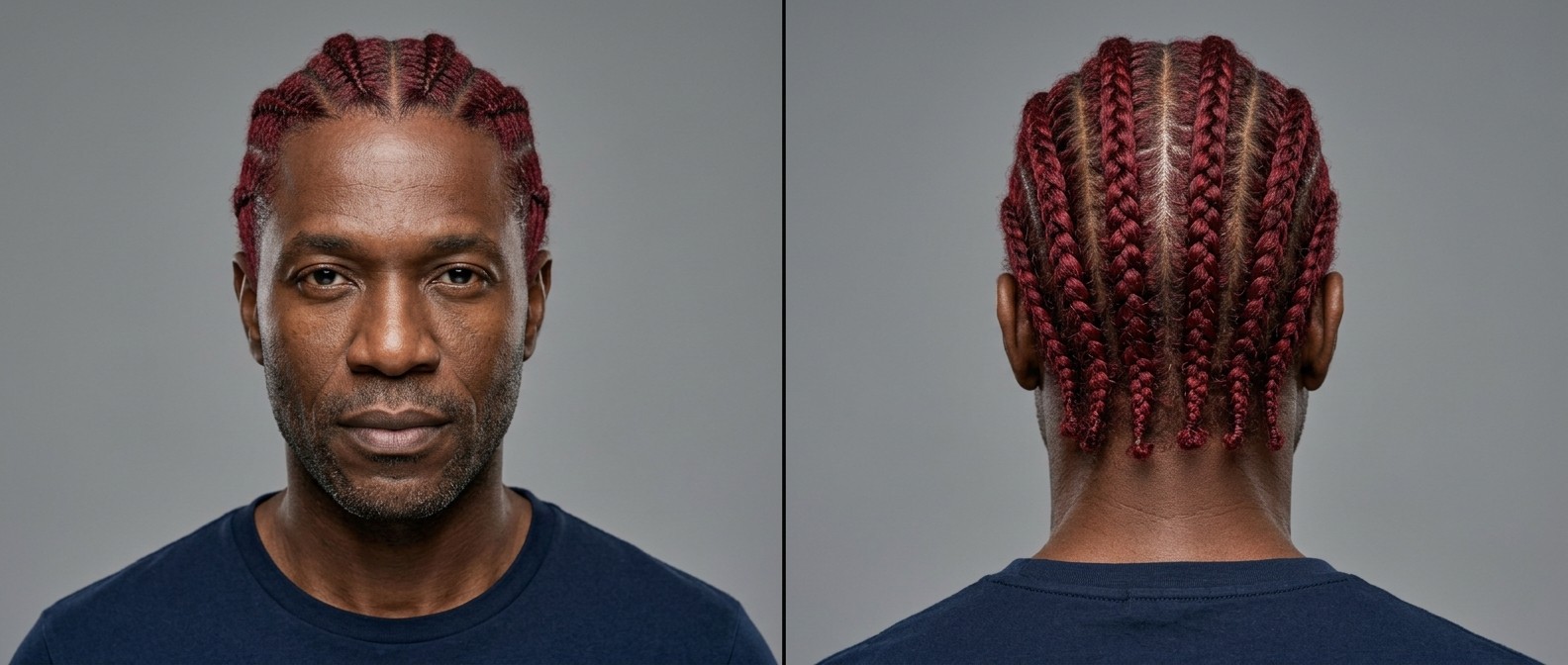
Cornrows
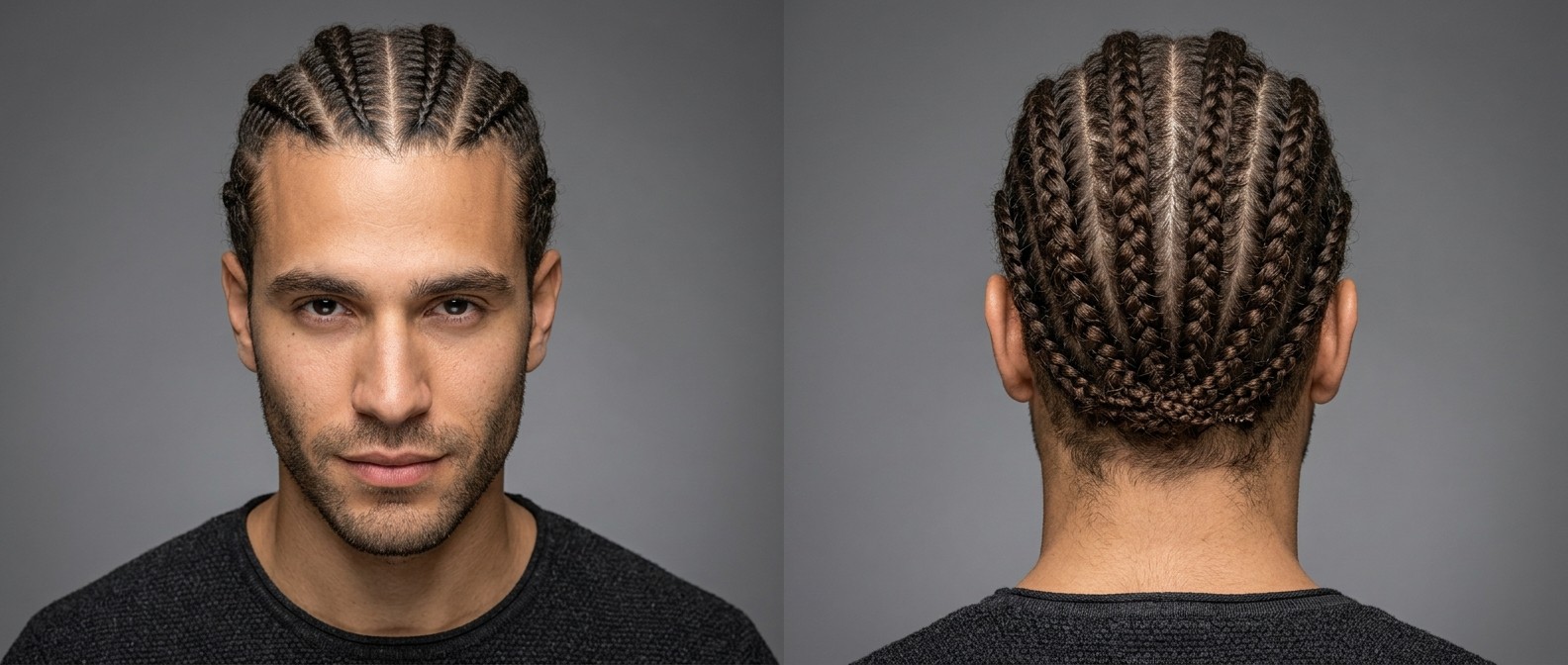
Bold Crimson Red Straight-Back Cornrows for Rectangular Faces
Cornrows
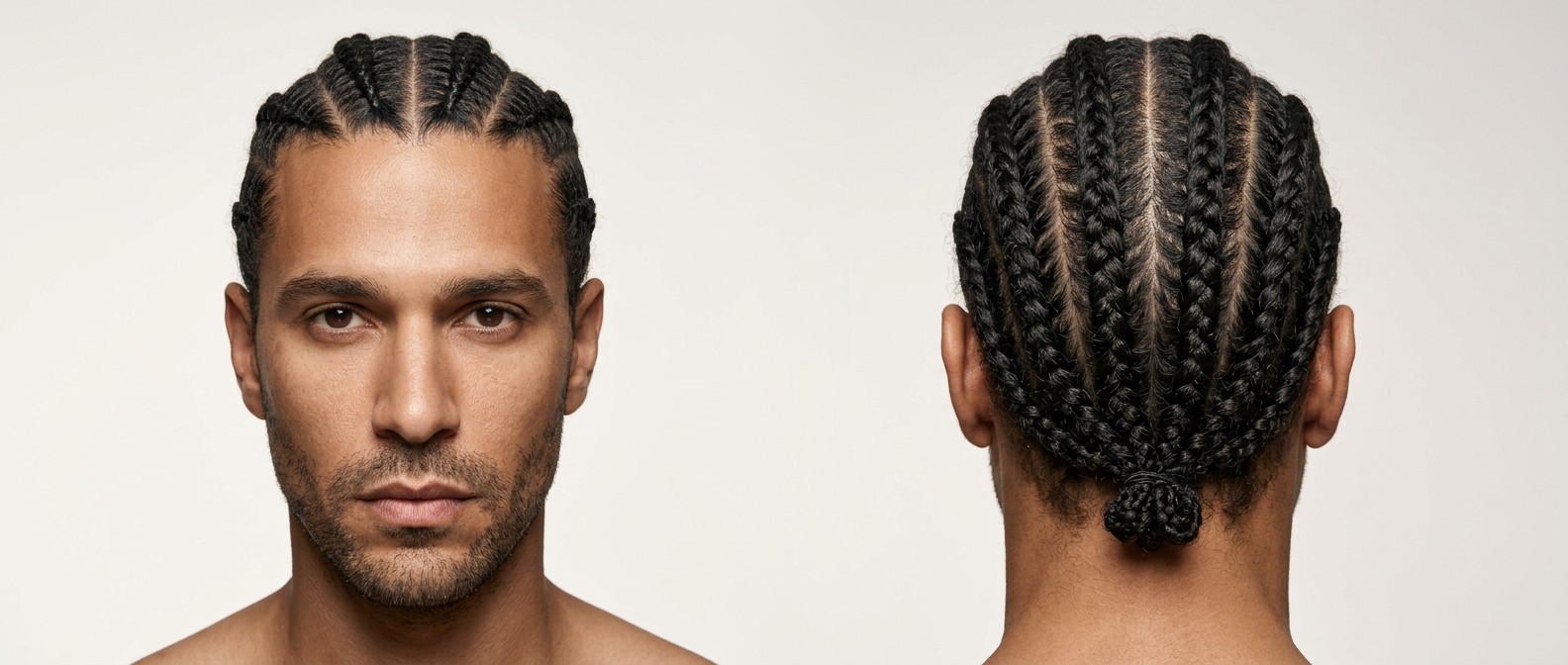
Classic Straight-Back Cornrows with Symmetrical Parting and Tucked Nape
Cornrows
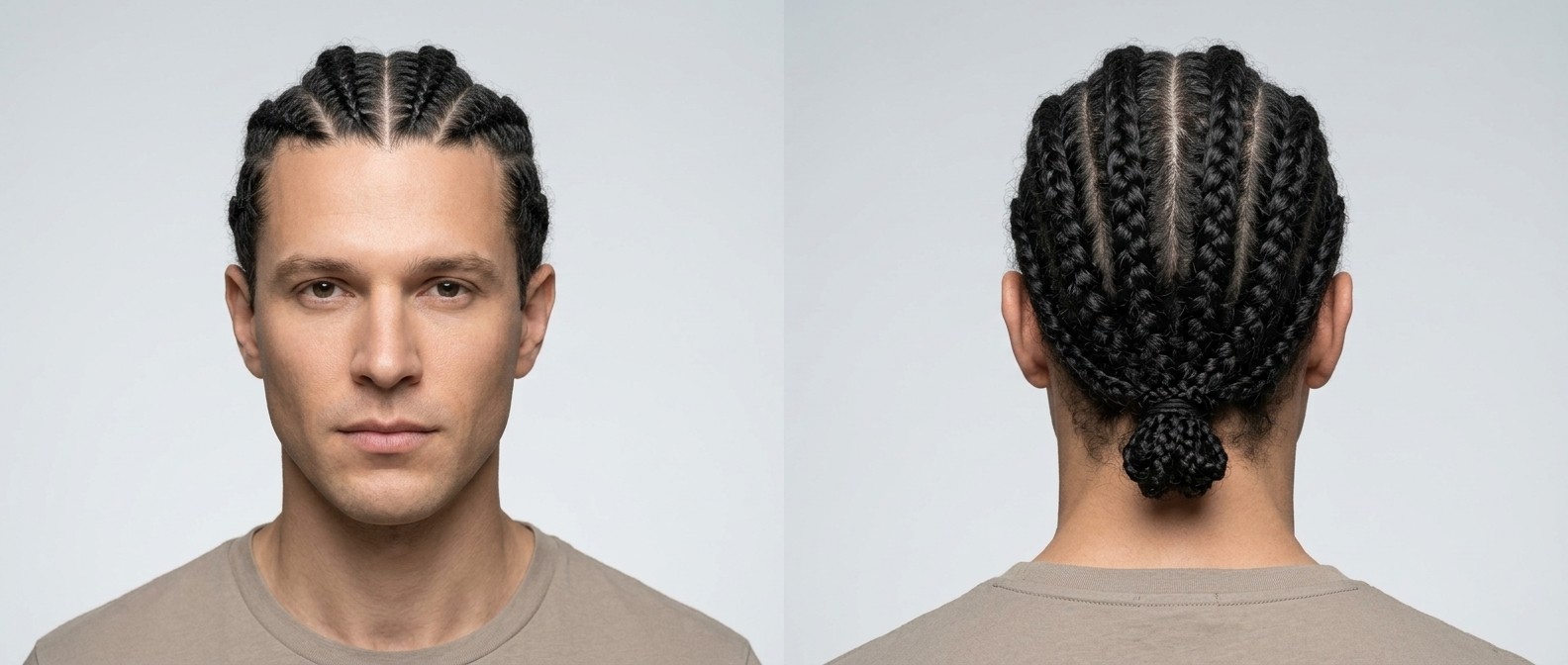
Classic Straight-Back Cornrows Featuring a Neat Nape Knot
Cornrows
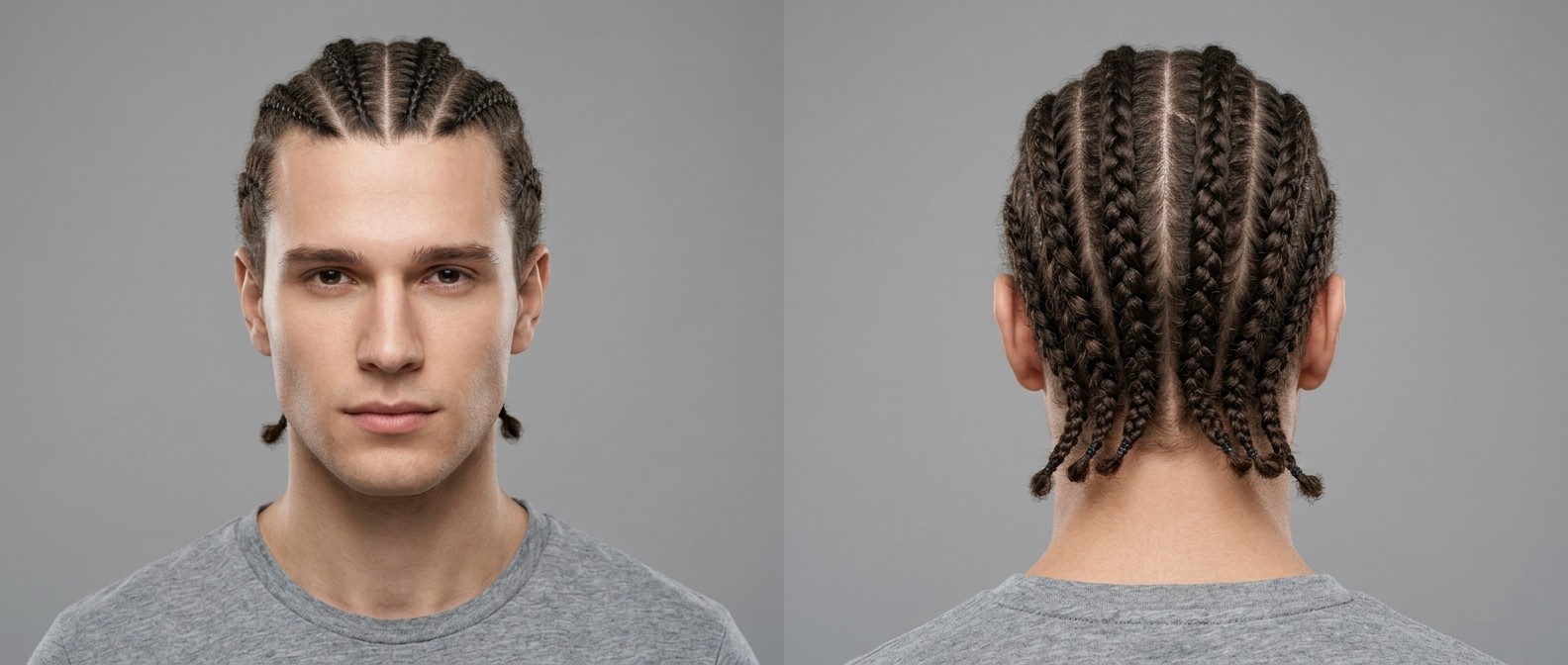
Classic Straight Back Cornrows with a Low Bun for Men
Cornrows
Symmetrical Straight-Back Cornrows for Thick Curly Men's Hair
Cornrows