Add one front-facing photo. We send it to the AI together with this exact cut — and you get a photorealistic preview of yourself wearing it.
1
Your photo
Front view · neutral face · even light
2
This haircut
Already included
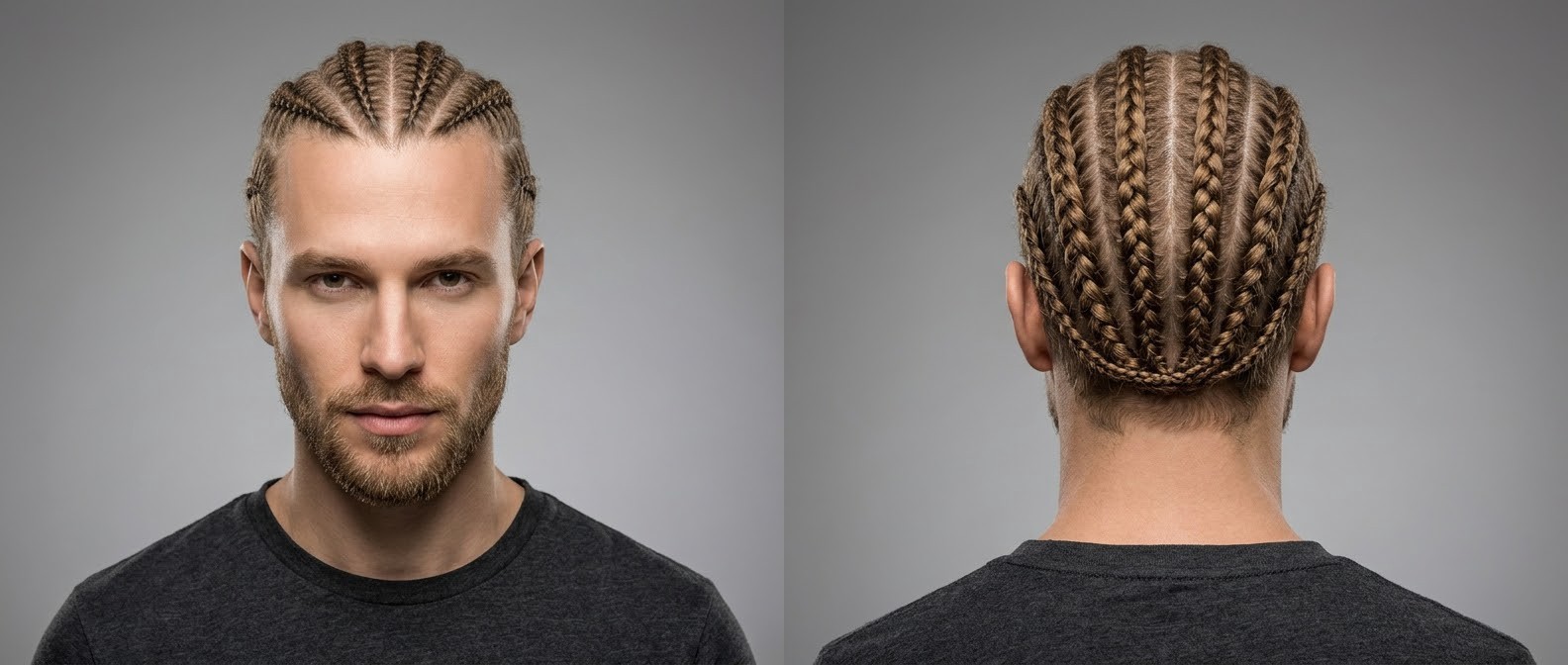
Front and back reference — taken from this page
3
Your preview
Your result appears here
![]()
![]()
Generated for you, not published anywhere
How do you rate this tool?
- Reading your photo
- Matching the cut
- Rendering your preview
How to take a photo that works
Do
- Face the camera straight on
- Even daylight, no harsh shadow
- Head and shoulders in frame
- Hair fully visible, nothing covering it
Avoid
- Hats, caps, hoods, sunglasses
- Steep angles or a tilted head
- Group photos or heavy filters
- Backlight that darkens the face
Men's Straight-Back Cornrows with Tucked Nape for Thick Hair
 Top
Long (10-20 cm)
Top
Long (10-20 cm)
 Sides
Medium (2-5 cm)
Sides
Medium (2-5 cm)
 Hair Type
Curly (Type 3)
Hair Type
Curly (Type 3)
 Face Shape
Heart
Face Shape
Heart
 Maintenance
Medium
Maintenance
Medium
 Thickness
Thick / Dense
Thickness
Thick / Dense
About This Style
Step into a bold, highly structured aesthetic with these classic straight-back cornrows, meticulously tailored for men with thick, textured hair. What immediately commands attention in this specific variation is the pristine, symmetrical parting system that runs perfectly parallel from the crisp front hairline all the way to the crown, before dropping seamlessly down to the nape of the neck. The braids are kept at a medium-to-large thickness, expertly utilizing the natural density of the hair to create raised, prominent three-dimensional ridges that offer incredible visual texture. Because the model has light brown hair, the intricate overlapping technique of the braids is highly visible, catching the light and emphasizing the craftsmanship. Notice how the ends are elegantly tucked and secured horizontally across the lower neckline, creating a clean, polished finish rather than leaving loose, dangling tails. This protective style is an absolute game-changer for men with active, on-the-go lifestyles who want a striking, masculine look without the hassle of daily morning styling. It beautifully complements a heart-shaped face by drawing the eye vertically, while a well-groomed, short beard grounds the entire appearance and adds a rugged contrast to the neat braids.
Key Features
- Symmetrical, straight-back braiding pattern originating from a crisp, natural front hairline and extending fluidly to the nape.
- Clean, highly visible scalp partings that create striking geometric contrast and emphasize the precision of the style.
- Raised, three-dimensional braid structures showcasing the thick hair density and the intricate underhand braiding technique.
- Horizontally tucked and cleanly secured braid tails at the lower neckline, providing a tailored, professional finish.
- Medium-tension execution that prevents hairline stress while maintaining a firm, long-lasting hold for weeks.
- Seamless visual integration with a short, neatly trimmed beard, balancing the structured top with a rugged lower face.
- Excellent light reflection on the light brown hair, which highlights the individual weaves and texture of each cornrow.
Getting the Cut
- Request a thorough clarifying wash, deep conditioning treatment, and a gentle blow-out to stretch your curly hair before any braiding begins.
- Ask your stylist to map out 8 to 10 straight-back sections, ensuring the central part aligns perfectly with the bridge of your nose for ultimate symmetry.
- Specify that you want underhand braids (traditional cornrows) to ensure the plaits sit raised and prominent on top of the scalp rather than flat.
- Request a firm but comfortable medium tension—it must be tight enough to last 3 to 4 weeks, but loose enough to avoid traction alopecia or scalp irritation.
- Instruct the braider to feed in the hair smoothly and consistently to manage your thick density without the braids becoming overly bulky at the crown of your head.
- Ask them to intricately tuck and sew (or discreetly band) the remaining braid tails horizontally across the nape of your neck for a clean, unified baseline.
- Have your barber line up your front hairline, temples, and beard with a precision trimmer to create sharp, contrasting edges against the flowing braids.
- Request a final set with foaming wrapping mousse and a few minutes under a hooded dryer to lock down flyaways and set the style firmly in place.
Daily Routine
- Wake up and carefully remove your silk or satin durag, which is the absolute most essential step for protecting the braids' neatness overnight.
- Inspect the braids and exposed scalp in the mirror for any loose hairs, flyaways, or dryness that may have surfaced during sleep.
- Lightly mist your scalp and the entire length of the braids with a hydrating, water-based leave-in conditioner spray to restore essential moisture.
- Apply a few drops of lightweight scalp oil (such as a jojoba, argan, or tea tree blend) directly to the exposed partings using your fingertips or a precision dropper.
- Massage the oil gently into the scalp using the pads of your fingers, being careful not to rub or rough up the actual braids to prevent frizz.
- Smooth down the top of the braids using a small amount of styling mousse or edge control rubbed between your palms, pressing gently to tame any rogue hairs.
- Use a soft-bristle boar brush exclusively on your natural hairline and beard to ensure those edges remain sharp, clean, and perfectly laid.
- Finish your one-minute routine by applying a premium beard balm to your facial hair, brushing it neatly to complement the highly structured look of your cornrows.
Products & Tools
- Hydrating, water-based leave-in conditioning spray to keep the natural hair moisturized without causing heavy, flaky buildup inside the braids.
- Lightweight scalp oil (tea tree, peppermint, or jojoba blend) in a dropper bottle for precise, mess-free application directly on the partings.
- Foaming wrapping mousse with a medium hold to lay down frizz and flyaways without leaving a white, crunchy residue on dark or light hair.
- Premium edge control gel with a firm, flexible hold and matte finish for detailing the front hairline and keeping baby hairs in check.
- High-quality silk or satin durag to compress the hair, retain moisture, and protect the style during sleep or intense physical workouts.
- Fine-tooth metal rat-tail comb for the braider to create razor-sharp, perfectly straight partings before braiding.
- Soft boar bristle brush for daily maintenance of the beard, mustache, and front hairline edges without snagging the cornrows.
Maintenance
- Always sleep with a silk or satin durag or bonnet to prevent cotton pillowcases from causing friction, which leads to frizz and premature unraveling.
- Limit full underwater washes to once every two weeks; instead, use witch hazel or micellar water on a cotton swab to gently cleanse the scalp partings.
- Strictly avoid heavy, petroleum-based hair greases or thick waxes that can clog hair follicles and create stubborn, hard-to-wash buildup inside the tightly woven braids.
- Apply a soothing, cooling anti-itch scalp serum containing peppermint or aloe vera if your scalp feels tight or itchy during the first few days after installation.
- Wear a moisture-wicking sweatband around your hairline during heavy gym sessions to prevent salty sweat from drying out your edges and causing frizz.
- Schedule a fresh take-down and re-braiding appointment every 3 to 4 weeks to maintain neatness and protect your delicate hairline from excessive, prolonged tension.
Best For
Face Shapes: Exceptionally flattering for Heart, Oval, and Square face shapes, as the straight-back geometric lines elongate the face and highlight strong jawlines and cheekbones.
Hair Types: Ideal for Type 3 curly hair or Type 4 coily hair with medium to thick density, providing enough grip and volume for substantial braids.
Hair Length: Requires a minimum top and side length of 10 to 20 centimeters (Long) to ensure the braids can reach the nape and be tucked securely without unraveling.
Lifestyles: Perfect for athletes, heavy gym-goers, and busy professionals who demand a zero-fuss, highly secure style that looks immaculate from morning to night.
Occasions: Fits effortlessly into casual, everyday settings, though its precise, neat execution makes it easily adaptable for modern, creative professional environments.
Pro Tips
- Never force your hair into tight braids if it is too short; wait until you have at least 10 centimeters of length to avoid damaging tension on the delicate hair roots.
- If your hair is naturally silky, fine, or loosely curled (Type 3A), ask your stylist to use a gripping braiding gel or jam to ensure the style holds its structure and doesn't slip.
- During the hot summer months, apply a spray-on scalp sunscreen to the exposed partings to prevent painful sunburns and peeling on your head.
- When it is time to remove the style, saturate the braids with a cheap, slippery conditioner and carefully detangle from the bottom up to minimize breakage.
- A meticulously sharp beard line-up is the secret weapon that elevates this braided look from a simple protective style to a highly groomed, fashion-forward statement.
Related Hairstyles
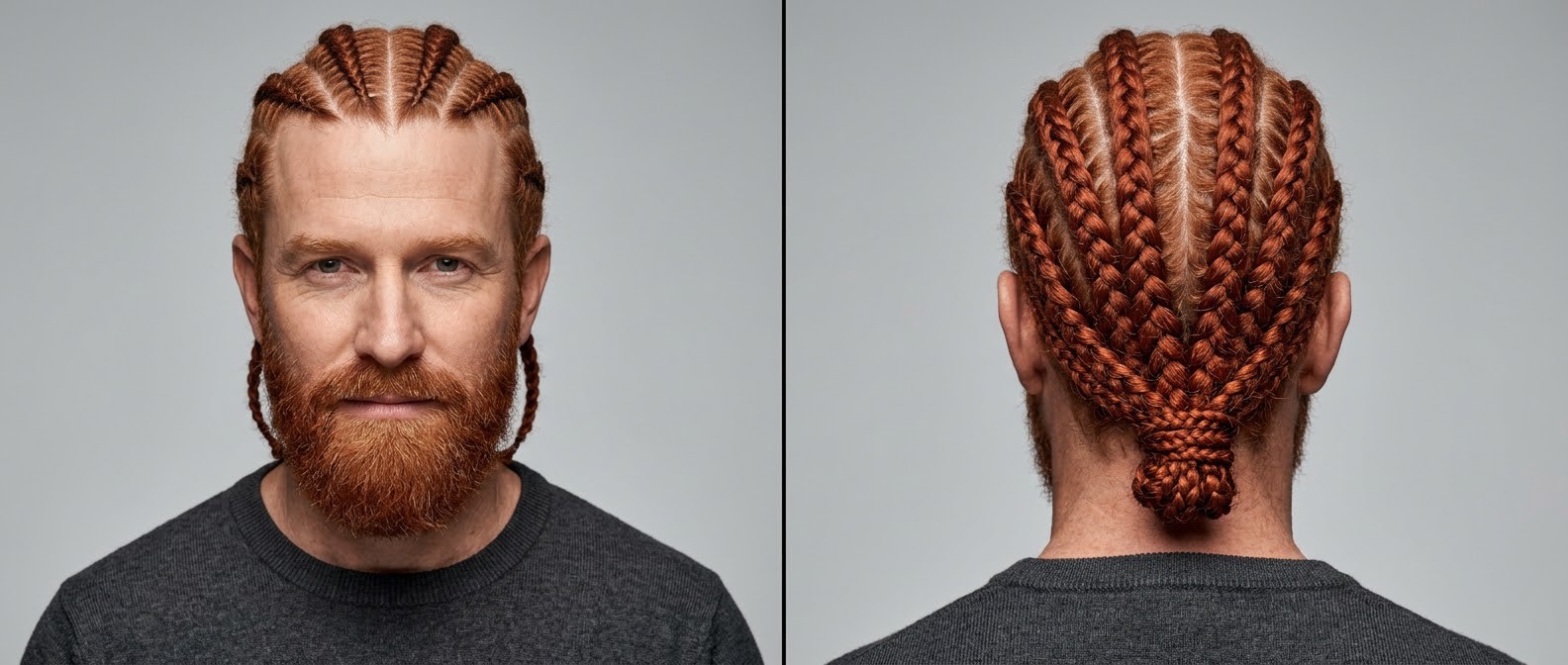
Cornrows
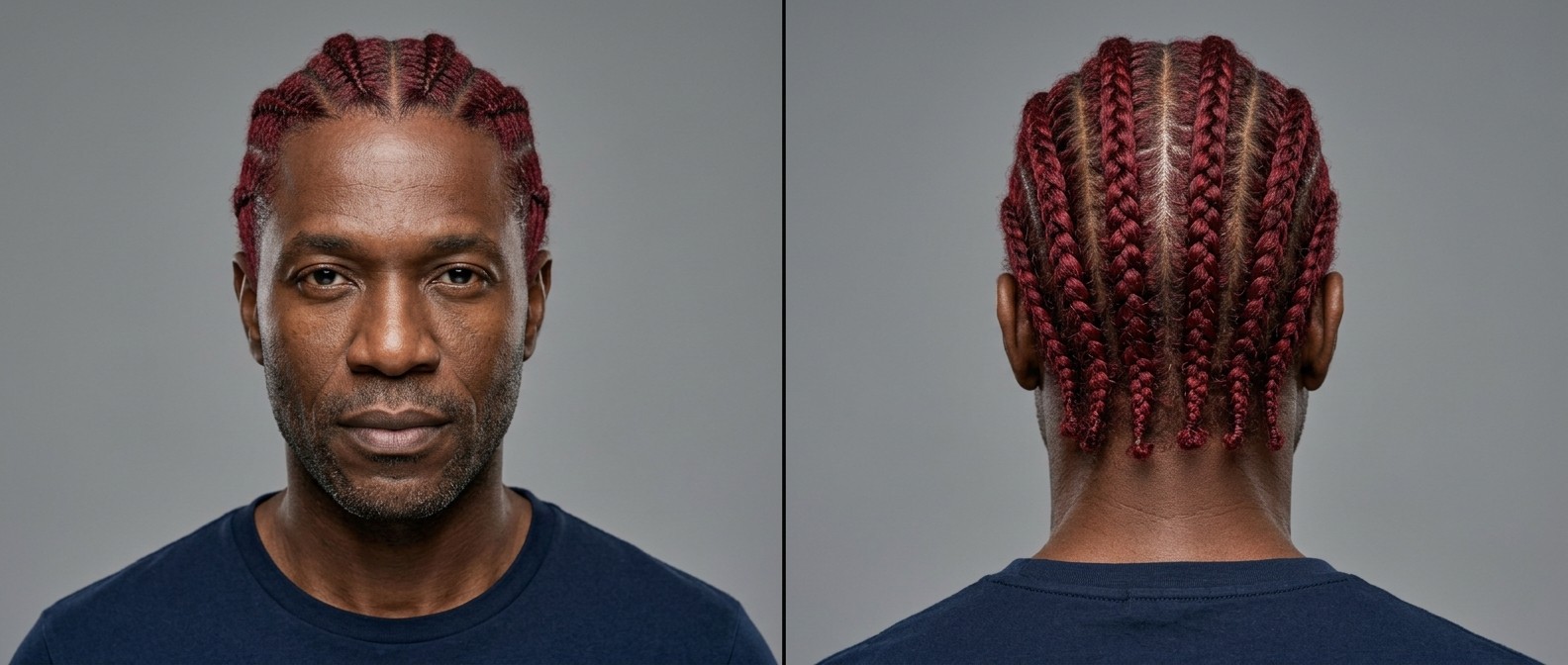
Crimson Red Straight-Back Cornrows with Intricate Braided Nape Knot
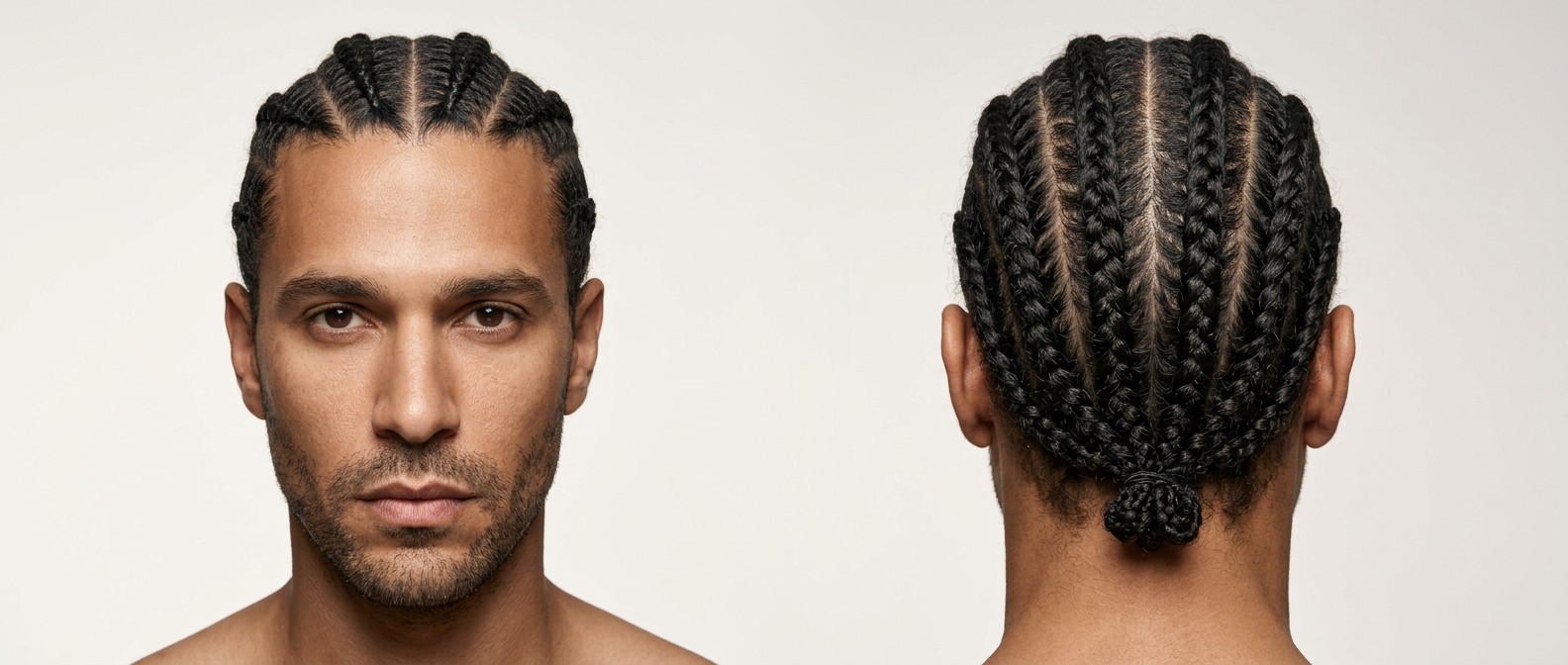
Cornrows
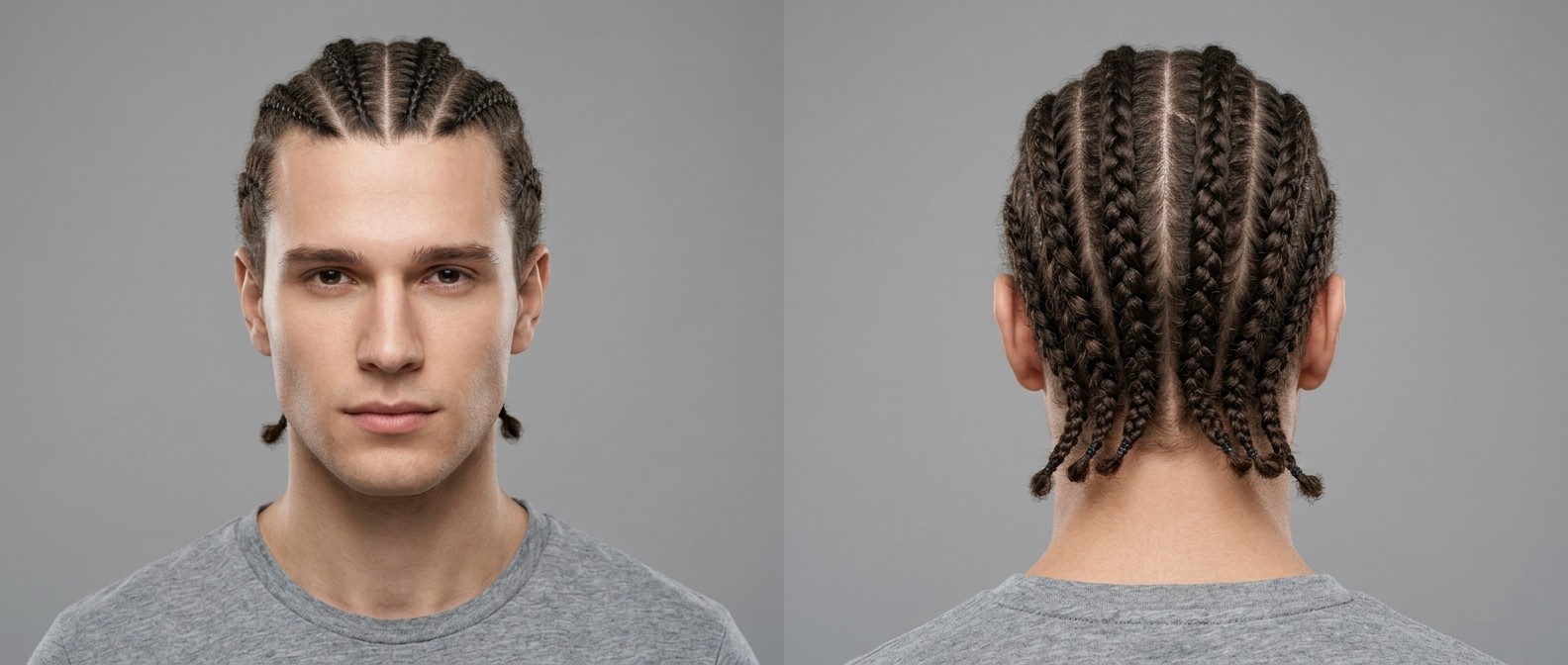
Classic Straight-Back Cornrows Featuring a Neat Nape Knot
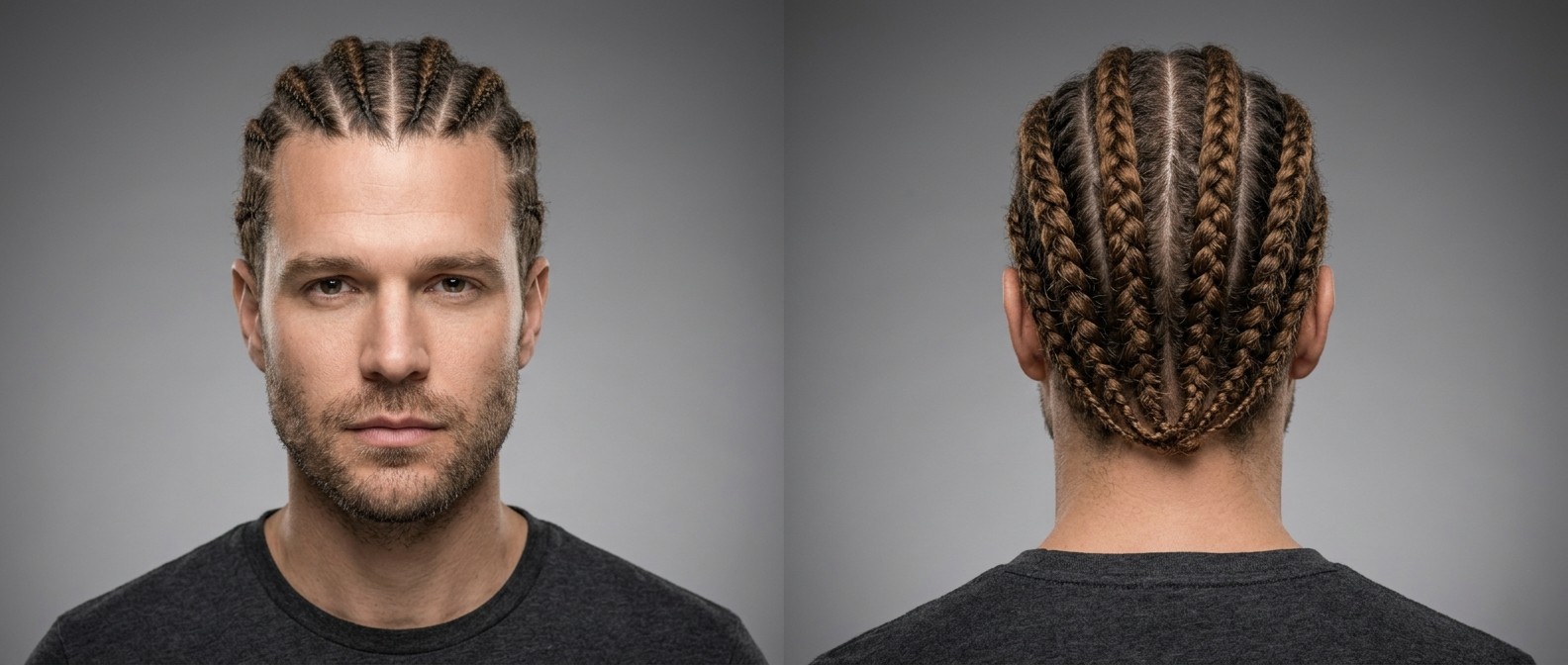
Cornrows
Creative Straight-Back Cornrows for Thick Textured Men's Hair
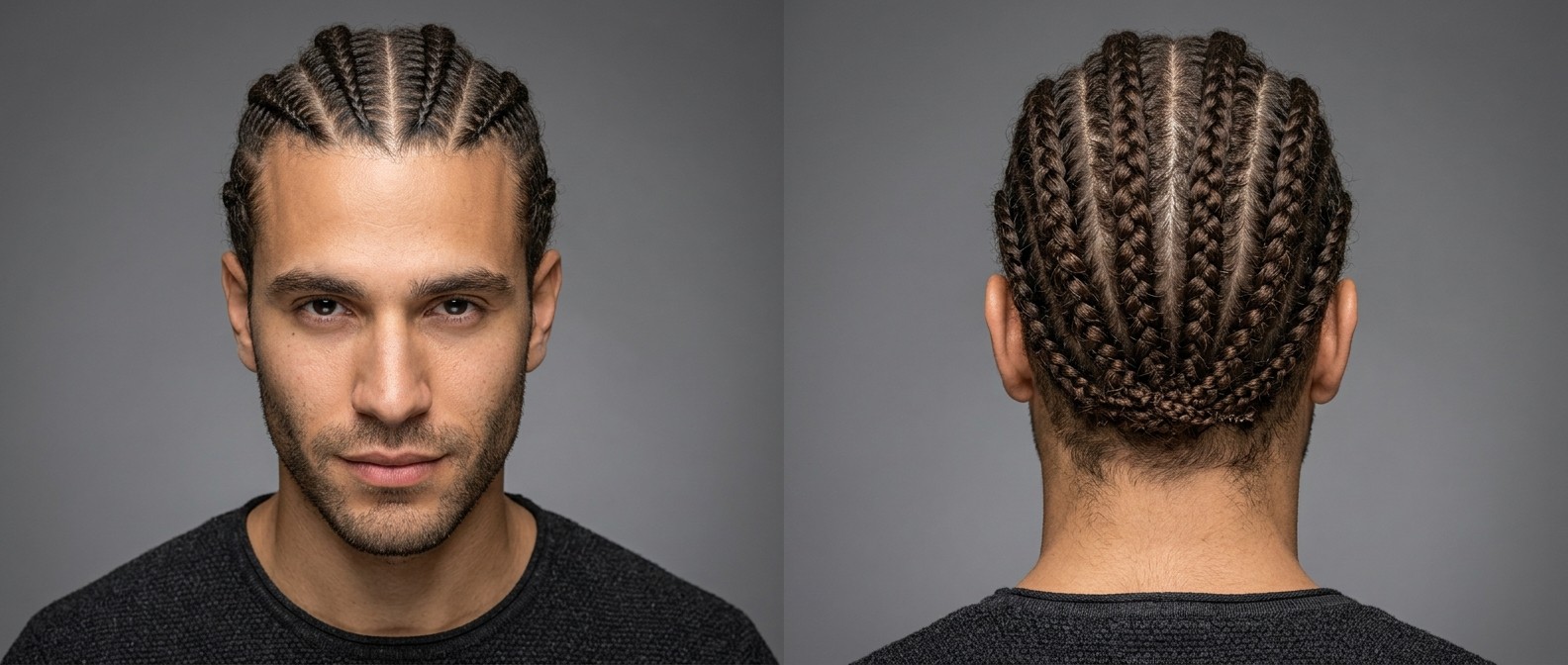
Cornrows
Classic Straight-Back Cornrows with Symmetrical Parting and Tucked Nape
Cornrows
Bold Crimson Red Straight-Back Cornrows for Rectangular Faces
Cornrows